Temperature24 – 28 °C
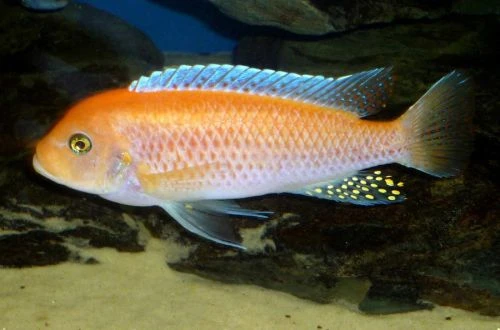
The Red Zebra Cichlid, scientifically known as Maylandia estherae (formerly Pseudotropheus estherae), belongs to the Cichlidae family. This vibrant, beautiful, and active fish exhibits interesting behavior. It can be a magnificent addition to a biotope aquarium already housing other Malawian cichlids. Although keeping and breeding this species is relatively simple, its challenging temperament makes it unsuitable for beginner aquarists.
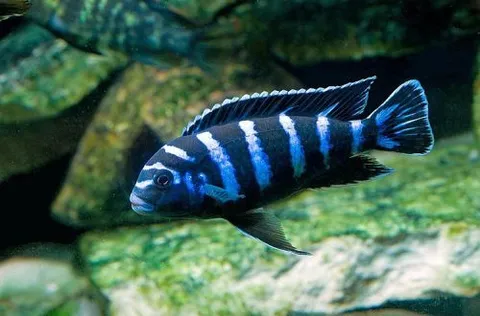
Adults can reach a length of up to 13 cm. Males are typically slightly larger and distinguished by a bluish coloration, while females tend to have yellow tones. An interesting feature is the variability in coloration depending on the region of origin: in some cases, males may acquire yellow hues, and females blue ones. If only fish of a single sex are kept in the aquarium, there is a possibility that one of them will display a combination of all possible colors.
This fish is endemic to Lake Malawi (also known as Lake Nyasa) in Africa, which is located between the countries of Malawi, Tanzania, and Mozambique. Its natural habitat consists of rocky shorelines in the southern part of the lake.
This fish belongs to the Mbuna cichlid group, which is characterized by aggressive behavior in males. Notably, their aggression is directed not only at direct competitors but can also be displayed towards females and representatives of other species. To reduce aggression, consider keeping them in a species-specific tank, which must be equipped with numerous hiding places. It is important to maintain a ratio of at least 3 females per male. An alternative solution can be to create an "overstocked" aquarium containing several Mbuna species. In this case, ensure that each male can find a separate bottom territory to defend against neighbors. Such an abundance of fish reflects their natural living conditions and helps effectively disperse aggression.
The optimal aquarium volume for a small group of Red Zebra Cichlids starts from 150 liters. The setup can be quite simple: a sandy substrate, along with piles of rocks and boulders from which grottoes and caves can be created to serve as hiding places for the fish. Almost any hollow objects can serve as shelters. Natural driftwood will not only adorn the interior but also create surfaces for algae growth, providing an additional food source for the fish. Maintenance is not particularly difficult, provided that suitable hydrochemical parameters are maintained, and the aquarium is regularly cleaned with weekly partial water changes (15–20% of the volume) with fresh water.
Most popular foods are readily accepted by these fish. However, it is important that plant-based components form the basis of their diet. For example, spirulina flakes or pieces of nori seaweed can be offered.
The appearance of fry is possible even in a community tank. During the breeding season, the male selects a specific spot on the bottom, which can be a flat stone or a depression in the sand—this will become the spawning substrate. Then, very active courtship begins, often causing females to seek refuge in hiding places. When the female is ready to spawn, she accepts the courtship and alternately lays eggs in batches, and after fertilization, she takes them into her mouth. The entire incubation period takes place in the female's mouth, and the fry remain in this refuge until they reach a sufficient size. This mechanism of offspring protection is typical for Lake Malawi cichlids.
The main cause of most diseases in Malawian cichlids is unsuitable living conditions and poor-quality food, which often leads to a condition known as Malawi Bloat. Upon detecting the first symptoms, it is important to check water parameters and ensure there are no high concentrations of dangerous substances such as ammonia, nitrites, and nitrates. All parameters must be normalized before proceeding with treatment.
When selecting individuals, preference should be given to active fish with clean fins and no visible skin damage. It is important to pay attention to the abdomen: it should not be excessively sunken, which may indicate emaciation or internal parasitic diseases. Avoid purchasing fish that appear apathetic, stay near the water surface, or show signs of scale damage. Since the species exhibits pronounced intraspecific aggression, it is advisable to clarify the sex composition of the group with the seller in advance. The optimal option for purchase is a harem consisting of one male and at least three females, which helps distribute the aggression of the dominant male. When buying young individuals, it is important to consider that their coloration may change as they mature, and also depends on the specific color morph.
The essentials: size, tank volume, water parameters and care
An adult reaches 10–13 cm in length. Plan the tank around the maximum size: the fish quickly outgrows a cramped setup.
The recommended volume is 200 L. A smaller tank speeds up nitrate build-up and raises stress levels.
Temperature 24–28 °C, pH 7.6–8.8, hardness 10–25 dGH. Stability matters more than exact values: sudden swings are harder on the fish than a small deviation from the ideal.
Around 8 years when kept properly. Lifespan depends directly on tank volume, water quality and a varied diet.
Temperament: aggressive / incompatible / unfriendly. Keep this in mind when choosing tank mates.
Recommended setup: harem (1 male and several females). Ignoring this is a common cause of stress and disease.
Diet type: plant-based (algae, vegetables). Feed small portions that are finished within a couple of minutes — overfeeding does more harm than underfeeding.
The scientific name of the species is Maylandia estherae, family Cichlids (Cichlidae). It also appears in the literature as: Metriaclima estherae, Pseudotropheus estherae.
The water suits 113 of 208 plants in the catalogue — the easiest ones are shown first.
African Onion PlantAfzelius's AnubiasAmazon FrogbitAmazon SwordAnacharisAnubiasArrowhead CryptDwarf CloverDwarf CloverDwarf HygrophilaDwarf SagittariaDwarf ValGuppy GrassHornwortJava MossMoneywortMud SwordNair's LagenandraNarrow Leaf AnacharisNarrow-leaf CloverStringy MossTaiwan MossTape GrassUssuri Watermilfoil
Matched by family, categories and overlapping keeping conditions
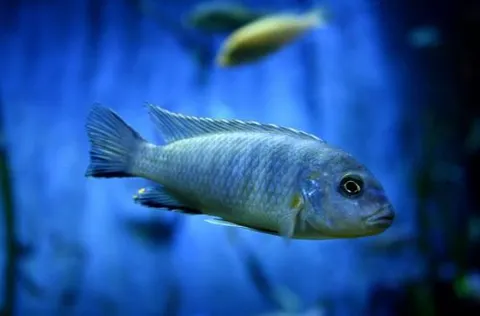
Maylandia zebra
Maylandia zebra, known as Zebra Mbuna or Blue Pseudotropheus zebra, belongs to the family Cichlidae. Although previously classified under the genus Pseudotropheus, the outdated name is still actively used. This fish is…
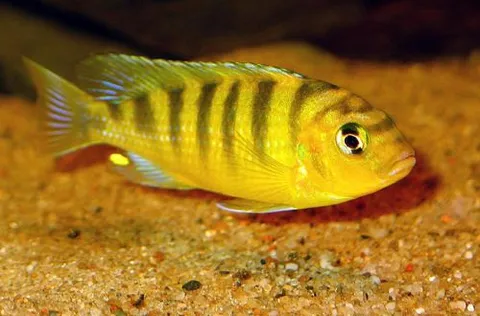
Maylandia lombardoi
Maylandia lombardoi, also known as Lombardo's Cichlid or Pseudotropheus lombardoi, belongs to the family Cichlidae. This bright and attractive fish is characterized by a rather belligerent disposition, which makes it…
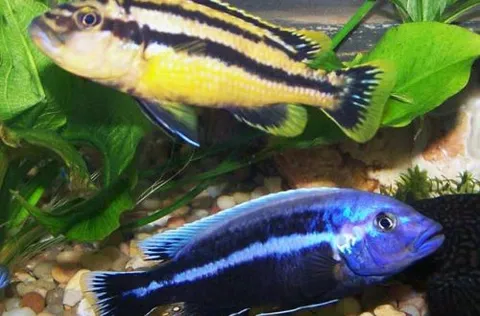
Melanochromis chipokae
Melanochromis chipokae, known scientifically as Melanochromis chipokae, belongs to the family Cichlidae. This species represents the Mbuna group of cichlids, characterized by their aggressive behavior. This particular…
Chindongo demasoni
Pseudotropheus demasoni, known scientifically as Chindongo demasoni, belongs to the family Cichlidae. This species appeared relatively recently in aquaristics, becoming available for purchase only from 1994. Before the…