Temperature24 – 28 °C
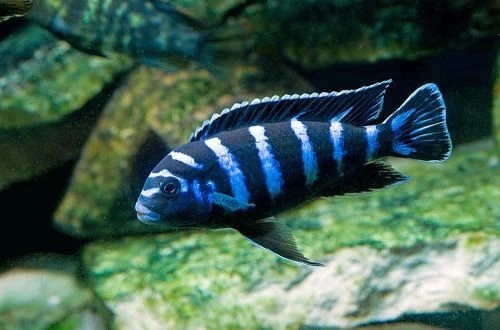
Pseudotropheus demasoni, known scientifically as Chindongo demasoni, belongs to the family Cichlidae. This species appeared relatively recently in aquaristics, becoming available for purchase only from 1994. Before the classification change in 2016, it was known as Pseudotropheus demasoni. Despite its relatively recent history in the aquarium hobby, it quickly gained popularity among collectors of Malawian cichlids and experts. Due to difficulties in compatibility with other fish, its keeping is not recommended for beginner aquarists.
This species is one of the smallest representatives of Mbuna, reaching about 7 cm in length when mature. Sexual dimorphism is weakly expressed, and males are practically indistinguishable from females. Their coloration is striking in its brightness, featuring alternating saturated dark blue and light blue stripes.
This species is endemic to Lake Malawi (Nyasa) in East Africa and is known from a single locality: Pombo Rocks, off the Tanzanian shore. Its primary habitat is the coastal waters of Tanzania, in an area known as Pombo Rocks. The fish prefer shallow waters, rarely appearing in open waters.
This fish is characterized by aggressive and territorial behavior, especially among males. Demasoni can attack even individuals significantly larger than themselves. There are two acceptable approaches to keeping them. The first option involves the presence of one male with several females; in this case, other males should be completely excluded to avoid conflicts. The second method, on the contrary, suggests creating an overcrowded aquarium where other Mbuna species of various colors are kept, which helps to disperse the aggression of the dominant male.
An aquarium for keeping these fish should have a volume of at least 200 liters. For decoration, a sandy substrate is preferred, as well as large stones and rock fragments from which many crevices and grottoes can be created. Various decorative elements that allow fish to hide, or simple ceramic pots and hollow tubes, can also serve as shelters. For successful keeping of Pseudotropheus demasoni, stable hydrochemical parameters and high water quality are critically important. This is achieved by installing an effective filtration system and regular aquarium cleaning. Weekly water changes of 15–20% of the total volume with fresh water also play a key role.
In their natural habitat, their diet consists of algae growing on the surface of stones, as well as various microorganisms inhabiting them. When kept in a home aquarium, it is recommended to offer predominantly plant-based foods with minimal protein content. Specialized foods developed for Malawian cichlids will be an optimal choice.
Breeding is possible in a species-specific aquarium. It is important to provide several flat stones on the bottom, which can serve as potential spawning sites. At the beginning of the breeding season, the male either digs a depression in the substrate or chooses a suitable flat stone and begins courtship. When the female is ready to spawn, she swims up, laying several eggs alternately, which she immediately collects into her mouth after fertilization. The entire incubation period will subsequently take place in the female's mouth — this is a unique protective mechanism characteristic of many fish from Lake Malawi.
Most diseases of Malawian cichlids are often caused by unsuitable keeping conditions or poor-quality food, which frequently leads to the development of "Malawi Bloat. If the first symptoms are detected, it is necessary to check the water parameters for high concentrations of dangerous substances such as ammonia, nitrites, and nitrates. If necessary, all parameters should be normalized, and only then should treatment begin.
When selecting individuals, preference should be given to active fish with bright, clearly defined striped coloration. Avoid specimens with signs of emaciation, fin damage, film on the body, or unnatural behavior such as apathy or constant hiding in a corner of the aquarium. Given the high level of intraspecific aggression, it is recommended to acquire a group of young individuals simultaneously to balance the hierarchy in the future shoal. Before purchasing, it is important to ensure that the conditions in the store meet the species' requirements, as the fish are sensitive to water quality and stress during transportation.
The essentials: size, tank volume, water parameters and care
An adult reaches 7 cm in length. Plan the tank around the maximum size: the fish quickly outgrows a cramped setup.
The recommended volume is 200 L. A smaller tank speeds up nitrate build-up and raises stress levels.
Temperature 24–28 °C, pH 7.6–8.8, hardness 10–25 dGH. Stability matters more than exact values: sudden swings are harder on the fish than a small deviation from the ideal.
Around 8 years when kept properly. Lifespan depends directly on tank volume, water quality and a varied diet.
Temperament: aggressive / incompatible / unfriendly. Keep this in mind when choosing tank mates.
Recommended setup: harem (1 male and several females). Ignoring this is a common cause of stress and disease.
Diet type: plant-based (algae, vegetables). Feed small portions that are finished within a couple of minutes — overfeeding does more harm than underfeeding.
The scientific name of the species is Chindongo demasoni, family Cichlids (Cichlidae).
The water suits 113 of 208 plants in the catalogue — the easiest ones are shown first.
African Onion PlantAfzelius's AnubiasAmazon FrogbitAmazon SwordAnacharisAnubiasArrowhead CryptDwarf CloverDwarf CloverDwarf HygrophilaDwarf SagittariaDwarf ValGuppy GrassHornwortJava MossMoneywortMud SwordNair's LagenandraNarrow Leaf AnacharisNarrow-leaf CloverStringy MossTaiwan MossTape GrassUssuri Watermilfoil
Matched by family, categories and overlapping keeping conditions
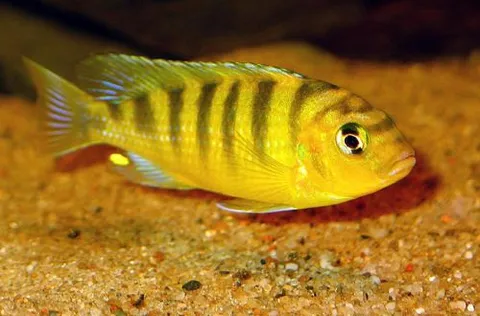
Maylandia lombardoi
Maylandia lombardoi, also known as Lombardo's Cichlid or Pseudotropheus lombardoi, belongs to the family Cichlidae. This bright and attractive fish is characterized by a rather belligerent disposition, which makes it…
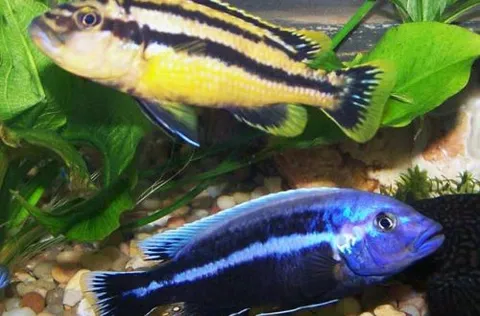
Melanochromis chipokae
Melanochromis chipokae, known scientifically as Melanochromis chipokae, belongs to the family Cichlidae. This species represents the Mbuna group of cichlids, characterized by their aggressive behavior. This particular…
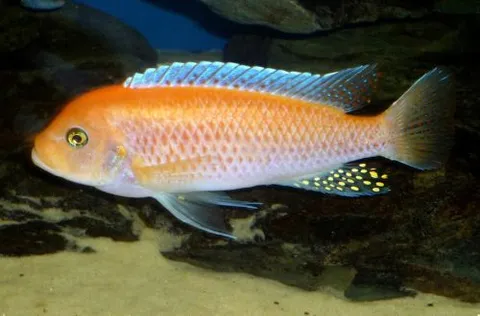
Maylandia estherae
The Red Zebra Cichlid, scientifically known as Maylandia estherae (formerly Pseudotropheus estherae), belongs to the Cichlidae family. This vibrant, beautiful, and active fish exhibits interesting behavior. It can be a…
Chindongo saulosi
The scientific name for this fish is Chindongo saulosi, although it was formerly known as Pseudotropheus saulosi. It belongs to the Cichlidae family. This species is part of the Mbuna group, which are endemic to Lake…