Temperature20 – 26 °C
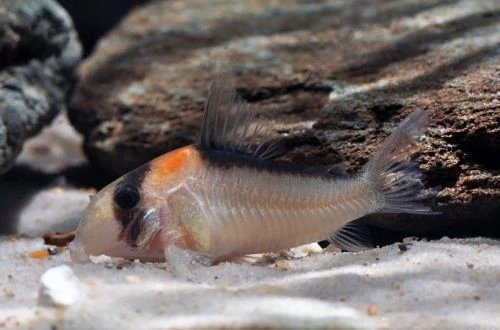
Corydoras adolfoi, also known as Adolfo's Corydoras, belongs to the family Callichthyidae. It was named after Adolfo Schwarz, an exporter of South American fish, who played a key role in popularizing this species among aquarists. This catfish inhabits a rather limited region in the Rio Negro basin, within the Brazilian municipality of São Gabriel da Cachoeira. Its natural habitat, in this pristine equatorial part of the Amazon, is characterized by low pH and low carbonate hardness. Due to the abundance of organic material such as fallen leaves, branches, and riparian vegetation, the water in these areas is rich in tannins and organic acids, giving it a deep brown, 'tea-like' hue.
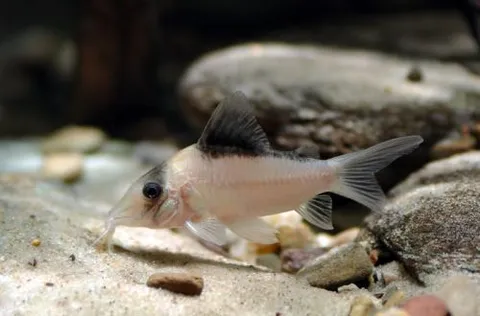
Adults of this species grow to approximately 6 cm. Their body and fins are predominantly light-colored. A black back, adorned with a bright red spot at the base of the dorsal fin, serves as a characteristic distinguishing feature of the species. A noticeable black stripe, running through the eyes across the head, resembles a kind of mask. Sexual dimorphism in Adolfo's Corydoras is not clearly pronounced, making sex determination difficult.
Adolfo's Corydoras inhabits water bodies in the Rio Negro and Uaupés river basins in Brazil. Its natural environment consists of areas with slow currents, where the water is rich in tannins due to abundant organic matter, giving it a characteristic tea-like hue. In these locations, the water is characterized by high acidity (pH 4.0–5.5) and very low hardness.
This is a peaceful, schooling fish, primarily active in the bottom layer of the water. For their comfort, it is recommended to keep a group of 5–6 individuals. Adolfo's Corydoras get along well with other calm fish species that prefer similar water parameters and do not show aggression towards tank mates.
A minimum aquarium volume of 60–70 liters is required for keeping them. Soft river sand must be used as substrate, as sharp gravel particles can damage the fish's delicate barbels. The decor should include driftwood and live plants to create shaded areas. Gentle filtration and regular partial water changes are recommended, as the species is sensitive to the accumulation of organic pollutants.
In nature, they feed on small invertebrates, worms, and plant detritus. In the aquarium, fish readily accept high-quality sinking foods: specialized granules or tablets for bottom-dwelling fish. It is beneficial to diversify the diet with frozen or live foods such as Artemia, Daphnia, or bloodworms. Feeding should be done 1–2 times a day, ensuring that food remains do not spoil the water.
Breeding occurs in a spawning tank, stimulated by frequent changes of soft water. The female lays small portions of eggs (1–2 at a time) on plant leaves or glass, sticking them on. Parents do not show care for their offspring. The incubation period is about 3–5 days, after which the larvae begin to feed independently. Rearing fry requires clean water and the use of infusoria or Artemia nauplii.
The species is susceptible to typical Corydoras diseases, mainly arising from poor water quality or unsuitable substrate. Bacterial infections are possible if barbels are damaged by rough substrate. They are sensitive to abrupt changes in environmental parameters and the accumulation of nitrogenous compounds. Prevention involves regular siphoning of the sand and maintaining a stable biological balance.
When purchasing, choose active fish with clean fins and no white spots or sores on their bodies. It is important to ensure that the catfish have intact barbels, as their absence indicates improper keeping conditions in the store. Healthy individuals should show interest in foraging on the bottom and not appear emaciated.
The essentials: size, tank volume, water parameters and care
An adult reaches 6 cm in length. Plan the tank around the maximum size: the fish quickly outgrows a cramped setup.
The recommended volume is 70 L. A smaller tank speeds up nitrate build-up and raises stress levels.
Temperature 20–26 °C, pH 4–7, hardness 1–5 dGH. Stability matters more than exact values: sudden swings are harder on the fish than a small deviation from the ideal.
Around 5 years when kept properly. Lifespan depends directly on tank volume, water quality and a varied diet.
Temperament: peaceful (regular). Keep this in mind when choosing tank mates.
Recommended setup: small group (5–6 individuals). Ignoring this is a common cause of stress and disease.
Diet type: sinking (any). Feed small portions that are finished within a couple of minutes — overfeeding does more harm than underfeeding.
The scientific name of the species is Corydoras adolfoi, family Armored Catfish (Callichthyidae).
The water suits 197 of 208 plants in the catalogue — the easiest ones are shown first.
Afzelius's AnubiasAnacharisAnubiasBrazilian PennywortDwarf CloverDwarf CloverDwarf HygrophilaDwarf SagittariaDwarf ValGuppy GrassHornwortJava FernJava MossMoneywortMud SwordNair's LagenandraNarrow Leaf AnacharisNarrow-leaf CloverStringy MossSüsswassertangTaiwan MossTape GrassTemple PlantUssuri Watermilfoil
Matched by family, categories and overlapping keeping conditions
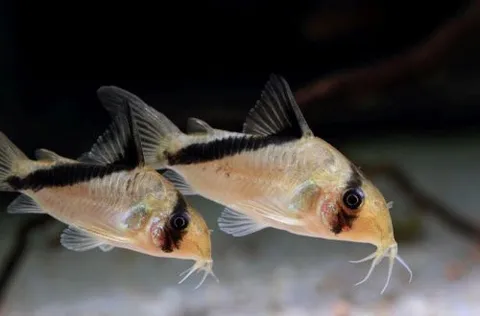
Corydoras melini
Melini's Corydoras, scientifically known as Corydoras melini, belongs to the family Callichthyidae, which includes armored or callichthyid catfishes. The name of this fish commemorates the Swedish biologist Douglas…
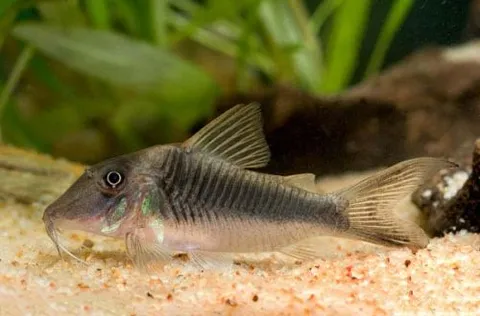
Corydoras treitlii
Corydoras treitlii, scientifically known as Corydoras treitlii, is a representative of the Callichthyidae family, also known as Armored Catfishes. This fish comes from the coastal drainages of north-eastern Brazil, in…
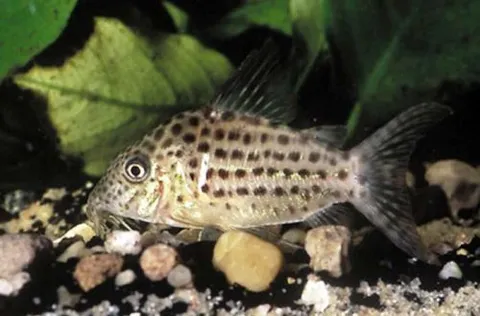
Corydoras maculifer
The scientific name of this catfish is Corydoras maculifer, also known as Maculifer Corydoras or Dotted Corydoras, and it belongs to the family Callichthyidae (Armored Catfish). This species was discovered relatively…
Corydoras imitator
Corydoras imitator, or the Imitator Cory catfish, belongs to the family Callichthyidae (Armored or Callichthyid catfishes) and bears the scientific name Corydoras imitator. Its name contains the word "imitator," which…