Temperature20 – 25 °C
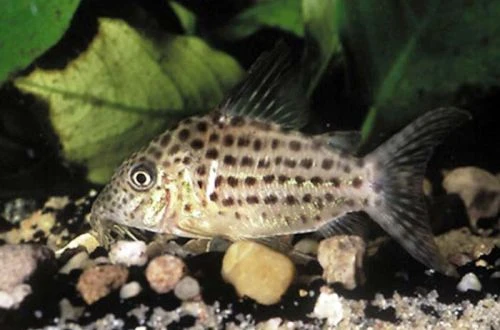
The scientific name of this catfish is Corydoras maculifer, also known as Maculifer Corydoras or Dotted Corydoras, and it belongs to the family Callichthyidae (Armored Catfish). This species was discovered relatively recently, in the 1970s, when it was found in the upper reaches of the Araguaia River basin, located in the southern states of Brazil.
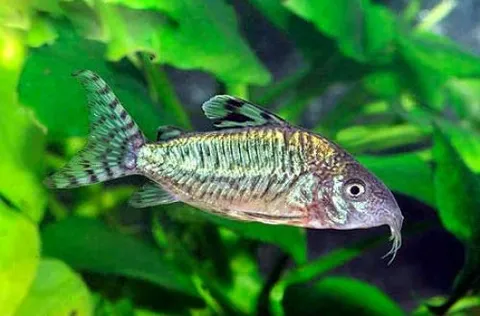
Adults of this species reach approximately 6 cm in length. Their body has the typical Corydoras shape and is covered with characteristic rows of bony plates. The coloration is characterized by a light background, scattered with numerous dark speckles forming dotted lines along the sides. Superficially, it is practically indistinguishable from a neighboring species, the Araguaia Catfish, whose body is also covered with black speckles. The main difference is that this corydoras is smaller, only about 3–4 cm long.
The species inhabits South America, in the Araguaia River basin (Brazil). In nature, it lives in shallow streams, preferring areas with soft substrate, where it leads a benthic lifestyle. The water in its habitats is characterized by tropical temperatures, and the fish can tolerate a wide range of hardness and acidity parameters.
This fish is peaceful and friendly, preferring to stay in groups of its own kind. It is recommended to keep them in a school of 3–4 individuals. They get along well with many other non-aggressive freshwater species of similar size. Good tankmates include fish that inhabit the middle and upper water layers, such as small Tetras, Danios, Rasboras, and most Livebearers.
For a school of six catfish, an aquarium of at least 80 liters is required, with the tank length being no less than 50 cm. When setting up the aquarium, attention should be paid to a soft substrate and the arrangement of several shelters, such as thickets of aquatic vegetation, driftwood, fallen leaves, or nut shells. Providing a stable aquatic environment is critical for long-term keeping. Although the Dotted Corydoras can adapt to a wide range of pH and dGH values, this does not negate the need to avoid sharp fluctuations in hydrochemical parameters. Maintaining environmental stability directly depends on regular aquarium maintenance. It is necessary to replace a portion of the water with fresh water weekly and to promptly remove organic waste.
In natural conditions, it feeds on small invertebrates and organic detritus found in the bottom substrate. In the aquarium, it readily eats high-quality dry foods in the form of sinking tablets, granules, or flakes. To maintain health and prepare for breeding, it is recommended to regularly include live or frozen foods in their diet, such as bloodworms, tubifex, daphnia, or enchytraeids.
Reliable data on the specific breeding characteristics of Corydoras maculifer in captivity are absent. As with most members of the genus, spawning is presumably stimulated by imitating the rainy season through partial water changes with softer and cooler water, as well as by increasing the level of dissolved oxygen. The fish lay their eggs on a substrate, such as fine-leaved plants or the aquarium walls. Parental care is not expressed, so after spawning, the parents are recommended to be removed to prevent them from eating the clutch.
Like other members of the genus, this species is susceptible to diseases when water quality is poor and substrate hygiene is not maintained. The main danger is damage to the sensitive barbels by sharp substrate particles, which can lead to bacterial infections. For prevention, fine sand should be used, and the bottom should be kept clean, avoiding the accumulation of organic waste.
When purchasing, choose active fish with clean skin and no visible damage. Healthy individuals should have intact fins and sensitive barbels around the mouth. Avoid purchasing fish with signs of emaciation, sunken bellies, or apathetic behavior, as this may indicate the presence of internal parasites or stress after transportation.
The essentials: size, tank volume, water parameters and care
An adult reaches 6 cm in length. Plan the tank around the maximum size: the fish quickly outgrows a cramped setup.
The recommended volume is 80 L. A smaller tank speeds up nitrate build-up and raises stress levels.
Temperature 20–25 °C, pH 6–8, hardness 2–25 dGH. Stability matters more than exact values: sudden swings are harder on the fish than a small deviation from the ideal.
Around 5 years when kept properly. Lifespan depends directly on tank volume, water quality and a varied diet.
Temperament: peaceful (regular). Keep this in mind when choosing tank mates.
Recommended setup: small group (3–4 individuals). Ignoring this is a common cause of stress and disease.
Diet type: sinking (any). Feed small portions that are finished within a couple of minutes — overfeeding does more harm than underfeeding.
The scientific name of the species is Corydoras maculifer, family Armored Catfish (Callichthyidae).
The water suits 196 of 208 plants in the catalogue — the easiest ones are shown first.
Afzelius's AnubiasAnacharisAnubiasBrazilian PennywortDwarf CloverDwarf CloverDwarf HygrophilaDwarf SagittariaDwarf ValGuppy GrassHornwortJava FernJava MossMoneywortMud SwordNarrow Leaf AnacharisNarrow-leaf CloverStringy MossSüsswassertangTaiwan MossTape GrassTemple PlantUssuri WatermilfoilWater Wisteria
Matched by family, categories and overlapping keeping conditions
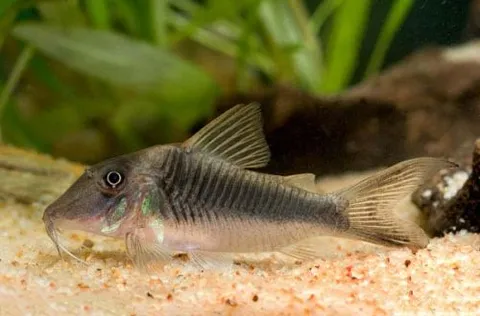
Corydoras treitlii
Corydoras treitlii, scientifically known as Corydoras treitlii, is a representative of the Callichthyidae family, also known as Armored Catfishes. This fish comes from the coastal drainages of north-eastern Brazil, in…
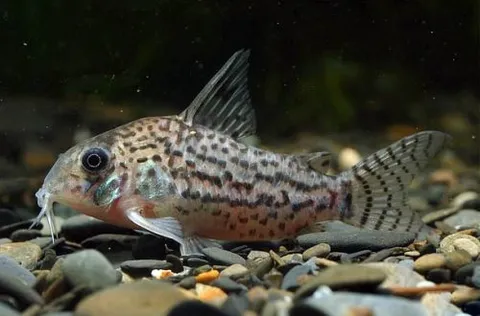
Corydoras acrensis
The Acre Corydoras, known as Corydoras acrensis, belongs to the armored catfish family, Callichthyidae. This fish gets its name from its discovery location – the Brazilian state of Acre, situated on the border with Peru…
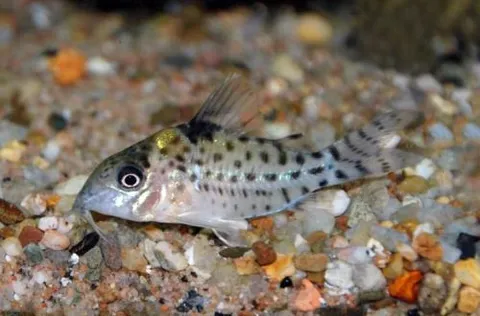
Corydoras ambiacus
The scientific name Corydoras ambiacus is applied to the Corydoras ambiacus catfish, or Cory Ambiacus catfish, which belongs to the family Callichthyidae (Armored or Callichthyid Catfish). Its homeland is South America,…
Corydoras geryi
The Bolivian Corydoras, scientifically known as Corydoras geryi, belongs to the family Callichthyidae (Armored Catfishes). This fish originates from South America, with its natural habitat concentrated in the Mamoré…