Temperature23 – 27 °C
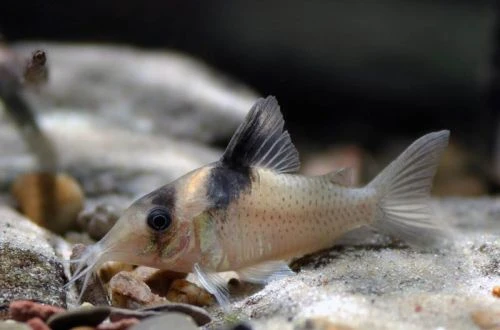
Amanda Jane's Corydoras, scientifically known as Corydoras amandajanea, belongs to the family Callichthyidae, which comprises armored or callichthyid catfishes. This species was named in honour of Mrs Amanda Jane Sands; it was described in 1995. Wild specimens of these corydoras were found in the Brazilian municipality of São Gabriel da Cachoeira, in one of the tributaries of the Rio Negro. It is presumed that their natural habitat is limited to the upper reaches of the Rio Negro, surrounded by dense Amazonian forests.
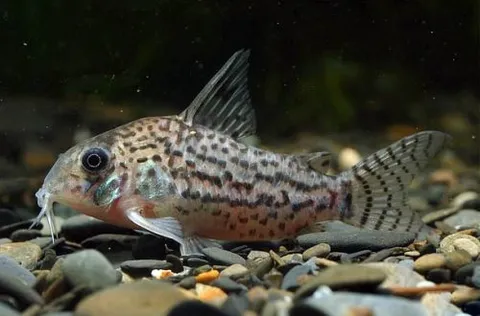
Adults of this species typically reach up to 6 cm in length. Their bodies have a light silvery or beige coloration, and depending on the specific population, dark speckles may be observed. Their fins are semi-transparent. One of their characteristic features is a noticeable black spot located at the base of the dorsal fin, as well as a black stripe on the head. A reddish pigment appears between these dark elements.
The species inhabits South America, primarily the northern part of Brazil, including the Rio Negro basin and its tributary, the Uarinabé. In nature, it prefers calm sections of rivers with soft sandy or silty bottoms, often found in areas with dense vegetation and fallen leaves, where water parameters are characterized by softness and slight acidity.
This is a peaceful schooling fish, most active during twilight hours. For their comfort, it is recommended to keep a group of 5–6 or more individuals. Compatibility with other species is high, but they should not be kept with aggressive fish. When frightened or stressed, corydoras can release toxic mucus, which should be considered when transporting them in a limited volume of water.
Generally, the fish offered for sale are descendants of wild relatives that have successfully adapted to life in artificial aquarium conditions over several generations. Thanks to this, their keeping will not cause great difficulties. The care of aquariums housing Amanda’s Jane Corydoras is similar to the requirements of most other freshwater fish. The key is to maintain water purity, ensure acceptable hydrochemical parameters, and prevent the accumulation of organic waste. An important aspect is also related to nutrition. Although these fish are unpretentious and willing to accept a variety of foods (be it dry, freeze-dried, live, or frozen), the quality of the products offered cannot be ignored. The daily diet should consist exclusively of high-quality feeds from trusted manufacturers. Behavior and compatibility. These fish are characterized by a calm and friendly nature. They prefer to be in a group of their own kind, so it is recommended to acquire at least 4–6 corydoras. Corydoras are an excellent choice for a community tank with other peaceful species. Avoid cohabitation with territorial bottom-dwelling species, as well as aggressive or predatory fish.
An omnivorous species, feeding on small invertebrates and organic detritus in nature. In the aquarium, the diet should be based on high-quality sinking foods, such as tablets or granules for bottom-dwelling fish. Dietary variety is achieved by adding frozen foods, including bloodworms, artemia, or tubifex, which the fish consume from the substrate surface.
Breeding requires a separate spawning tank. Stimulation is provided by a partial water change with cooler water and abundant protein feeding. The female lays eggs on smooth surfaces, such as broad plant leaves or flat stones. After spawning, the parents must be removed to prevent them from eating the eggs. Fry are sensitive to water quality and require regular water changes.
The species has robust health when kept in proper conditions. The main danger is damage to the delicate barbels from coarse or sharp substrate, which can lead to bacterial infections. Sensitivity to salt is an important factor: adding salt to the aquarium is unacceptable, as it is detrimental to scaleless fish. Prevention includes maintaining substrate cleanliness and regular filtration.
When purchasing, choose active individuals with intact fins and undamaged barbels. It is important to ensure there are no white spots, ulcers, or signs of emaciation on the body. Healthy fish should show interest in foraging for food on the bottom. Avoid purchasing individuals from tanks with clear signs of other fish dying or poor water quality.
The essentials: size, tank volume, water parameters and care
An adult reaches 6 cm in length. Plan the tank around the maximum size: the fish quickly outgrows a cramped setup.
The recommended volume is 80 L. A smaller tank speeds up nitrate build-up and raises stress levels.
Temperature 23–27 °C, pH 6–7.5, hardness 2–12 dGH. Stability matters more than exact values: sudden swings are harder on the fish than a small deviation from the ideal.
Around 8 years when kept properly. Lifespan depends directly on tank volume, water quality and a varied diet.
Temperament: peaceful (regular). Keep this in mind when choosing tank mates.
Recommended setup: small group (5–6 individuals). Ignoring this is a common cause of stress and disease.
Diet type: sinking (any). Feed small portions that are finished within a couple of minutes — overfeeding does more harm than underfeeding.
The scientific name of the species is Corydoras amandajanea, family Armored Catfish (Callichthyidae).
The water suits 197 of 208 plants in the catalogue — the easiest ones are shown first.
Afzelius's AnubiasAnacharisAnubiasBrazilian PennywortDwarf CloverDwarf CloverDwarf HygrophilaDwarf SagittariaDwarf ValGuppy GrassHornwortJava FernJava MossMoneywortMud SwordNair's LagenandraNarrow Leaf AnacharisNarrow-leaf CloverStringy MossSüsswassertangTaiwan MossTape GrassTemple PlantUssuri Watermilfoil
Matched by family, categories and overlapping keeping conditions
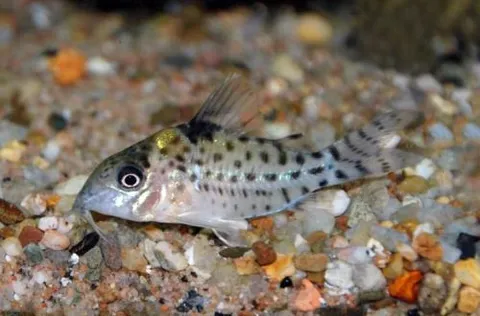
Corydoras ambiacus
The scientific name Corydoras ambiacus is applied to the Corydoras ambiacus catfish, or Cory Ambiacus catfish, which belongs to the family Callichthyidae (Armored or Callichthyid Catfish). Its homeland is South America,…
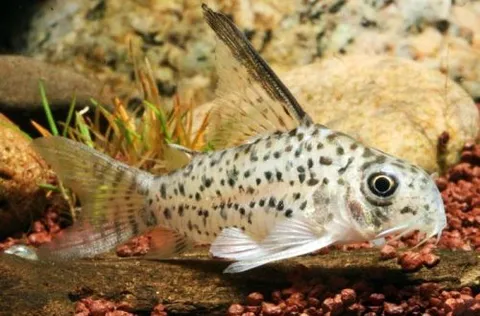
Corydoras armatus
Corydoras armatus, also known as the Armored Corydoras, belongs to the family Callichthyidae (armored catfish), and its scientific name is Corydoras armatus. The word “armatus” itself comes from Latin and translates as…
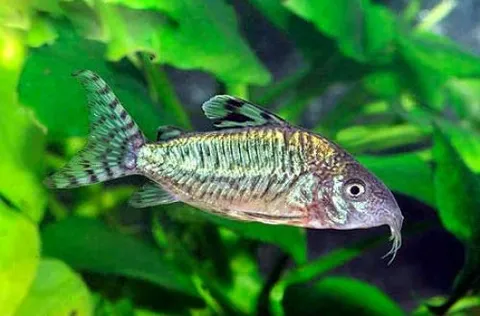
Corydoras geryi
The Bolivian Corydoras, scientifically known as Corydoras geryi, belongs to the family Callichthyidae (Armored Catfishes). This fish originates from South America, with its natural habitat concentrated in the Mamoré…
Corydoras acrensis
The Acre Corydoras, known as Corydoras acrensis, belongs to the armored catfish family, Callichthyidae. This fish gets its name from its discovery location – the Brazilian state of Acre, situated on the border with Peru…