Temperature20 – 25 °C
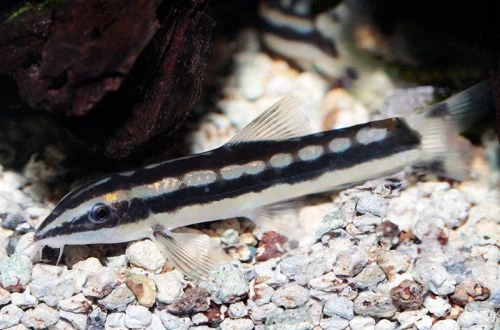
The scientific name Ambastaia nigrolineata indicates that this fish belongs to the family Botiidae, specifically to the species Ambastaia nigrolineata. Among loaches, this species is not as frequently available for sale as many of its close relatives. It is characterized by a calm and peaceful disposition. Keeping it is quite simple, which allows the fish to be used in community tanks.
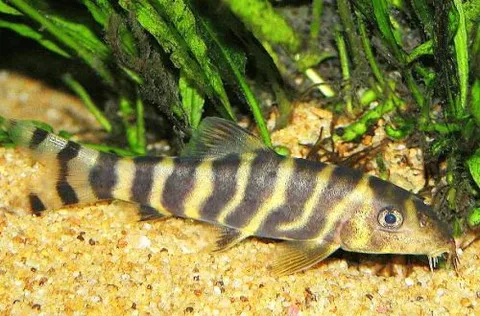
Adults typically reach 7–8 cm in length. Sexual dimorphism in this species is weakly expressed, making sex determination difficult. The body pattern consists of alternating wide black and light horizontal stripes, with the belly remaining white. In juveniles, the upper light stripe has many vertical crossbars. Near the mouth on the head are sensitive barbels that help the fish find food on the bottom.
The natural habitat of this species is in Southern China, in Yunnan province. The fish inhabits the upper reaches of the Lancang Jiang River basin, also known as the Mekong in China. Wild populations have also been noted in Laos, in the Nan River (a left tributary of the Mekong). Typical biotopes are small streams with sandy bottoms, clear water, and moderate currents.
This peaceful and calm species coexists well with many fish of similar size and temperament that prefer similar conditions. However, avoid keeping Ambastaia nigrolineata with ornamental fish that have long fins, as they may be damaged. It is recommended to keep them in a group of at least 5 individuals, and the best option would be to acquire a school of 10 or more fish.
For a group of 5 fish, the minimum aquarium volume is 80 liters. Soft substrates such as sand or fine gravel are used for decoration. Snags overgrown with ferns and mosses, as well as large boulders, will also be appropriate. With stone arrangements, you can create grottoes and crevices where Ambastaia will gladly hide. Favorable conditions for keeping include subdued lighting, moderate current, and high water quality. A reliable filtration system and weekly water changes of 30–50% of the volume will help avoid excessive accumulation of organic waste.
The diet includes all types of sinking foods, and it is important that they contain vegetable components. An optimal menu may include dry granules or flakes in combination with frozen foods such as bloodworms or brine shrimp, or pieces of earthworms and mollusks. You can also offer pieces of vegetables (e.g., zucchini, spinach, cucumber) secured to the bottom.
In their natural environment, the breeding period for Ambastaia is associated with annual migrations, which cannot be replicated in a home aquarium. In specialized fish farms, fry are obtained through hormonal injections.
Health problems usually arise only as a result of injuries or keeping in unsuitable conditions, which leads to a weakening of the immune system and, as a rule, provokes the development of various diseases. At the first signs of illness, the primary task is to check the water parameters for excesses or dangerous concentrations of toxic substances (nitrates, nitrites, ammonia, etc.). After bringing all indicators back to normal, treatment can begin.
When selecting individuals, pay attention to their activity and the integrity of their skin. A healthy fish should show curiosity, swim in the water column or actively explore the bottom, rather than constantly hiding in the corners of the aquarium. Avoid specimens with signs of emaciation, sunken bellies, damaged fins, or visible sores on the body. — ensure there is no white film or spots indicating skin diseases; — check the integrity of the barbels, as their damage indicates poor keeping conditions or incorrect substrate; — prefer individuals that show interest in the offered food in the presence of the buyer.
The essentials: size, tank volume, water parameters and care
An adult reaches 7–8 cm in length. Plan the tank around the maximum size: the fish quickly outgrows a cramped setup.
The recommended volume is 80 L. A smaller tank speeds up nitrate build-up and raises stress levels.
Temperature 20–25 °C, pH 5.5–7.5, hardness 5–15 dGH. Stability matters more than exact values: sudden swings are harder on the fish than a small deviation from the ideal.
Around 7 years when kept properly. Lifespan depends directly on tank volume, water quality and a varied diet.
Temperament: peaceful (regular). Keep this in mind when choosing tank mates.
Recommended setup: small group (5–6 individuals). Ignoring this is a common cause of stress and disease.
Diet type: sinking (any). Feed small portions that are finished within a couple of minutes — overfeeding does more harm than underfeeding.
The scientific name of the species is Ambastaia nigrolineata, family Botiidae. It also appears in the literature as: Botia nigrolineata, Yasuhikotakia nigrolineata.
The water suits 197 of 208 plants in the catalogue — the easiest ones are shown first.
Afzelius's AnubiasAnacharisAnubiasBrazilian PennywortDwarf CloverDwarf CloverDwarf HygrophilaDwarf SagittariaDwarf ValGuppy GrassHornwortJava FernJava MossMoneywortMud SwordNarrow Leaf AnacharisNarrow-leaf CloverStringy MossSüsswassertangTaiwan MossTape GrassTemple PlantUssuri WatermilfoilWater Wisteria
Matched by family, categories and overlapping keeping conditions
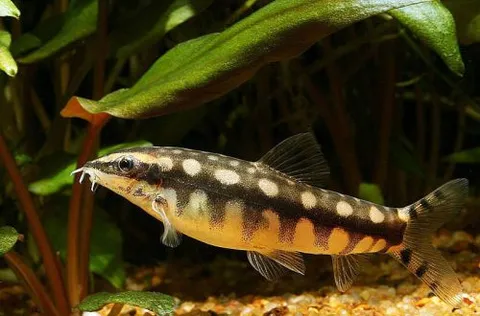
Ambastaia sidthimunki
The Dwarf Loach, scientifically known as Ambastaia sidthimunki, is a member of the Botiidae family. This undemanding and relatively easy-to-keep fish is characterized by its peaceful nature and remarkable body pattern.…
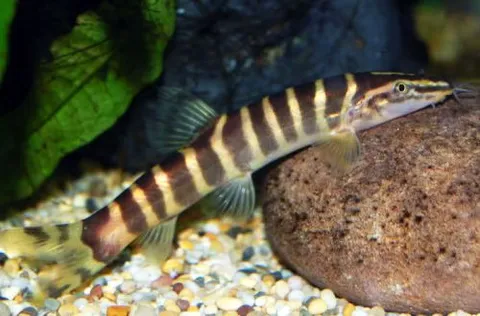
Sinibotia pulchra
Botia pulchra, or Golden Zebra Loach (scientific name Sinibotia pulchra), belongs to the family Botiidae (Loaches). This fish is characterized by its peaceful nature and undemanding care requirements, making it an…
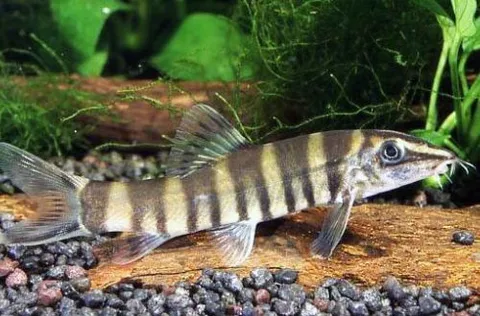
Sinibotia robusta
The Chinese Loach, known scientifically as Sinibotia robusta, belongs to the family Botiidae. This fish is characterized by its ease of care and unpretentiousness, coexisting well with other species, which makes it an…
Botia dario
Botia dario, also known as the Bengal Loach (scientific name Botia dario), belongs to the family Botiidae (Loaches). This fish is undemanding and easy to keep, coexisting well with many popular aquarium inhabitants. It…