Temperature23 – 28 °C
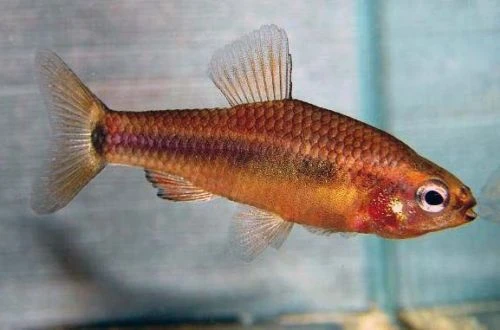
Neolebias ansorgii, or Ansorg's Neolebias, belongs to the family Distichodontidae. It is rarely found for sale, which is due to its specific requirements for keeping conditions. Often, these fish are kept improperly by suppliers, causing their bright coloration to fade, reducing interest in them among ordinary aquarists. Nevertheless, with the right approach, they could become worthy competitors to many popular aquarium inhabitants.
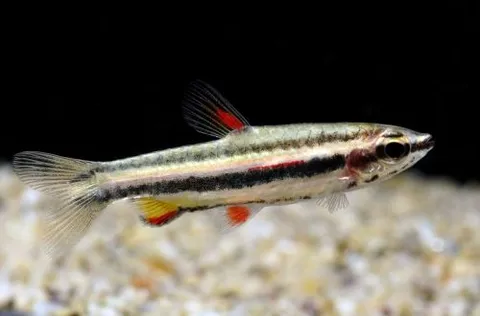
Adults reach approximately 3.5 cm in length. They are distinguished by their bright, iridescent coloration. Males have a predominantly reddish-orange body with a noticeable dark stripe along the lateral line and fin edging. Under certain lighting, a greenish tint can be observed. Females, although slightly larger than males, appear more subdued; their coloration is predominantly light blue.
The natural habitat of this species is in equatorial Africa, in countries such as Cameroon, the Democratic Republic of Congo, Nigeria, Gabon, and Benin. Neolebias ansorgii prefers to settle in numerous swamps and small bodies of water with abundant vegetation, as well as in the small streams and rivers that flow into them.
This peaceful and extremely timid species is completely unable to compete for food even with other miniature fish of a similar temperament. It is recommended to keep them in a species-specific aquarium, in a pair or a small group, which is also due to their specific habitat requirements.
For successful keeping, a small, shallow aquarium with a volume of at least 40 L and a height not exceeding 20 cm is necessary. The conditions in it should mimic equatorial swamps. Dark, peat-based substrate is used for decoration, along with many snags, roots, and branches, as well as dense thickets of plants, including floating ones. It is appropriate to place dried leaves and/or deciduous tree cones on the bottom. As they decompose, they will enrich the water with tannins, giving it a characteristic light brown tint. Leaves should be dried beforehand, then soaked until they sink. They need to be replaced every 1–2 weeks. Lighting should be subdued. In the filtration system, it is recommended to use alder cones and dried leaves, which will help maintain an acidic pH level with low carbonate hardness. Aquarium care includes weekly partial water changes (10–15%) with fresh water and regular cleaning of the substrate from organic residues, such as uneaten food and excrement.
Frozen and live foods are preferred for these fish. Although they can adapt to dry foods, it is important to choose products only from trusted, well-established manufacturers, as the quality of the food directly affects the brightness of their coloration.
Successful breeding of these fish in home aquariums is quite rare. It is known that females lay up to 300 eggs, although their number usually does not exceed 100. The eggs are initially very small, but by absorbing water, they gradually increase in size and become visible to the naked eye. The incubation period lasts only 24 hours. After 2–3 days, the fry begin to swim freely in search of food. They grow quickly and reach sexual maturity by the seventh month of life. Since Ansorg's Neolebias does not show parental care for its offspring, spawning is carried out in a separate, smaller tank, decorated similarly to the main aquarium. To protect the eggs, the bottom is covered with a fine mesh or a layer of Java moss. During the breeding period, the fish are placed in this temporary spawning tank and then returned.
A balanced ecosystem in an aquarium with optimal keeping conditions is the best protection against possible diseases. Therefore, if the fish's behavior has changed, its coloration has faded, unusual spots or other symptoms have appeared, the first step should be to check the water parameters. If necessary, normalize them, and only then proceed with treatment.
Caution should be exercised when purchasing, as this species is rarely available and often kept in unsuitable conditions. A healthy specimen should be active, without visible fin damage, ulcers, or plaque on the body. Avoid acquiring fish with dull coloration, as this may be a sign of chronic stress or exhaustion. Given the timid nature of the species, fish may hide in the store, so it is important to ask the seller to encourage their activity for visual inspection. It is advisable to clarify the water parameters in which the fish are kept to minimize stress during adaptation to new conditions.
The essentials: size, tank volume, water parameters and care
An adult reaches 3.5 cm in length. Plan the tank around the maximum size: the fish quickly outgrows a cramped setup.
The recommended volume is 40 L. A smaller tank speeds up nitrate build-up and raises stress levels.
Temperature 23–28 °C, pH 5–6, hardness 5–12 dGH. Stability matters more than exact values: sudden swings are harder on the fish than a small deviation from the ideal.
Around 3 years when kept properly. Lifespan depends directly on tank volume, water quality and a varied diet.
Temperament: peaceful (regular). Keep this in mind when choosing tank mates.
Recommended setup: both solitary and in group (flexible). Ignoring this is a common cause of stress and disease.
Diet type: any (universal). Feed small portions that are finished within a couple of minutes — overfeeding does more harm than underfeeding.
The scientific name of the species is Neolebias ansorgii, family Distichodontidae. It also appears in the literature as: Micraethiops ansorgii, Nannaethiops geisleri, Neolebias landgrafi.
The water suits 171 of 208 plants in the catalogue — the easiest ones are shown first.
African Onion PlantAmazon FrogbitAmazon SwordAnacharisAnubiasArrowhead CryptDwarf CloverDwarf CloverDwarf HygrophilaDwarf SagittariaGuppy GrassHornwortJava FernJava MossMoneywortMud SwordNair's LagenandraNarrow Leaf AnacharisNarrow-leaf CloverStringy MossSüsswassertangTaiwan MossTemple PlantUssuri Watermilfoil
Matched by family, categories and overlapping keeping conditions
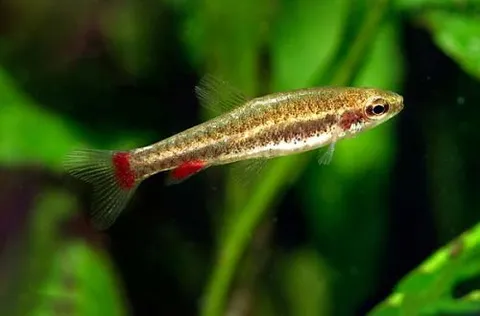
Nannostomus anduzei
Nannostomus anduzei, known scientifically as Nannostomus anduzei, belongs to the family Lebiasinidae. The fish was named in honor of the Venezuelan biologist and explorer Pablo Anduze, who first provided a detailed…
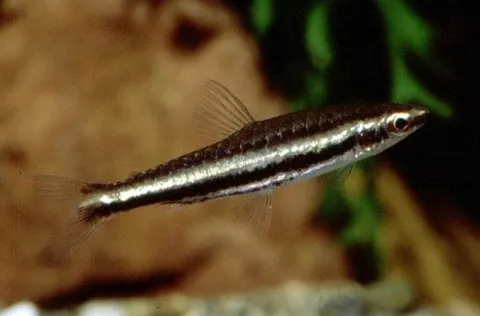
Nannostomus digrammus
Nannostomus digrammus, known as the two-striped nannostomus, is a member of the Lebiasinidae family. It is not frequently encountered by hobbyists in the aquarium trade, usually arriving in shipments with other…
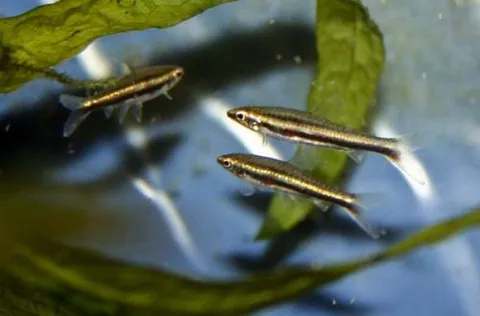
Nannostomus minimus
Nannostomus minimus, with the Latin name Nannostomus minimus, belongs to the family Lebiasinidae. It is quite rare among amateur aquarists. These fish are often found as incidental bycatch in shipments with other…
Nannostomus marginatus
The Dwarf Pencilfish, or Nannostomus marginatus, belongs to the family Lebiasinidae. These active and undemanding fish can become a true adornment to almost any freshwater aquarium. Thanks to their simplicity, they are…