Temperature22 – 28 °C
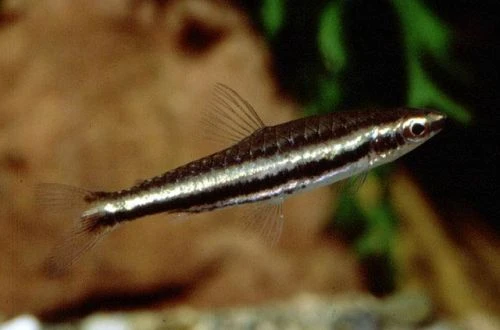
Nannostomus digrammus, known as the two-striped nannostomus, is a member of the Lebiasinidae family. It is not frequently encountered by hobbyists in the aquarium trade, usually arriving in shipments with other Nannostomus species. Like its relatives, this species is easy to keep and coexists wonderfully with other peaceful aquarium inhabitants.
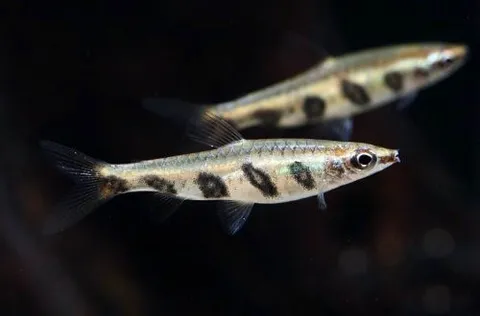
Adults can reach up to 3 cm in length. Sexual dimorphism is weakly expressed. The differences between males and females lie in the male's enlarged anal fin; otherwise, they are practically identical. Body coloration varies from gray to silvery. The characteristic pattern consists of two dark stripes running from head to tail. The upper stripe may be less noticeable.
The natural habitat of this species covers the central part of the Amazon River basin in South America, including major tributaries such as the Madeira, Trombetas, and Tapajós. The fish prefer small streams, slow-flowing rivers, flooded areas, and oxbow lakes. During the rainy season, they swim into flooded rainforest areas. They typically inhabit places with abundant aquatic vegetation and numerous snags.
This peaceful and sociable fish species can be a good neighbor for other species of similar size and temperament. Although nannostomus live in groups, they cannot be called truly schooling fish, as males tend to compete with each other for the attention of females. Coexistence in a group for such small creatures is an instinctive defense mechanism. It is desirable to maintain a group size of at least 10 individuals.
For a group of 10 fish, the minimum recommended aquarium volume is 40 L. The aquarium decor should ideally include many aquatic plants, as well as natural or artificial branches, tree roots, and other natural decorations. An additional, though not mandatory, design element can be leaves from certain trees, placed on the bottom. As they decompose, they release tannins, creating conditions similar to their natural habitat: the water acquires a characteristic chemical composition and brownish tint. Since two-striped nannostomus inhabit bodies of water with weak currents, it is important to prevent strong water flow in the aquarium. The main source of internal current is often the filtration system. When choosing a filter, preference should be given to models that provide minimal water movement while maintaining the necessary degree of purification. In some cases, a simple air-driven filter is sufficient.
Being an omnivorous species, in a home aquarium, the two-striped nannostomus will readily accept various appropriately sized foods intended for aquarium fish, presented in dry, frozen, or live form.
Due to the limited distribution of this species in amateur aquaristics, there is currently no reliable data on successful breeding of two-striped nannostomus in home conditions.
Health problems usually arise only as a result of injuries or keeping in unsuitable conditions, which leads to a weakening of the immune system and, as a rule, provokes the development of various diseases. At the first signs of illness, the primary task is to check the water parameters for excesses or dangerous concentrations of toxic substances (nitrates, nitrites, ammonia, etc.). After bringing all indicators back to normal, treatment can begin.
When purchasing, choose active individuals that stay in a group and show natural curiosity. Examine the fish for any fin damage, ulcers, or white film on the body. Avoid specimens with signs of emaciation, sunken bellies, or lethargic, apathetic behavior. Given the species' sensitivity to water quality, it is recommended to ask the seller about the keeping parameters in the store and avoid buying fish from aquariums with visible signs of disease or deceased individuals.
The essentials: size, tank volume, water parameters and care
An adult reaches 3 cm in length. Plan the tank around the maximum size: the fish quickly outgrows a cramped setup.
The recommended volume is 40 L. A smaller tank speeds up nitrate build-up and raises stress levels.
Temperature 22–28 °C, pH 5–7, hardness 1–10 dGH. Stability matters more than exact values: sudden swings are harder on the fish than a small deviation from the ideal.
Around 4 years when kept properly. Lifespan depends directly on tank volume, water quality and a varied diet.
Temperament: peaceful (regular). Keep this in mind when choosing tank mates.
Recommended setup: large group (10+ individuals). Ignoring this is a common cause of stress and disease.
Diet type: any (universal). Feed small portions that are finished within a couple of minutes — overfeeding does more harm than underfeeding.
The scientific name of the species is Nannostomus digrammus, family Lebiasinidae. It also appears in the literature as: Poecilobrycon digrammus.
The water suits 198 of 208 plants in the catalogue — the easiest ones are shown first.
Afzelius's AnubiasAnacharisAnubiasBrazilian PennywortDwarf CloverDwarf CloverDwarf HygrophilaDwarf SagittariaDwarf ValGuppy GrassHornwortJava FernJava MossMoneywortMud SwordNair's LagenandraNarrow Leaf AnacharisNarrow-leaf CloverStringy MossSüsswassertangTaiwan MossTape GrassTemple PlantUssuri Watermilfoil
Matched by family, categories and overlapping keeping conditions
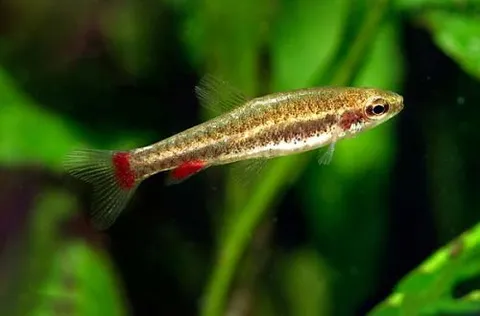
Nannostomus anduzei
Nannostomus anduzei, known scientifically as Nannostomus anduzei, belongs to the family Lebiasinidae. The fish was named in honor of the Venezuelan biologist and explorer Pablo Anduze, who first provided a detailed…
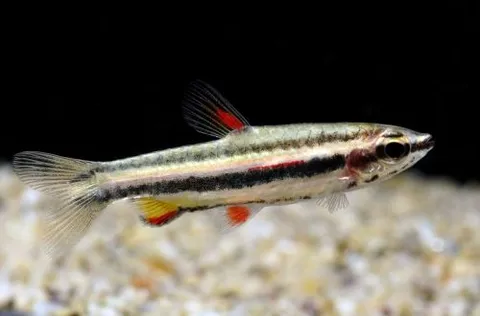
Nannostomus marginatus
The Dwarf Pencilfish, or Nannostomus marginatus, belongs to the family Lebiasinidae. These active and undemanding fish can become a true adornment to almost any freshwater aquarium. Thanks to their simplicity, they are…
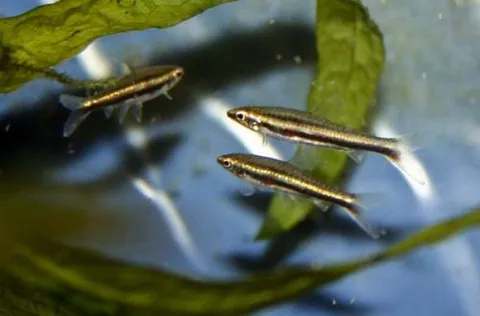
Nannostomus minimus
Nannostomus minimus, with the Latin name Nannostomus minimus, belongs to the family Lebiasinidae. It is quite rare among amateur aquarists. These fish are often found as incidental bycatch in shipments with other…
Nannostomus espei
Nannostomus espei, known as the Banded Pencilfish, belongs to the family Lebiasinidae. It is quite popular in the aquarium hobby, but its widespread distribution is hindered by certain difficulties in breeding. However,…