Temperature23 – 26 °C
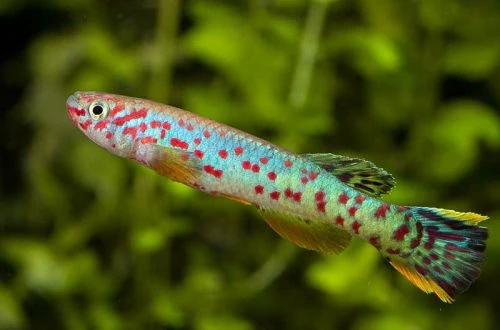
Fundulopanchax scheeli, known as Aphyosemion scheeli, belongs to the family Nothobranchiidae. This fish was named in honor of the Danish ichthyologist Jorgen Jacob Scheel (1916–1989). Interestingly, until 2002, the species was classified in the genus Aphyosemion, but was subsequently moved to the genus Fundulopanchax, although the former, more familiar name, has been retained.
Adult Aphyosemion scheeli reach 5–6 cm in length. A distinguishing feature of males is their larger size and vibrant coloration: a blue body dotted with noticeable pink specks. The fins and tail also have a variegated pattern with contrasting yellow edges. Females, as a rule, are smaller and significantly more modestly colored. Outwardly, this species resembles the closely related Aphyosemion gardneri, but differs in having fewer pink spots.
The natural habitats of this African fish are limited to the border regions of southeastern Nigeria and northwestern Cameroon. Here, it is found in small streams, rivulets, and lakes located deep within tropical forests.
Although these fish are generally considered calm and peaceful, males can show some animosity towards each other. In a small aquarium, it is recommended to keep a group consisting of one male and several females. When choosing tank mates, preference should be given to miniature and peaceful species, such as tetras, rasboras, or Corydoras catfish.
For a group of 4–5 Aphyosemion scheeli, an aquarium of 30–40 L will be required. A dark, soft substrate is preferred for decoration, as well as dense thickets of shade-loving plants, mosses, and ferns. It is also useful to place several snags or other decorative elements that can serve as shelters. Lighting should be subdued, and floating plants will help create additional shade and prevent fish from jumping out of the water. An important aspect of keeping them is providing soft, slightly acidic water. Filtration should not be excessively powerful to avoid strong water movement. In small aquariums, external or simple airlift filters can be used. Standard aquarium care includes weekly partial water changes with fresh water, regular removal of organic debris (uneaten food, excrement), and prophylactic inspection of equipment.
For these fish, protein-rich foods should be the main dietary component. These include live or frozen insect larvae, bloodworms, brine shrimp, and other small invertebrates. Over time, they may also get used to dry foods, such as flakes or granules.
Breeding this species does not present significant difficulties. The fish need to be provided with a complete diet and suitable spawning sites, such as dense thickets of fine-leaved plants or mosses. The incubation period for the eggs is about 14 days. It is advisable to transfer the hatched fry to a separate aquarium with similar water parameters. In the first days of life, they will need micro-food, such as infusoria or specialized suspensions. Later, they will be able to feed on brine shrimp nauplii and other similar products. Fry grow quite quickly, reaching sexual maturity by 4–5 months.
Creating suitable living conditions minimizes the risk of disease. The use of live food can pose a certain threat, as it is often a carrier of parasites. However, the strong immune system of a healthy fish successfully copes with such challenges.
When selecting individuals, attention should be paid to their activity and skin condition. Healthy fish should show curiosity, have no visible damage, sores, film, or signs of emaciation. Avoid purchasing fish that appear lethargic, constantly stay near the surface, or have clamped fins. Since the species can be sensitive to transportation and keeping conditions, it is recommended to ask the seller about the current diet and water parameters. Avoid purchasing individuals from aquariums with clear signs of illness in their tank mates, as any stressful factors in the store can provoke hidden infections.
The essentials: size, tank volume, water parameters and care
An adult reaches 5–6 cm in length. Plan the tank around the maximum size: the fish quickly outgrows a cramped setup.
The recommended volume is 40 L. A smaller tank speeds up nitrate build-up and raises stress levels.
Temperature 23–26 °C, pH 5.5–7, hardness 2–9 dGH. Stability matters more than exact values: sudden swings are harder on the fish than a small deviation from the ideal.
Around 3 years when kept properly. Lifespan depends directly on tank volume, water quality and a varied diet.
Temperament: peaceful (regular). Keep this in mind when choosing tank mates.
Recommended setup: harem (1 male and several females). Ignoring this is a common cause of stress and disease.
Diet type: high protein (predominantly meat). Feed small portions that are finished within a couple of minutes — overfeeding does more harm than underfeeding.
The scientific name of the species is Fundulopanchax scheeli, family Nothobranchiidae. It also appears in the literature as: Aphyosemion akamkpaense, Aphyosemion burundi, Aphyosemion scheeli.
The water suits 197 of 208 plants in the catalogue — the easiest ones are shown first.
Afzelius's AnubiasAnacharisAnubiasBrazilian PennywortDwarf CloverDwarf CloverDwarf HygrophilaDwarf SagittariaDwarf ValGuppy GrassHornwortJava FernJava MossMoneywortMud SwordNair's LagenandraNarrow Leaf AnacharisNarrow-leaf CloverStringy MossSüsswassertangTaiwan MossTape GrassTemple PlantUssuri Watermilfoil
Matched by family, categories and overlapping keeping conditions
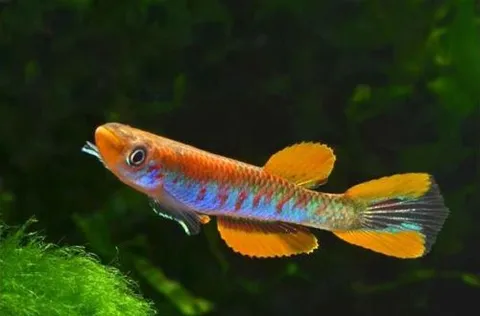
Aphyosemion mimbon
Aphyosemion mimbon, known in the aquarium hobby as Mimbon Killifish, belongs to the family Nothobranchiidae. This small fish attracts attention with its bright, rich coloration. Its keeping does not present any…
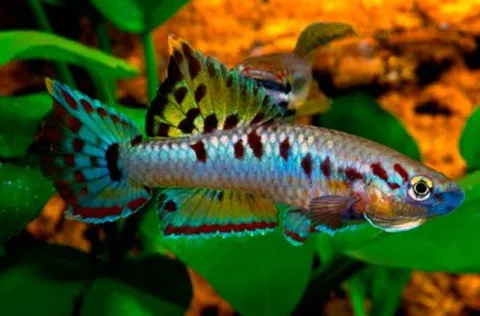
Aphyosemion bivittatum
Aphyosemion bivittatum, known as the Two-striped Aphyosemion, belongs to the family Nothobranchiidae. Its natural habitat is in Africa, where the fish inhabits small river systems and streams. These bodies of water are…
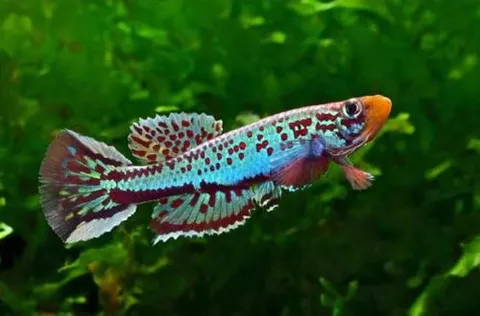
Aphyosemion cameronense
Aphyosemion cameronense, known in scientific literature as Aphyosemion cameronense, is a member of the family Nothobranchiidae. This small fish is distinguished by its bright coloration and rather spirited character.…
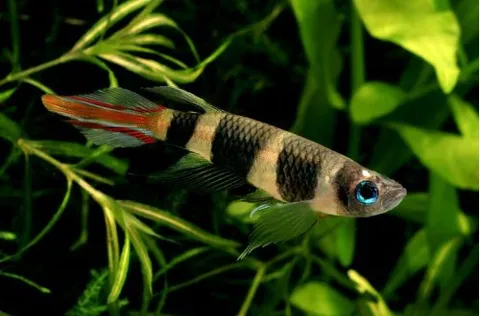
Epiplatys annulatus
The Torch Epiplatys, or Clown Killifish (scientific name Epiplatys annulatus), belongs to the family Nothobranchiidae. This fish attracts with its vibrant coloration, activity, and unique appearance. It is considered…