Temperature17 – 24 °C
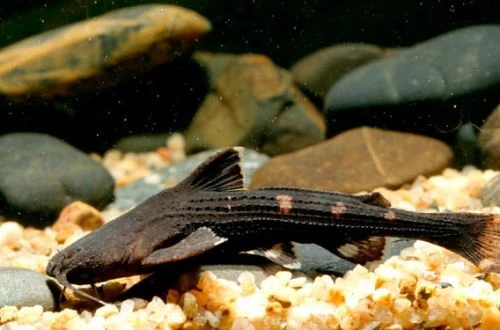
The Asian Banjo Catfish, scientifically named Acrochordonichthys rugosus, belongs to the family Akysidae. This variety of catfish is valued by aquarists for its unique and diverse coloration. Keeping it is not difficult if certain conditions are met, however, this species is not recommended for beginner aquarists.
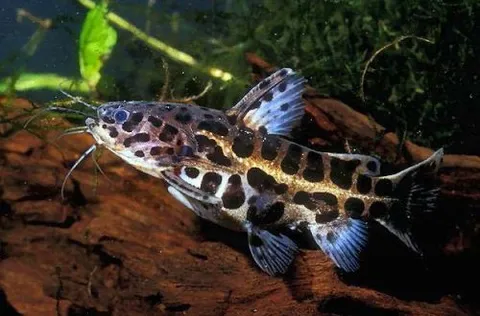
Adult specimens can reach a length of 10–11 cm. The catfish's body is characterized by a broad, flat head that transitions into an elongated caudal section. The pectoral and dorsal fins are equipped with thick, pointed first rays, which resemble spines and serve as protection against predators. Numerous spiny barbs, arranged in rows across the body, perform a similar defensive function. The coloration of these fish can vary greatly, even among individuals living in close proximity and collected from the same body of water. The palette typically includes dark gray, brown, and pale yellow hues.
The natural habitat of these fish is Southeast Asia. They can be found on the islands of Sumatra and Borneo, as well as in Peninsular Malaysia and the southern regions of Thailand. These catfish prefer to live in shallow rivers and streams with fast currents and clear water, where the bottom consists of sand and rocks. They like to hide under snags and in crevices beneath boulders.
Despite its predatory nature, this fish is quite peaceful and does not show aggression. It can coexist with other species of similar size that inhabit the water column or surface. However, this catfish poses a danger to very small aquarium inhabitants. It should also be avoided to keep them with large territorial fish that might attack the catfish. In such a situation, there is a high risk of poisoning, which can be read in more detail in the "Description" section.
The Asian Banjo Catfish is not highly active, so an aquarium of 60 liters or more will be suitable for it. For decoration, rocky substrate, large boulders, and snags can be used to create shelters. Live aquatic plants are not essential; if desired, artificial ones can be used, or undemanding species that can grow on wooden surfaces can be chosen. For example, Anubias, Microsorum pteropus, Crinum, or Bucephalandra species thrive well on snags. The most important aspect of maintenance is ensuring cleanliness and sufficient oxygen saturation of the water. An effective filtration and aeration system handles this task well. However, regular aquarium maintenance procedures should not be neglected. It is necessary to weekly replace a portion of the water (30–50% of the total volume) with fresh water and promptly remove organic waste, such as excrement and food residues.
In natural conditions, this species is a predator, ambushing prey to attack small fish. In a home aquarium, it readily eats fresh or frozen pieces of fish, shrimp, mussels, as well as small earthworms and large bloodworms. If given the opportunity, it will certainly catch a small aquarium inhabitant. Catfish generally do not actively search for food on the bottom but patiently wait for it to appear directly in front of them. It is important to consider this feature when feeding, by providing food directly above their hiding place.
Reliable information about the breeding of this species in aquarium conditions is practically nonexistent. It is assumed that the fish are egg-laying, similar to other members of the family Akysidae. Breeding attempts are considered difficult and are not recommended for beginner aquarists due to a lack of data on the necessary stimuli and specific spawning requirements.
When kept in favorable conditions, fish rarely experience health deterioration. The occurrence of diseases usually indicates problems in keeping, such as polluted water, poor quality food, or injuries. In most cases, eliminating the root cause leads to recovery. However, sometimes medication may be required.
When selecting specimens, attention should be paid to the general condition of the fish: the body should be free of visible damage, ulcers, or unnatural spots, and breathing should be even. A healthy fish usually behaves secretively, preferring to stay in hiding or on the bottom, burrowing into the substrate. Specimens showing signs of emaciation or those that are excessively active during the day should be avoided, as this may indicate stress or illness. When purchasing, it is important to consider that the species can secrete toxic mucus when severely frightened, so transportation should be carried out with caution.
The essentials: size, tank volume, water parameters and care
An adult reaches 10–11 cm in length. Plan the tank around the maximum size: the fish quickly outgrows a cramped setup.
The recommended volume is 60 L. A smaller tank speeds up nitrate build-up and raises stress levels.
Temperature 17–24 °C, pH 5–7, hardness 0–10 dGH. Stability matters more than exact values: sudden swings are harder on the fish than a small deviation from the ideal.
Around 10 years when kept properly. Lifespan depends directly on tank volume, water quality and a varied diet.
Temperament: semi-peaceful (dangerous to smaller ones). Not a predatory species, but small fish that fit in its mouth will eventually be eaten.
Recommended setup: both solitary and in group (flexible). Ignoring this is a common cause of stress and disease.
Diet type: meat / protein (live, frozen, fresh). Feed small portions that are finished within a couple of minutes — overfeeding does more harm than underfeeding.
The scientific name of the species is Acrochordonichthys rugosus, family Akysidae. It also appears in the literature as: Acrochordonichthys buettikoferi, Acrochordonichthys melanogaster, Acrochordonichthys obscurus.
The water suits 197 of 208 plants in the catalogue — the easiest ones are shown first.
Afzelius's AnubiasAnacharisAnubiasBrazilian PennywortDwarf CloverDwarf CloverDwarf HygrophilaDwarf SagittariaDwarf ValGuppy GrassHornwortJava FernJava MossMoneywortMud SwordNarrow Leaf AnacharisNarrow-leaf CloverStringy MossSüsswassertangTaiwan MossTape GrassTemple PlantUssuri WatermilfoilWater Wisteria
Matched by family, categories and overlapping keeping conditions
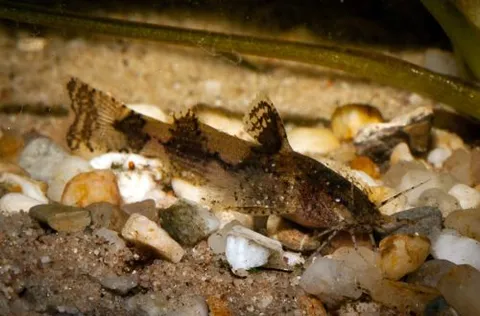
Akysis maculipinnis
The Akysis Catfish, scientifically known as Akysis maculipinnis, is a member of the Akysidae family. This miniature fish, sometimes called tiny, can be difficult to spot in an aquarium due to its predominantly nocturnal…
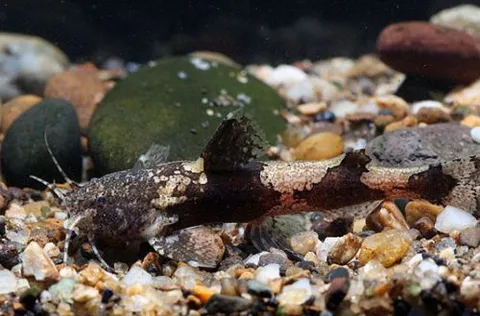
Akysis hendricksoni
Akysis hendricksoni is the scientific name given to this member of the Akysidae family, known as Hendrickson's Akysis. This inconspicuous catfish is not often found in aquariums; it is one of the few members of its…
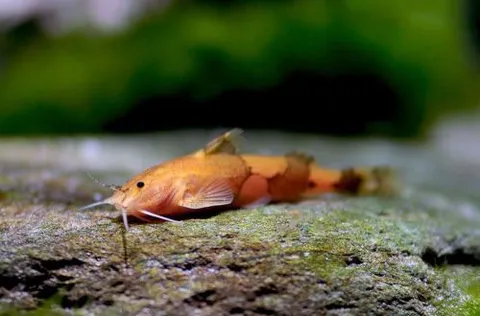
Akysis vespa
Akysis vespa, known as the Orange Stone Catfish or Bumblebee Catfish, belongs to the Akysidae family. This catfish makes an excellent choice for both beginners and experienced aquarists, thanks to its peaceful nature,…
Liosomadoras oncinus
Liosomadoras oncinus is the scientific name for the Jaguar Catfish, a member of the Auchenipteridae family, or Wood Catfishes. These fish originate from South America, inhabiting the Branco River basin, which is a…