Pseudomugilidae

Australian Blue-eye

Pseudomugil signifer

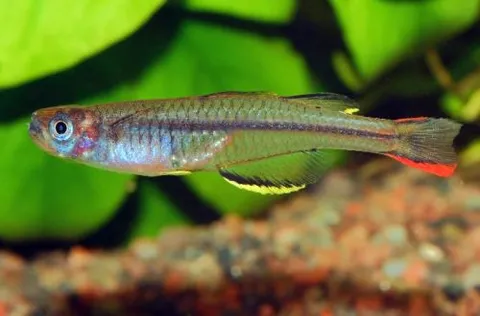
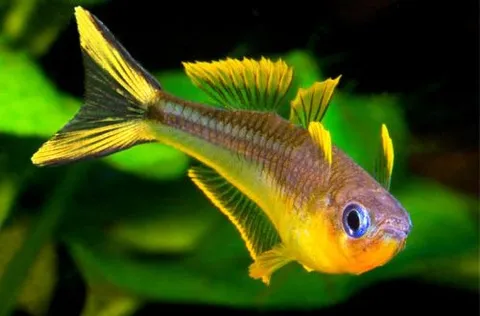
Pseudomugil signifer, the Australian blue-eye, belongs to the family Pseudomugilidae. This fish is remarkable for its unusual appearance and remarkable ability to adapt to diverse living conditions. Its hardiness, ease of care, and compatibility with other peaceful species make it an excellent choice for a community tank.

Tank
from 54 L (14 gal), 60 L (16 gal) recommended
Temperature
20 – 26 °C (68 – 79 °F)
Size in aquarium
7 cm (2.8 in)
Acidity
pH 6–8
Natural rangeRange on the map
  • Eastern Australia area
  • Australia

Tank conditions

Plan the tank stocking
Temperature
20 – 26 °C (68 – 79 °F)
Water pH
Slightly acidic (6) – Slightly alkaline (8)
Water dH
Soft (5) – Hard (15)
Water salinity
wide range from ~1 to ~20 g/L
Size in aquarium
7 cm (2.8 in)
Lifespan
3 years
Temperament
Peaceful (regular)
Toward small fish
not a predator
Required aquarium volume
from 54 L (14 gal), 60 L (16 gal) recommended
Lighting
moderate (regular)
Substrate
any (no restrictions)
Water flow
weak
Swimming level
middle level
Feeding
Any (universal)
Keeping
Group (8–10 individuals)
Jumping
low
  • Lifespan. A lifespan to expect under good care, not a measured value: it depends heavily on tank volume, water quality and diet — and for selectively bred forms, on their origin as well.
  • Toward small fish. Based on the Predators category in the catalog or the temperament in the species parameters. “A risk to small fish” means the species is not a predator by habit, yet will swallow any fish that fits in its mouth.
  • Required aquarium volume. This is a husbandry recommendation, not a measured value: the volume depends on the keeping mode (group (8–10 individuals)), footprint, decor and tank mates.

Care and keeping

Description

Adult size ranges from 3 to 7 cm. Fish vary considerably in size depending on their geographic origin: northern Australian blue-eyes are larger with more elongated fins than those from southern regions. The body has a yellowish tone with a silvery sheen on the head. The species is named for its distinctive blue iris.

Habitat

This fish comes from the east coast of Australia and nearby island territories. The species inhabits diverse natural biotopes: swamps, clear freshwater lakes and streams, and brackish waters, mangrove swamps and salt marshes.

Behavior and Compatibility

Most of these fish are peaceful and calm, getting along well in a community tank with tank mates of similar size and temperament, such as tetras, barbs, catfish and others. Schooling is recommended, with a group of at least 8–10 individuals. The males of northern varieties can be quite aggressive toward each other, especially during spawning, staging fierce fights. Weaker individuals sometimes die from their injuries.

Care and Maintenance

A small school of southern blue-eyes needs a minimum of 60 litres; northern forms require more space due to their larger size. The tank can feature dense plant areas alternating with open swimming space. A few natural or artificial roots add to the aesthetics. If the australian blue-eye was raised in an aquarium or on a farm rather than wild-caught, it will cause no problems. It is enough to recreate water conditions similar to those where it was previously kept. Thanks to its high adaptability, conditions can be gradually changed during tank maintenance to suit your needs and optimize care costs. It can be kept in brackish water at a salt concentration of up to 10–15 g per litre.

Diet

Since this fish feeds at the surface and in the water column, sinking foods are not desirable. When possible, enriching the diet with live foods such as fine bloodworms, brine shrimp and daphnia is recommended.

Breeding and Reproduction

In nature, the breeding season runs from October to December, but in a home aquarium with stable parameters it can begin at any time. Fish use sticky threads to attach eggs to the surface of fine-leaved plants or moss; artificial plants also work. Spawning lasts several days, during which the female lays several batches of eggs that may be fertilized by several males. The incubation period is 10 to 21 days, depending on temperature. These fish lack parental instinct, and adults often eat both their own eggs and fry. In a densely planted tank, a small percentage of offspring may survive. To preserve all the fry, eggs can be carefully moved to a separate tank with identical water conditions, where the young can then be reared. Feed specialized powdered foods and/or brine shrimp nauplii.

Diseases

Health problems arise only with injury or unsuitable conditions that weaken the immune system and lead to disease. At the first signs of illness, check water parameters for values exceeding safe ranges or the presence of toxic substances such as nitrites, nitrates or ammonia. If abnormalities are found, normalize all parameters, then begin treatment.

How to choose

When buying, choose active, vigorous fish with clean fins and no visible damage or coating on the body. Avoid fish showing sluggishness, rapid breathing or clamped fins, as these may indicate stress or hidden disease. Since the species has wide geographic variation, ask the seller about the origin of the stock, as northern and southern populations differ in size and colour intensity. Before purchase, ensure the fish are kept in conditions close to those recommended for the species and show no signs of starvation. Since Pseudomugil signifer is a schooling species, buy a group of 8–10 individuals at once to minimize stress during acclimation to the new tank. If possible, observe the fish in the shop: healthy ones should be curious and show natural social activity.
Compatibility

There are no pair reviews for this species yet — check tankmates in the matcher.

All tankmates

Plants and this fish

Matching water does not mean the plant will stay intact.

Frequently asked questions

The essentials: size, tank volume, water parameters and care

How big does Australian Blue-eye get?

An adult reaches 7 cm in length. Plan the tank around the maximum size: the fish quickly outgrows a cramped setup.

What size aquarium does Australian Blue-eye need?

The recommended volume is 60 L. A smaller tank speeds up nitrate build-up and raises stress levels.

What water parameters does Australian Blue-eye need?

Temperature 20–26 °C, pH 6–8, hardness 5–15 dGH. Stability matters more than exact values: sudden swings are harder on the fish than a small deviation from the ideal.

How long does Australian Blue-eye live?

Around 3 years when kept properly. Lifespan depends directly on tank volume, water quality and a varied diet.

Is Australian Blue-eye aggressive?

Temperament: peaceful (regular). Keep this in mind when choosing tank mates.

How many Australian Blue-eye should be kept together?

Recommended setup: group (8–10 individuals). Ignoring this is a common cause of stress and disease.

What does Australian Blue-eye eat?

Diet type: any (universal). Feed small portions that are finished within a couple of minutes — overfeeding does more harm than underfeeding.

What is the scientific name of Australian Blue-eye?

The scientific name of the species is Pseudomugil signifer, family Pseudomugilidae. It also appears in the literature as: Atherina signata, Atherinosoma jamesonii, Pseudomugil signafer.

Similar fishes

Matched by family, categories and overlapping keeping conditions

Blue-eyed Neon

Blue-eyed Neon

Pseudomugil cyanodorsalis

Pseudomugilidae

Pseudomugil cyanodorsalis, commonly known as the Blue-eyed Neon, belongs to the family Pseudomugilidae. This unique tropical fish shows remarkable adaptability and can even be kept in brackish or marine aquariums,…

Pseudomugil mellis

Pseudomugil mellis

Pseudomugil mellis

Pseudomugilidae

The Honey Blue-eye, or Pseudomugil mellis, belonging to the family Pseudomugilidae, is an interesting choice for aquarists. This active fish is distinguished by its bright coloration and peaceful nature, and is also…

New Guinea Blue-eye

New Guinea Blue-eye

Pseudomugil novaeguineae

Pseudomugilidae

A member of the family Pseudomugilidae, scientifically named Pseudomugil novaeguineae, is known as the New Guinea Blue-eye. This rainbowfish is notable for its vibrant coloration. Although it is considered a peaceful…

Forktail Rainbowfish

Forktail Rainbowfish

Pseudomugil furcatus

Pseudomugilidae

The Forktail Rainbowfish, or Popondetta furcata (Pseudomugil furcatus), a representative of the family Pseudomugilidae, is a vibrant and attractive addition to any freshwater aquarium. This species became available to…

Other scientific names and conservation status

Other scientific names
Atherina signata, Atherinosoma jamesonii, Pseudomugil signafer, Pseudomugil signata
Conservation status
Least concernLC