Temperature22 – 28 °C
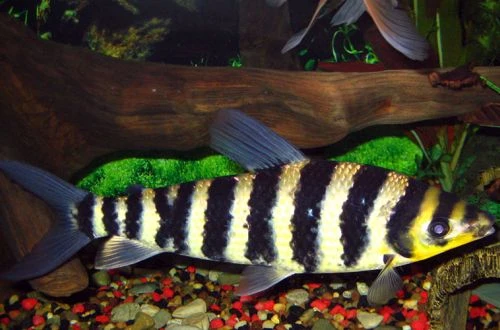
The Banded Leporinus, scientifically known as Leporinus fasciatus, belongs to the Anostomidae family. For many years, this fish has attracted the attention of aquarists due to its characteristic alternating black and yellow stripes, making it one of the most sought-after species for home keeping among tropical fish.
The body of the Banded Leporinus is elongated, tapering smoothly towards the tail, and its head has a pointed shape. A distinctive feature of its appearance is the contrasting yellow and black stripes, the number of which increases as the fish matures.
At the end of the 18th century this fish was described from Suriname; its range covers the Amazon and Orinoco basins in South America. Leporinus inhabit areas with fast currents. During the rainy season, they move to flooded forest areas. When water levels drop, these fish often become trapped in the resulting ponds and backwaters. Their diet consists of algae, plant debris, worms, various insects, and sometimes small fish.
The Banded Leporinus exhibits a peaceful nature if kept in a group of at least 6 individuals, regardless of species; with fewer numbers, they may show signs of aggression. This species coexists well with fish of similar size and temperament but poses a danger to smaller aquarium inhabitants. One of the negative behavioral traits of Leporinus is their "love" for long fins, which they often nip off their tank mates.
A key condition for the well-being of these fish is maintaining high water quality, for which it is recommended to purchase powerful canister filters and additional air stones to ensure effective aeration. Every two weeks, 25% to 50% of the water volume should be replaced with fresh water. It is also important to create sufficient water movement in the aquarium, simulating a river current. Canister filters are usually capable of providing this effect; otherwise, special powerheads can be used. In aquarium decor, preference is given to wooden elements (snags, roots), which not only decorate but also serve as a substrate for the growth of single-celled algae, providing an additional food source. Sand is the preferred substrate, supplemented with several large smooth stones. Fragile decorations should be avoided, as the fish are very active and can easily damage delicate structures. Careful consideration is also needed when choosing plants, as the fish can significantly damage soft leaves and stems.
Since these fish prefer plant-based food, they can be fed specialized commercial foods based on plant components (e.g., vegetable flakes, dried algae, pellets), as well as homemade preparations — finely chopped spinach leaves, lettuce, or young shoots of tender plants. It is important to remember that without sufficient plant food, aquarium plants may suffer.
Attempts at successful breeding in home conditions have not yet been successful, as it is difficult to recreate the necessary conditions of the rainy season and the opportunities for migration characteristic of their natural habitat. In nature, Leporinus are caring parents: the male builds a kind of nest where the female lays her eggs, and he then guards them until the offspring appear.
Fish of this family have a predisposition to skin parasitic diseases due to their physiological characteristics. However, such cases are rare under favorable conditions. A change in water quality will almost certainly lead to such problems.
When choosing a Banded Leporinus, young individuals should be preferred, as they adapt more easily to aquarium conditions. Carefully inspect the fish: the body should be clean, without damage, white film, ulcers, or signs of fungus. Healthy individuals are active, have a clear, contrasting pattern, and tightly clamped fins. Avoid specimens with sluggish behavior, sunken bellies, or signs of emaciation. Given the territorial nature of the species, it is better to acquire a group of 5 or more individuals at once to reduce the risk of intraspecific aggression. Before purchasing, ensure that the fish in the store are kept in conditions close to those required and show no signs of stress from recent transportation.
The essentials: size, tank volume, water parameters and care
An adult reaches 20–37 cm in length. Plan the tank around the maximum size: the fish quickly outgrows a cramped setup.
The recommended volume is 700 L. A smaller tank speeds up nitrate build-up and raises stress levels.
Temperature 22–28 °C, pH 5.5–7.5, hardness 2–20 dGH. Stability matters more than exact values: sudden swings are harder on the fish than a small deviation from the ideal.
Around 10 years when kept properly. Lifespan depends directly on tank volume, water quality and a varied diet.
Temperament: territorial (often aggressive). Keep this in mind when choosing tank mates.
Recommended setup: both solitary and in group (flexible). Ignoring this is a common cause of stress and disease.
Diet type: plant-based (algae, vegetables). Feed small portions that are finished within a couple of minutes — overfeeding does more harm than underfeeding.
The scientific name of the species is Leporinus fasciatus, family Anostomidae. It also appears in the literature as: Chalceus fasciatus, Leporinus faciatus, Leporinus novem.
The water suits 198 of 208 plants in the catalogue — the easiest ones are shown first.
Afzelius's AnubiasAnacharisAnubiasBrazilian PennywortDwarf CloverDwarf CloverDwarf HygrophilaDwarf SagittariaDwarf ValGuppy GrassHornwortJava FernJava MossMoneywortMud SwordNair's LagenandraNarrow Leaf AnacharisNarrow-leaf CloverStringy MossSüsswassertangTaiwan MossTape GrassTemple PlantUssuri Watermilfoil
Matched by family, categories and overlapping keeping conditions
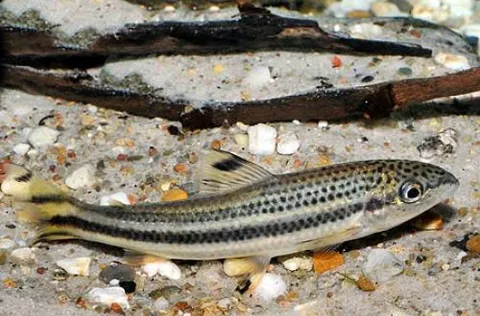
Leporellus vittatus
Leporinus vittatus, a representative of the family Anostomidae, known scientifically as Leporellus vittatus, is a large fish with a distinctive character and rather modest coloration. Its keeping requires a spacious…
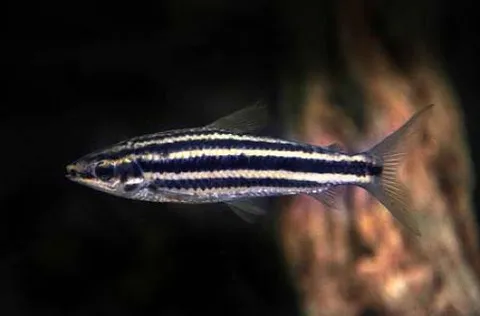
Leporinus striatus
The Four-lined Leporinus, also known as Leporinus striatus, belongs to the family Anostomidae. This fish species inhabits the waters of South America, particularly in the Paraná and Paraguay river basins, covering the…
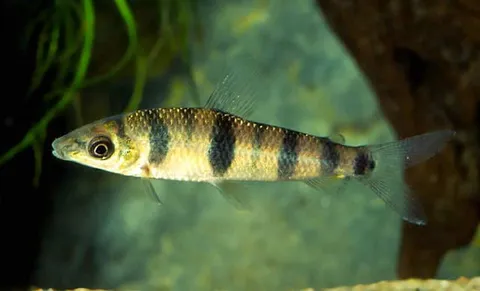
Leporinus pellegrinii
Leporinus pellegrinii, also known as Pellegrin's Leporinus, is a member of the family Anostomidae. Its homeland is the vast expanses of South America; in particular, it is widely distributed throughout the entire length…
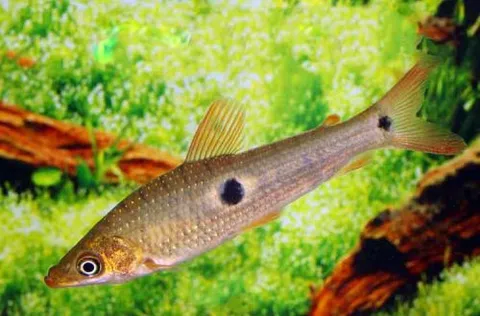
Pseudanos trimaculatus
The Three-spot Anostomus, scientifically known as Pseudanos trimaculatus, belongs to the family Anostomidae, or Headstanders. Previously, this fish was classified as Anostomus trimaculatus, and this name is still found…