Poeciliidae

Black and Yellow Molly

Poecilia sphenops

A form of:Molly sphenops

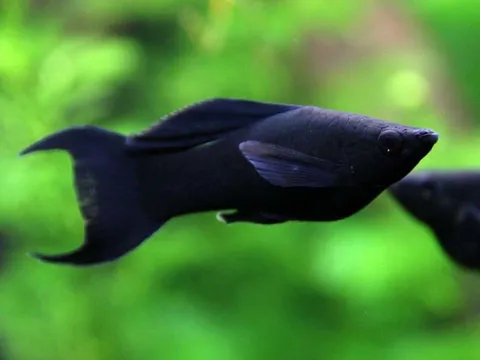
The Black and Yellow Molly, also known as Gold Dust Molly, takes its names from English trade names: Gold and Black Molly Fish and Gold dust molly. These names refer to a colour form of Poecilia sphenops distinguished by its striking two-tone pattern. The front half is typically yellow or gold, while the rear and tail are dark, almost black. The dark colouring consists of many fine spots, particularly visible where yellow meets black. This speckled pattern may result from hybridization with another selectively bred form, the Dalmatian molly.

Tank
from 150 L (40 gal)
Temperature
21 – 26 °C (70 – 79 °F)
Size in aquarium
8 – 12 cm (3.1 – 4.7 in)
Acidity
pH 7–8.5
Natural rangeRange on the map
  • Central America area
  • Colombia
  • Cook Islands
  • Curaçao
  • El Salvador
  • Honduras
  • Mexico
  • Nicaragua
  • Venezuela

Tank conditions

Plan the tank stocking
Temperature
21 – 26 °C (70 – 79 °F)
Water pH
Neutral (7) – Slightly alkaline (8.5)
Water dH
Hard (15) – Very hard (30)
Water salinity
low (3–5 g/L)
Size in aquarium
8 – 12 cm (3.1 – 4.7 in)
Lifespan
4 years
Temperament
Peaceful (regular)
Toward small fish
not a predator
Required aquarium volume
from 150 L (40 gal)
Lighting
any
Substrate
any (no restrictions)
Water flow
weak
Swimming level
near the surface
Feeding
Mixed diet meat + plant-based
Keeping
Mixed solitary / pair / group
Jumping
high a tight-fitting lid is essential
  • Lifespan. A lifespan to expect under good care, not a measured value: it depends heavily on tank volume, water quality and diet — and for selectively bred forms, on their origin as well.
  • Toward small fish. Based on the Predators category in the catalog or the temperament in the species parameters. “A risk to small fish” means the species is not a predator by habit, yet will swallow any fish that fits in its mouth.
  • Required aquarium volume. This is a husbandry recommendation, not a measured value: the volume depends on the keeping mode (mixed (solitary / pair / group)), footprint, decor and tank mates.

Care and keeping

Description

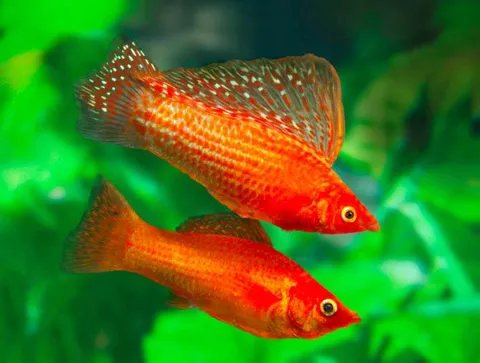
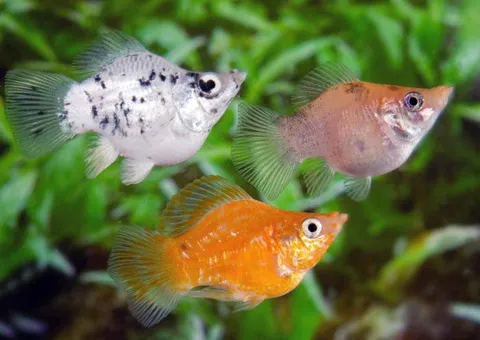
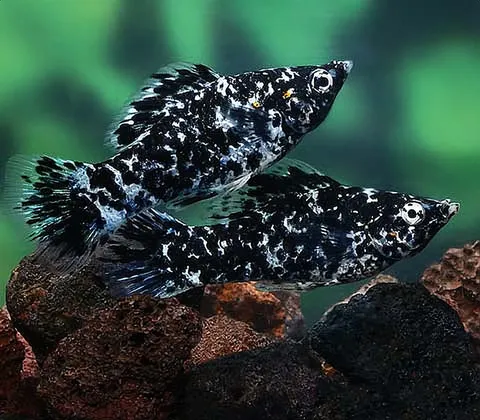
Poecilia sphenops is a selectively bred form with an elongated body, slightly compressed laterally. Females are larger than males and can reach 12 cm, while males usually grow to 7–8 cm. Sexual dimorphism is pronounced: males have a pointed anal fin modified into a gonopodium, while females have a fan-shaped anal fin. Colouration ranges from deep black to various yellow combinations, often with a spotted pattern.

Habitat

In nature the original species inhabits Central and South America, living in freshwater and brackish environments including river estuaries and coastal lagoons. These fish prefer densely planted areas. In the wild they are adapted to high water hardness and can tolerate fluctuations in salinity, which explains their hardiness in aquarium conditions.

Behavior and Compatibility

This fish coexists peacefully with most species of similar size and temperament. The most harmonious community is usually formed with other livebearers such as swordtails, guppies and platies.

Care and Maintenance

For a group of 3–4 Black and Yellow Mollies, the minimum aquarium size should be around 100 litres. When setting up the tank, provide dense plant growth: this offers shelter and an extra food source, which is valuable because this species prefers a diet high in plant matter. For this reason choose hardy undemanding plants such as Vallisneria, Anubias, Najas, Myriophyllum, aquatic ferns and mosses. Keeping this fish is straightforward if several conditions are met: daily feeding with quality foods, peaceful tank mates, and stable water quality within acceptable temperature and chemical ranges. Although they prefer slightly alkaline water with high general hardness, selective breeding has adapted them to other conditions, including soft acidic water. It is critical to prevent the buildup of organic waste—leftover food and faeces—which requires regular tank maintenance and a functioning filter.
Diet

Most common commercial dry foods are suitable. Many well-known manufacturers offer special formulations for this species. Feed once or twice daily, offering only what they will eat in 5 minutes.

Breeding and Reproduction

Black and Yellow Mollies are livebearers that reproduce without complex stimulation. Females carry fry for 4–6 weeks before giving birth to up to 100 fully formed young. Because parents may eat their fry, provide dense plant growth or a separate rearing tank. Feed fry on newly hatched brine shrimp, microworms or finely crushed dry food.

Diseases

The most common diseases are ich (white spots on the body) and fungal infections, often caused by poor water conditions or a sudden temperature drop. Digestive problems from lack of plant fibre are also widespread. Prevention includes maintaining stable hardness, regular water changes and adding a small amount of aquarium salt.

How to choose

When buying, choose active fish with clean fins and no white coating on the scales. Avoid fish with clamped fins or an unnaturally swollen belly, which may indicate infection. Check for signs of emaciation, as fish raised in poor conditions may be weakened and need a long adjustment period.

Compatibility

There are no pair reviews for this species yet — check tankmates in the matcher.

All tankmates

Plants and this fish

Matching water does not mean the plant will stay intact.

Frequently asked questions

The essentials: size, tank volume, water parameters and care

How big does Black and Yellow Molly get?

An adult reaches 8–12 cm in length. Plan the tank around the maximum size: the fish quickly outgrows a cramped setup.

What size aquarium does Black and Yellow Molly need?

The recommended volume is 150 L. A smaller tank speeds up nitrate build-up and raises stress levels.

What water parameters does Black and Yellow Molly need?

Temperature 21–26 °C, pH 7–8.5, hardness 15–30 dGH. Stability matters more than exact values: sudden swings are harder on the fish than a small deviation from the ideal.

How long does Black and Yellow Molly live?

Around 4 years when kept properly. Lifespan depends directly on tank volume, water quality and a varied diet.

Is Black and Yellow Molly aggressive?

Temperament: peaceful (regular). Keep this in mind when choosing tank mates.

How many Black and Yellow Molly should be kept together?

Recommended setup: mixed (solitary / pair / group). Ignoring this is a common cause of stress and disease.

What does Black and Yellow Molly eat?

Diet type: mixed diet (meat + plant-based). Feed small portions that are finished within a couple of minutes — overfeeding does more harm than underfeeding.

What is the scientific name of Black and Yellow Molly?

The scientific name of the species is Poecilia sphenops, family Poeciliidae. It also appears in the literature as: Gambusia modesta, Gambusia plumbea, Lembesseia parvianalis.

Similar fishes

Matched by family, categories and overlapping keeping conditions

Balloon Molly

Balloon Molly

Poecilia sphenops

Poeciliidae

The Balloon Molly, also known as the Balloon Molly, is called the Balloon Molly in English-speaking trade. This common name is given to selective breeding forms obtained by breeding based on Poecilia sphenops, Poecilia…

Black and White Molly

Black and White Molly

Poecilia sphenops

Poeciliidae

The Black and White Molly is a collective name for several selectively bred forms distinguished by their characteristic body colouring dominated by black and white tones. Examples of these forms include the Dalmatian…

Black Molly

Black Molly

Poecilia sphenops

Poeciliidae

The black molly, often simply called Black Molly, is apparently a selectively bred colour variant of the common molly, Poecilia sphenops. Some experienced breeders argue instead that it descends from Poecilia latipinna.…

Blood Red Molly

Blood Red Molly

Poecilia sphenops

Poeciliidae

The Blood Red Molly, often called Blood Red Molly in English-speaking countries, is a vibrant color variation developed through selective breeding of certain Molly species. Its distinguishing feature is its intense red…

Other scientific names and conservation status

Other scientific names
Gambusia modesta, Gambusia plumbea, Lembesseia parvianalis, Mollienesia altissima, Mollienesia macrura, Mollienesia pallida
Categories
Livebearers
Conservation status
Least concernLC