Temperature23 – 28 °C
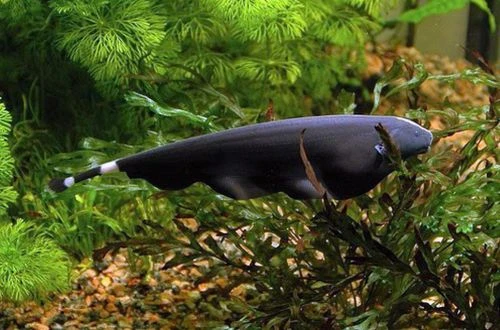
The scientific name Apteronotus albifrons refers to the "Black Ghost Knifefish," also known as the "Black Knifefish" or "Black Ghost." It is a member of the family Apteronotidae. There is a curious, though unconfirmed, belief that some Amazonian tribes believe in the transmigration of the souls of the deceased into these fish. This story may simply be a fabrication intended to pique the interest of aquarists in this species.
Adults of this fish can reach up to 50 cm in length. Their body has a characteristic shape, resembling a knife blade or a lancet. An important feature is the rudimentary tail, which became so through evolution. The main propulsive organ is the anal fin, which extends almost from head to tail. It is this fin that allows the fish to move equally easily both forward and backward. The coloration of the "Black Ghost Knifefish" is exclusively black, and two white rings are visible on the tip of its tail. The vision of this fish is poorly developed. To orient itself in its environment and hunt successfully, it uses a specialized organ that generates a weak electric field around its body, helping it detect nearby objects.
The natural habitat of these fish covers the Amazon River basin in South America. They prefer areas with slow currents, where the bottom consists of sandy substrates and there are many hiding places. During the rainy season, "Black Knifefish" swim into flooded forest zones. This species is nocturnal, preferring to hide in places inaccessible to direct sunlight during the day.
Towards other aquarium inhabitants, the "Black Knifefish" behaves as a peaceful and even shy fish. However, it is important to remember its carnivorous nature: very small fish can become unwitting victims. The "Black Ghost Knifefish" perceives its own kind differently, showing significant aggression towards them, which makes cohabitation of a group of these fish impossible.
For one adult "Black Ghost Knifefish," an aquarium of at least 300 liters is required. The setup should replicate natural conditions, including subdued lighting and numerous hiding places. Fine-grained gravel is recommended as a substrate, along with smooth stones, live plants (including floating ones), as well as driftwood and other elements that can serve as shelters. Successful keeping of this species largely depends on maintaining stable water parameters, particularly pH and dGH, within suitable limits. In addition to a powerful filtration system, some aquarists install UV sterilizers to combat pathogenic microorganisms. Weekly aquarium maintenance procedures must include changing 30–50% of the water and regular cleaning of the substrate from organic deposits.
Being a carnivorous species, in its natural habitat, the "Black Ghost Knifefish" feeds on worms, aquatic insects and their larvae, as well as small fish. In aquarium conditions, the diet can include fresh or frozen foods: earthworms, bloodworms, brine shrimp, as well as pieces of mussels and shrimp. If the opportunity arises, they will also not refuse live fish. It has been noted that the "Black Ghost Knifefish" can eventually recognize its owner and take food directly from their hands. It is important to ensure that hands are clean and free of soap or cream residues.
To date, no successful cases of breeding "Black Knifefish" in home aquariums have been recorded. Commercial breeding of this species is carried out in Southeast Asia, but suppliers generally do not disclose details, so there is no reliable information on breeding methods.
Fish raised in artificial conditions are usually considered more robust compared to individuals caught from natural waters. Under favorable keeping conditions, both types of fish, both captive-bred and wild-caught, rarely encounter health problems. Conversely, with improper care, the risks of various diseases significantly increase. For aquarium-bred fish, the boundaries of the optimal keeping range are somewhat wider.
When choosing a healthy specimen, pay attention to the integrity of the fins and the absence of damage on the body, as these fish are extremely susceptible to infections due to the lack of scales. Make sure that the characteristic white markings are present on the tail and that there is no white film or suspicious spots on the body. A healthy specimen should be well-fed, without a sunken belly, and show activity, even if it is hiding in a shelter. Since these fish are often sold at a young age, ask the seller if the individual has been accustomed to frozen or dry foods, as wild-caught specimens may refuse them in favor of live food. Ask a store employee to feed the fish in your presence to confirm its appetite. Avoid buying individuals that appear emaciated, lethargic, or constantly make erratic movements, which may indicate stress or problems adapting to aquarium conditions.
The essentials: size, tank volume, water parameters and care
An adult reaches 50 cm in length. Plan the tank around the maximum size: the fish quickly outgrows a cramped setup.
The recommended volume is 350 L. A smaller tank speeds up nitrate build-up and raises stress levels.
Temperature 23–28 °C, pH 6.5–8, hardness 5–19 dGH. Stability matters more than exact values: sudden swings are harder on the fish than a small deviation from the ideal.
Around 15 years when kept properly. Lifespan depends directly on tank volume, water quality and a varied diet.
Temperament: predator, but semi-peaceful (gets along with large ones). This is a predatory species — any fish small enough to fit in its mouth will eventually be eaten.
Recommended setup: solitary + other species (large / compatible). Ignoring this is a common cause of stress and disease.
Diet type: meat / protein (live, frozen, fresh). Feed small portions that are finished within a couple of minutes — overfeeding does more harm than underfeeding.
The scientific name of the species is Apteronotus albifrons, family Apteronotidae. It also appears in the literature as: Apteronotus passan, Gymnotus albifrons, Sternarchus albifrons.
The water suits 197 of 208 plants in the catalogue — the easiest ones are shown first.
Afzelius's AnubiasAnacharisAnubiasBrazilian PennywortDwarf CloverDwarf CloverDwarf HygrophilaDwarf SagittariaDwarf ValGuppy GrassHornwortJava FernJava MossMoneywortMud SwordNair's LagenandraNarrow Leaf AnacharisNarrow-leaf CloverStringy MossSüsswassertangTaiwan MossTape GrassTemple PlantUssuri Watermilfoil
Matched by family, categories and overlapping keeping conditions
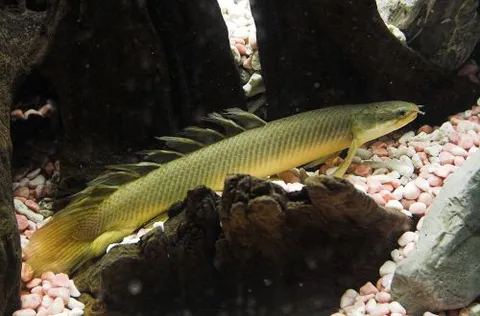
Polypterus senegalus
A representative of an ancient genus of fish that existed more than 200 million years ago, during the Triassic period, is the Polypterus, or Senegal Bichir (scientific name Polypterus senegalus). It belongs to the…
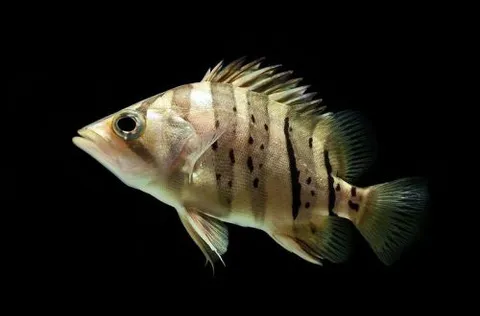
Datnioides microlepis
The Tiger Siamese Perch, or Indonesian Tiger Perch, scientifically known as Datnioides microlepis, belongs to the family Datnioididae. This fish is characterized by its large size and bright, contrasting coloration,…
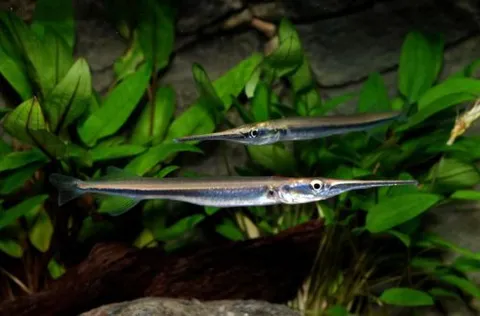
Xenentodon cancila
Xenentodon cancila, known as the Freshwater Gar, Freshwater Needlefish, or "Silver Needle," is a member of the Belonidae family. A very similar species, Xenentodon canciloides, is also found under the same name, and…
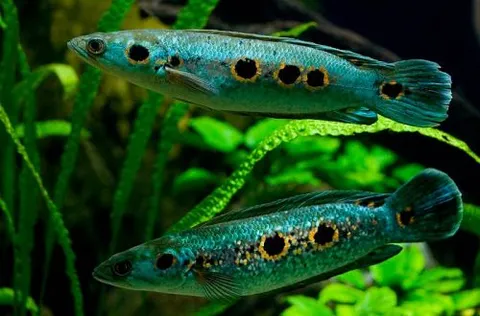
Channa pleurophthalma
The Ornate Snakehead (Channa pleurophthalma) is a species belonging to the family Channidae, or Snakeheads. Its scientific name is Channa pleurophthalma. A distinctive feature of its appearance is the expressive black…