Temperature22 – 28 °C
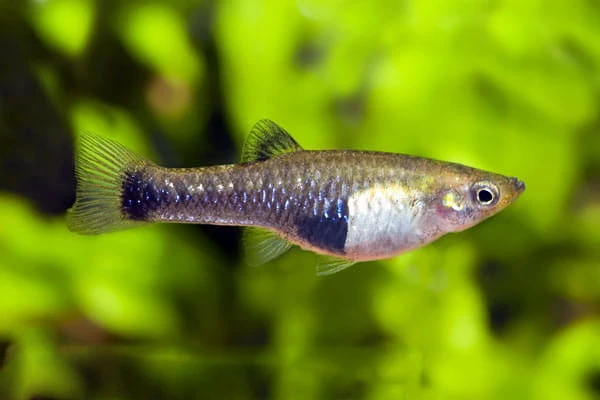
Limia melanogaster, known as the Blackbelly Limia, belongs to the family Poeciliidae. These fish are characterized by their undemanding nature, successful breeding, and good compatibility with various tank mates. Such qualities make them an excellent choice for those just starting their journey in aquaristics. Perhaps the only thing that could be considered a drawback is their not-so-vibrant coloration.
Adults grow up to 5 cm in length, with males remaining slightly smaller, reaching a maximum of 4 cm. Their coloration consists of gray tones with a slight bluish sheen, while the belly has a silvery hue. A distinctive feature of this fish is a darkened area on the lower part of the body.
The natural habitat of these fish is the Caribbean basin, specifically the island of Jamaica. There they inhabit shallow streams and small rivers, where large sandy shoals and rocky areas in hilly terrain predominate.
These fish are distinguished by their peaceful and calm disposition, which allows them to coexist perfectly with other species of similar size and temperament. It is recommended to maintain a ratio of 2-3 females per male so that his attention is distributed among several partners. This is because during the breeding season, males become very active and can exhibit excessive courtship if there is only one female.
For a school of Blackbelly Limias, the minimum recommended aquarium volume is 40 liters. The aquarium setup depends entirely on the owner's preferences; it is only important to provide both dense plant thickets and sufficiently open areas for free swimming. There are no specific requirements for the keeping conditions of this species. Weekly water changes of 15% to 20% of the volume, replacing it with fresh water, and regular removal of organic pollutants from the aquarium will suffice.
This species is not demanding about food and readily accepts most standard foods of appropriate size, whether live, frozen, or dry.
The Blackbelly Limia is a livebearing species, meaning they do not lay eggs but give birth to fully formed offspring. The entire embryonic development period occurs inside the female's body. Under optimal conditions, an adult female can produce offspring every 6–8 weeks, with each brood numbering up to 25 fry. Unlike many other livebearing species, cases of cannibalism among Limias are rare, especially if the young are provided with reliable hiding places, such as plant thickets. Thanks to this, fry can be kept together with adult individuals.
Health problems in these fish arise only in the presence of injuries or keeping in unsuitable conditions, which leads to a weakening of the immune system and the subsequent occurrence of various diseases. At the first signs of illness, it is necessary first to check the water parameters for exceeding permissible values or the presence of toxic substances (such as nitrites, nitrates, ammonia). If deviations are found, all indicators should be normalized, and then treatment should begin.
When purchasing, choose active and mobile fish with clean fins and no visible damage to the body. It is important to pay attention to the condition of the scales: they should be tightly attached, without signs of ulcers, film, or spots. Avoid individuals that stay at the water surface, appear apathetic, or have sunken bellies, as this may indicate stress or the presence of parasites. — Inspect the aquarium in the store: there should be no dead fish. — Make sure the fish show a healthy interest in food. — Purchase a group of one male and several females to reduce intraspecific stress.
The essentials: size, tank volume, water parameters and care
An adult reaches 5 cm in length. Plan the tank around the maximum size: the fish quickly outgrows a cramped setup.
The recommended volume is 40 L. A smaller tank speeds up nitrate build-up and raises stress levels.
Temperature 22–28 °C, pH 7–8.5, hardness 20–30 dGH. Stability matters more than exact values: sudden swings are harder on the fish than a small deviation from the ideal.
Around 3 years when kept properly. Lifespan depends directly on tank volume, water quality and a varied diet.
Temperament: peaceful (regular). Keep this in mind when choosing tank mates.
Recommended setup: both solitary and in group (flexible). Ignoring this is a common cause of stress and disease.
Diet type: any (universal). Feed small portions that are finished within a couple of minutes — overfeeding does more harm than underfeeding.
The scientific name of the species is Limia melanogaster, family Poeciliidae. It also appears in the literature as: Lebistes melanogaster, Poecilia melanogaster.
The water suits 113 of 208 plants in the catalogue — the easiest ones are shown first.
African Onion PlantAfzelius's AnubiasAmazon FrogbitAmazon SwordAnacharisAnubiasArrowhead CryptDwarf CloverDwarf CloverDwarf HygrophilaDwarf SagittariaDwarf ValGuppy GrassHornwortJava MossMoneywortMud SwordNair's LagenandraNarrow Leaf AnacharisNarrow-leaf CloverStringy MossTaiwan MossTape GrassUssuri Watermilfoil
Matched by family, categories and overlapping keeping conditions
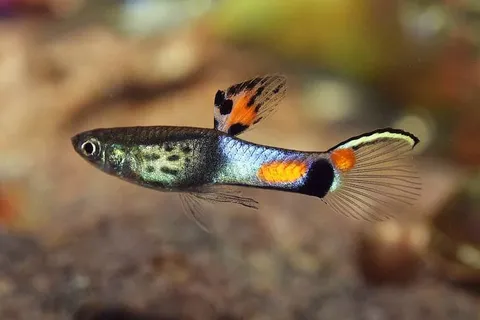
Poecilia wingei
Endler's Guppy, scientifically known as Poecilia wingei, belongs to the family Poeciliidae. This vibrant and colorful fish is easy to keep and breed, making it an excellent choice for beginners in the aquarium hobby.…
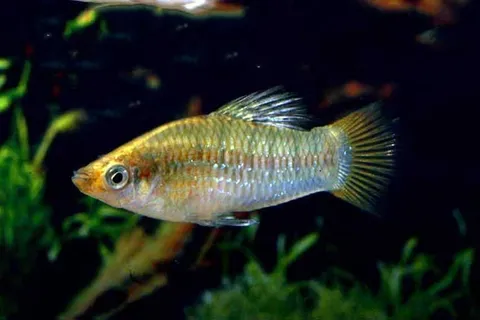
Limia perugiae
The Dominican Limia, scientifically known as Limia perugiae, belongs to the family Poeciliidae, also known as livebearers. As its name suggests, this fish is native to Central America. It is known as an endemic species,…
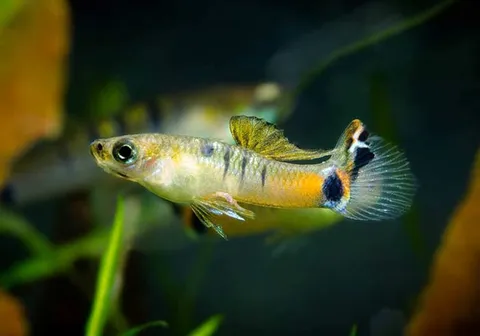
Micropoecilia branneri
The scientific name Micropoecilia branneri belongs to the species Branner's Micropoecilia, which is part of the Poeciliidae family. This fish originates from South America, where it can be found widely in various…
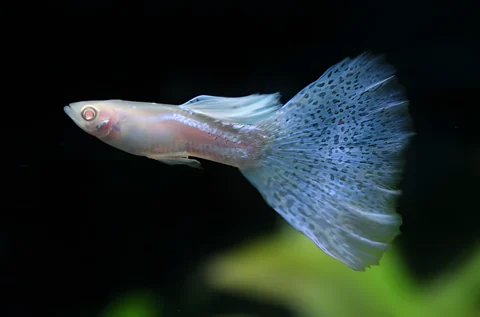
Poecilia reticulata
The Albino Guppy, belonging to the Poeciliidae family, is known by its scientific name Poecilia reticulata (Albino variety). A distinctive feature of this fish is the congenital absence of melanin – the black pigment in…