Temperature24 – 28 °C
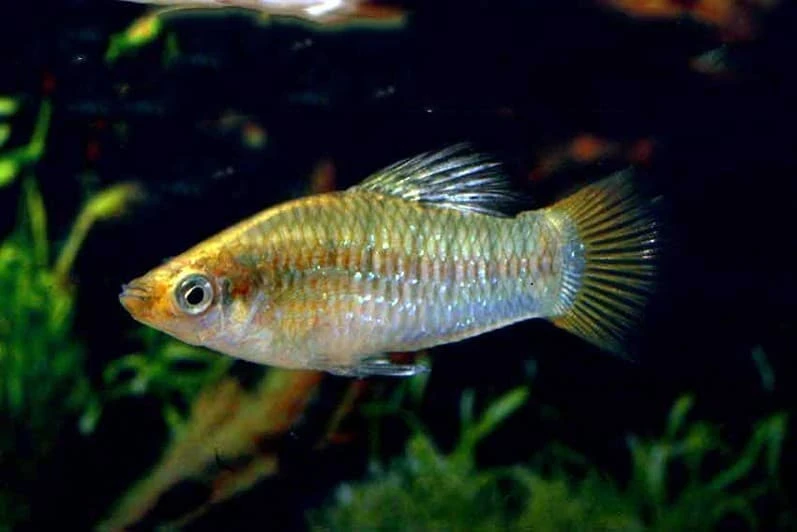
The Dominican Limia, scientifically known as Limia perugiae, belongs to the family Poeciliidae, also known as livebearers. As its name suggests, this fish is native to Central America. It is known as an endemic species, found only in some river systems in the south of the Dominican Republic. Its preferred habitats are shallow areas densely overgrown with aquatic plants. These fish thrive in both freshwater and brackish water bodies.
Adults reach 4–5 cm in length, with instances of specimens up to 10 cm found in the wild. Interestingly, the body shape and coloration of these fish are highly dependent on the water's salinity level. At higher salt concentrations, the fish become smaller and acquire more saturated coloration. In brackish water, their body becomes more streamlined, and the head becomes more rounded. The coloration of males varies from gray-brown, with noticeable blue iridescence on the scales. Their dorsal and caudal fins often have a pale yellow or orange hue, accentuated by a black outline. Some males may display a striped pattern. Females are usually colored in yellow-gray-brown tones with a silvery belly. Their fins are translucent, and a characteristic black speckle can often be seen at the base of the dorsal fin.
The Dominican Limia is endemic to the island of Hispaniola and primarily inhabits water bodies in the Dominican Republic. These fish populate various types of freshwater and brackish water bodies, including rivers, streams, lagoons, and even hypersaline lakes. They prefer areas with slow currents, dense aquatic vegetation, and warm water.
These peaceful and active fish often form large schools in their natural habitat. They are quite compatible with many other non-aggressive species of comparable size.
For a group of 4–5 fish, aquariums of 40 L or more will be optimal. The decor can be arbitrary, but dense thickets of plants, including floating ones, are highly desirable. The Dominican Limia prefers warm, hard water with high pH values and feels good in a brackish environment. Aquarium care is quite simple and involves regular partial water changes with fresh water, usually combined with the removal of accumulated organic debris. These fish are omnivorous and readily accept various foods: dry, frozen, and live, if they are of suitable size.
Being omnivorous, these fish equally enthusiastically consume dry, frozen, and live foods of suitable size. The gestation period lasts from 4 to 6 weeks. The number of offspring a female can produce increases with her age. One female can give birth to 10 to 100 fry.
The fry of these fish are born fully formed, bypassing the egg stage, which is characteristic of livebearing species. The incubation period usually lasts 4–6 weeks. Interestingly, the older the female, the more offspring she is capable of producing. The number of fry born can range from 10 to 100 individuals.
The species has strong immunity if kept under proper conditions. Like other Poeciliidae, these fish are sensitive to sudden changes in water parameters and organic pollution in the aquarium. The main preventive measures are regular water changes, maintaining stable hardness and pH levels, and avoiding overpopulation. If the keeping conditions are violated, skin and fin lesions caused by bacterial infections or parasites are possible.
When selecting individuals, attention should be paid to the fish's activity and the cleanliness of their skin. Healthy Limias should be active, show interest in their surroundings, and have a solid body without visible deformities, ulcers, or white spots. The fins should be spread out, with no signs of damage or clumping. It is recommended to avoid purchasing fish that stay at the surface, breathe heavily, or appear emaciated.
The essentials: size, tank volume, water parameters and care
An adult reaches 5 cm in length. Plan the tank around the maximum size: the fish quickly outgrows a cramped setup.
The recommended volume is 40 L. A smaller tank speeds up nitrate build-up and raises stress levels.
Temperature 24–28 °C, pH 6.8–8, hardness 10–20 dGH. Stability matters more than exact values: sudden swings are harder on the fish than a small deviation from the ideal.
Around 4 years when kept properly. Lifespan depends directly on tank volume, water quality and a varied diet.
Temperament: peaceful (regular). Keep this in mind when choosing tank mates.
Recommended setup: mixed (solitary / pair / group). Ignoring this is a common cause of stress and disease.
Diet type: any (universal). Feed small portions that are finished within a couple of minutes — overfeeding does more harm than underfeeding.
The scientific name of the species is Limia perugiae, family Poeciliidae. It also appears in the literature as: Platypoecilus perugiae, Poecilia perugiae.
The water suits 113 of 208 plants in the catalogue — the easiest ones are shown first.
African Onion PlantAfzelius's AnubiasAmazon FrogbitAmazon SwordAnacharisAnubiasArrowhead CryptDwarf CloverDwarf CloverDwarf HygrophilaDwarf SagittariaDwarf ValGuppy GrassHornwortJava MossMoneywortMud SwordNair's LagenandraNarrow Leaf AnacharisNarrow-leaf CloverStringy MossTaiwan MossTape GrassUssuri Watermilfoil
Matched by family, categories and overlapping keeping conditions
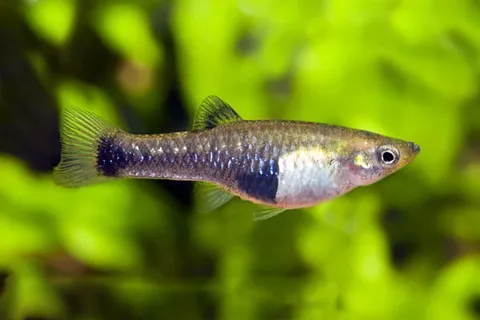
Limia melanogaster
Limia melanogaster, known as the Blackbelly Limia, belongs to the family Poeciliidae. These fish are characterized by their undemanding nature, successful breeding, and good compatibility with various tank mates. Such…
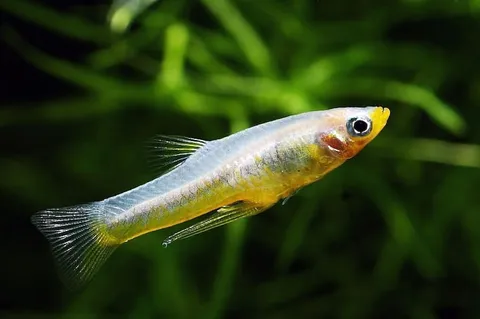
Girardinus metallicus
Girardinus metallicus, or metallic livebearer, belongs to the family Poeciliidae. This fish was once very popular among aquarists in the early 20th century, largely due to its exceptional hardiness and resilience.…
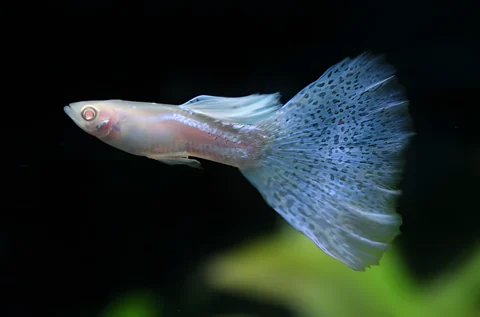
Poecilia reticulata
The Albino Guppy, belonging to the Poeciliidae family, is known by its scientific name Poecilia reticulata (Albino variety). A distinctive feature of this fish is the congenital absence of melanin – the black pigment in…
Poecilia reticulata
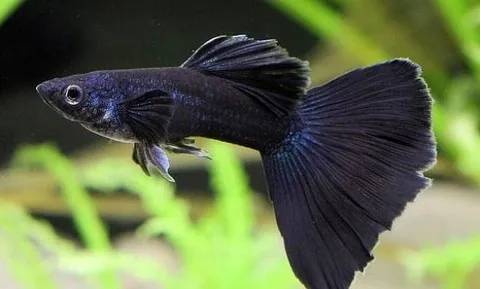
Black Monk Guppies, also known as Black Guppies, are a breed of Poecilia reticulata (Black strain) from the Poeciliidae family. One of the main features of this variety is the pronounced dark body coloration in males.…