Temperature21 – 25 °C
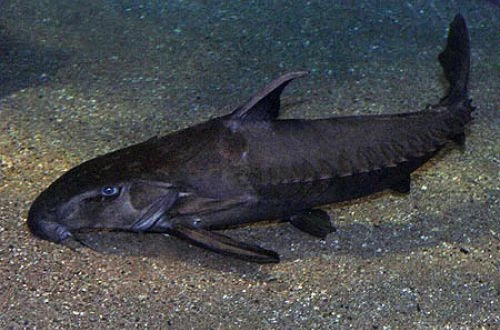
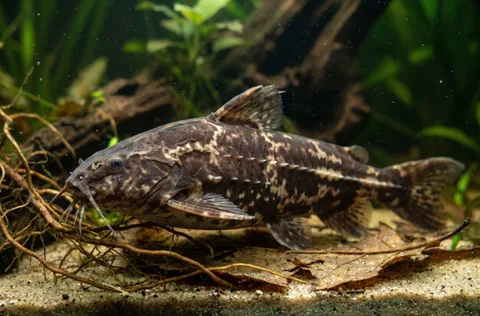
Oxydoras niger, also known as the Black Thorny Catfish or Blue-Eyed Catfish, belongs to the family Doradidae. This fish is a unique “gentle giant”: it is characterized by impressive size and a peaceful disposition. However, it is worth noting that very small fish can become accidental prey, while there is no danger to other aquarium inhabitants. Due to its size, this catfish is quite rare in hobbyists' aquariums.
This is indeed a large catfish, capable of reaching 80–90 cm in length, although such sizes are rarely seen in artificial aquarium conditions. The fish's coloration is predominantly dark, varying from deep black to dark gray depending on the lighting. A characteristic stripe, consisting of pointed bony plates, runs along each side. Sexual dimorphism is weakly expressed, making sex determination difficult.
Its natural habitat covers large river systems throughout the Amazon basin in South America. It can be found in the territories of modern states such as Ecuador, Colombia, Venezuela, Guyana, Peru, Bolivia, and Brazil.
This species is a peaceful giant, but it can pose a threat to small fish that can fit into its mouth. It is perfectly compatible with other large, non-aggressive species. Keeping them is possible both individually and in groups; intraspecific conflicts have not been observed among these fish.
Due to their enormous size, such fish are not often acquired by amateur aquarists. Their keeping requires an aquarium of an impressive volume — from 1700 L, as well as expensive equipment and significant construction work. The latter may include floor reinforcement, and the installation of sewage and water supply systems. The design and installation of such aquariums are usually carried out by specialized companies, which often also undertake subsequent maintenance. The owner will only need to feed their pets in a timely manner.
These catfishes consume everything they manage to find on the bottom. In their natural environment, their diet consists of crustaceans, insects, and their larvae, which they seek out by sifting through sandy substrate. In aquarium conditions, they will readily accept all common types of sinking foods (whether flakes, granules, or tablets) intended for aquarium fish. It is important to ensure a regular presence of vegetable supplements in their diet.
Breeding in a home aquarium, even the most spacious one, is practically impossible. Oxydoras niger are bred by professional breeders on specialized fish farms. Less often, individuals caught from the wild can be found for sale.
The main cause of most diseases in these fish is unsuitable keeping conditions and poor-quality nutrition. If initial symptoms are observed, it is first necessary to check water parameters and the concentration of dangerous substances such as ammonia, nitrites, and nitrates. If the indicators deviate from the norm, they should be brought back into order, and only then should treatment begin.
Acquiring this species requires a conscious approach due to the impressive size of an adult, reaching 90 cm. Young specimens are often sold in stores, which creates a risk of purchasing a fish for which the owner does not have suitable keeping conditions. Before purchasing, it is important to ensure a long-term plan for providing an aquarium of 1700 L or a tropical pond, as rehoming an overgrown aquarium catfish is extremely difficult. When choosing a healthy specimen, attention should be paid to the absence of skin damage and bony plates along the lateral line, clean fins, and no signs of emaciation. The fish should show activity during twilight hours, be attentive to its surroundings, and have no visible ulcers or film on its body.
The essentials: size, tank volume, water parameters and care
An adult reaches 90 cm in length. Plan the tank around the maximum size: the fish quickly outgrows a cramped setup.
The recommended volume is 1700 L. A smaller tank speeds up nitrate build-up and raises stress levels.
Temperature 21–25 °C, pH 6–7, hardness 2–20 dGH. Stability matters more than exact values: sudden swings are harder on the fish than a small deviation from the ideal.
Around 10 years when kept properly. Lifespan depends directly on tank volume, water quality and a varied diet.
Temperament: semi-peaceful (dangerous to smaller ones). Not a predatory species, but small fish that fit in its mouth will eventually be eaten.
Recommended setup: both solitary and in group (flexible). Ignoring this is a common cause of stress and disease.
Diet type: any (universal). Feed small portions that are finished within a couple of minutes — overfeeding does more harm than underfeeding.
The scientific name of the species is Oxydoras niger, family Doradidae (Thorny Catfishes). It also appears in the literature as: Corydoras edentatus, Doras humboldti, Doras niger.
The water suits 196 of 208 plants in the catalogue — the easiest ones are shown first.
Afzelius's AnubiasAnacharisAnubiasBrazilian PennywortDwarf CloverDwarf CloverDwarf HygrophilaDwarf SagittariaDwarf ValGuppy GrassHornwortJava FernJava MossMoneywortMud SwordNarrow Leaf AnacharisNarrow-leaf CloverStringy MossSüsswassertangTaiwan MossTape GrassTemple PlantUssuri WatermilfoilWater Wisteria
Matched by family, categories and overlapping keeping conditions
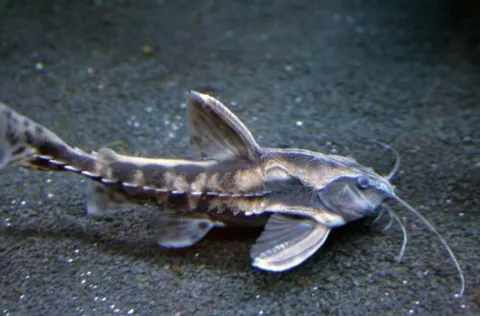
Megalodoras uranoscopus
The Giant Raphael Catfish, scientifically known as Megalodoras uranoscopus, belongs to the family Doradidae, or armored catfishes. It is rightfully considered a true "armored knight" of the underwater world due to its…
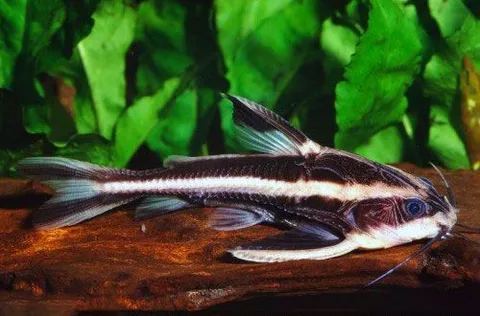
Platydoras armatulus
Platydoras (Platydoras armatulus), a representative of the family Doradidae, exhibits enviable unpretentiousness and high endurance. It can become an excellent helper in the aquarium, picking up food scraps left by…
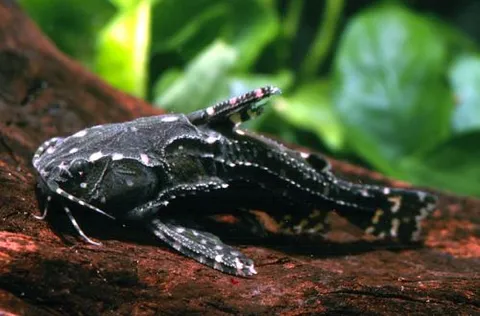
Agamyxis pectinifrons
Agamyxis pectinifrons is the scientific name for the Spotted Raphael Catfish, also known as the Spotted Doradid or White-spotted Agamyxis. This member of the Doradidae family earned its other common name, "Talking…
Acanthodoras spinosissimus
The Spiny Catfish, scientifically known as Acanthodoras spinosissimus, belongs to the family Doradidae, or Thorny Catfishes. They are also called "Talking Catfishes" due to the sounds they produce using special bony…