Temperature21 – 25 °C
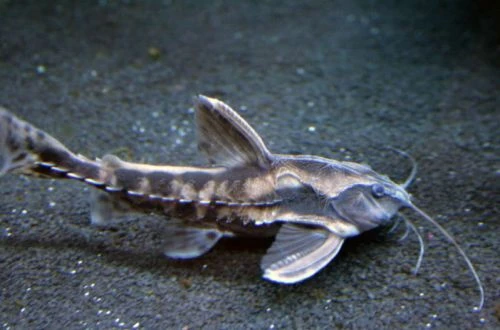
The Giant Raphael Catfish, scientifically known as Megalodoras uranoscopus, belongs to the family Doradidae, or armored catfishes. It is rightfully considered a true "armored knight" of the underwater world due to its unique protection. This species is characterized by its unpretentiousness, high endurance, and omnivorous diet, making it suitable for keeping with almost all types of freshwater fish. The only thing that requires special attention is the catfish's rather impressive size, as not every aquarist is prepared to install an aquarium with a volume of 1500 liters or more.
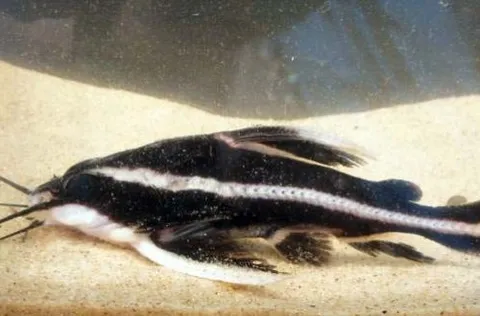
Adults reach impressive sizes — from 60 to 70 centimeters in length. The fish's appearance is notable for its robust protection, formed by bony plates covering the entire body and spines located along the sides. The pectoral and dorsal fins also terminate in spines. These structural features are reflected in the catfish's common names; for example, in the USA, it is often called the Saw Catfish or Sawtooth Catfish. Sexual dimorphism in this species is weakly expressed: males and females are practically indistinguishable, although females may be slightly larger.
Its natural habitat includes bodies of water (lakes, swamps) and river systems in the subequatorial part of South America. The range includes the territories of modern-day Ecuador, Colombia, Brazil, Bolivia, and Peru. The catfish prefers areas with slow currents or stagnant water, always staying near shelters such as snags, tree roots, or submerged vegetation.
This species is characterized by a calm and peaceful disposition, making it compatible with almost all fish of similar or smaller size. Its high degree of protection allows it to be kept even in the same aquarium with Piranhas. These fish prefer to live in groups; in aquarium conditions, it is advisable to keep at least four individuals.
For such a large fish, a reservoir of appropriate volume is necessary, starting from 1500 liters, as well as expensive aquarium equipment. In addition, work will be required to reinforce the floor and install engineering systems such as plumbing, sewerage, and electricity. Such large-scale projects are usually carried out by specialized companies, which then also undertake the subsequent maintenance of the aquarium. In this case, the aquarium owner will only need to feed their pets in a timely manner.
The diet includes all types of sinking foods; with age, the catfish may rise to the surface for food, but young individuals mostly stay near the bottom. Additions such as freshwater shrimp meat, earthworms, and pieces of fruits and vegetables will be very beneficial.
In the wild, the breeding season is accompanied by seasonal migrations, conditions for which are completely impossible to reproduce in domestic settings. Therefore, fish available to aquarists are exported from South American fish farms or caught in natural bodies of water.
The main cause of most diseases is unsuitable living conditions and poor-quality food. If you notice the first symptoms, you should immediately check the water parameters and ensure there are no high concentrations of dangerous substances (ammonia, nitrites, nitrates, etc.). The parameters must be brought back to normal, and only then can treatment measures begin.
When purchasing Megalodoras uranoscopus, it is important to consider that this species is rarely available for sale and requires specialized keeping conditions due to its impressive size. Choose active individuals with intact fins and no visible damage to the bony plates covering the body. Avoid fish with signs of emaciation, sunken bellies, or damage to the mouth and barbels, which often occur during improper transportation. Since these catfishes have sharp spines on their pectoral and dorsal fins, care should be taken during examination and transfer to avoid damaging the net or the fish's skin. In the store, pay attention to their behavior: healthy fish may be passive during the day, but show interest in food when fed. Make sure there are no signs of widespread disease in the aquarium with the catfishes, as these fish are sensitive to water quality and stress during adaptation.
The essentials: size, tank volume, water parameters and care
An adult reaches 70 cm in length. Plan the tank around the maximum size: the fish quickly outgrows a cramped setup.
The recommended volume is 1500 L. A smaller tank speeds up nitrate build-up and raises stress levels.
Temperature 21–25 °C, pH 5.5–7, hardness 1–20 dGH. Stability matters more than exact values: sudden swings are harder on the fish than a small deviation from the ideal.
Around 20 years when kept properly. Lifespan depends directly on tank volume, water quality and a varied diet.
Temperament: peaceful (regular). Keep this in mind when choosing tank mates.
Recommended setup: small group (3–4 individuals). Ignoring this is a common cause of stress and disease.
Diet type: any (universal). Feed small portions that are finished within a couple of minutes — overfeeding does more harm than underfeeding.
The scientific name of the species is Megalodoras uranoscopus, family Doradidae (Thorny Catfishes). It also appears in the literature as: Doras libertatis, Doras uranoscopus, Hoplodoras uranoscopus.
The water suits 197 of 208 plants in the catalogue — the easiest ones are shown first.
Afzelius's AnubiasAnacharisAnubiasBrazilian PennywortDwarf CloverDwarf CloverDwarf HygrophilaDwarf SagittariaDwarf ValGuppy GrassHornwortJava FernJava MossMoneywortMud SwordNarrow Leaf AnacharisNarrow-leaf CloverStringy MossSüsswassertangTaiwan MossTape GrassTemple PlantUssuri WatermilfoilWater Wisteria
Matched by family, categories and overlapping keeping conditions
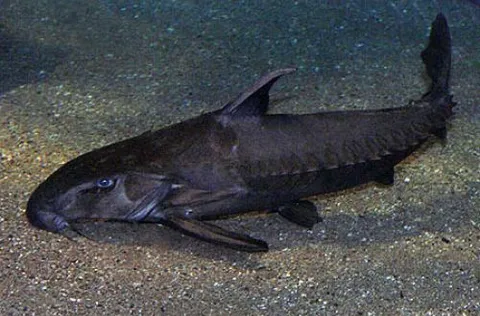
Oxydoras niger
Oxydoras niger, also known as the Black Thorny Catfish or Blue-Eyed Catfish, belongs to the family Doradidae. This fish is a unique “gentle giant”: it is characterized by impressive size and a peaceful disposition.…
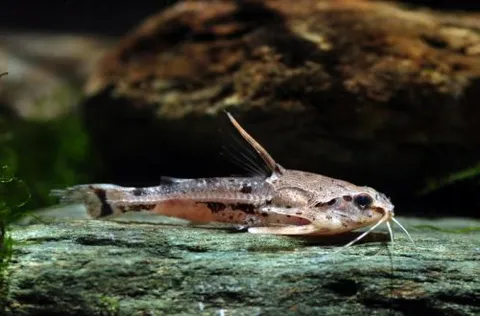
Amblydoras nauticus
The marbled talking catfish, known scientifically as Amblydoras nauticus, is a member of the family Doradidae, or thorny catfishes. This species is attractive due to its unpretentiousness and ease of keeping. It…
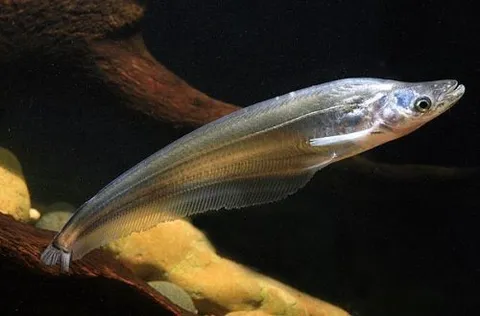
Phalacronotus apogon
The scientific name Phalacronotus apogon, or Phalacronotus, belongs to the family Siluridae. As a rule, this species is not classified as an aquarium fish due to its significant size. Its primary use is in large public…
Platydoras hancockii
Platydoras hancockii, also known as the Blue-eyed Platydoras, is a member of the Doradidae family, or Thorny Catfishes. This species of catfish originates from the vast waters of South America, where it can be found…