Temperature23 – 28 °C
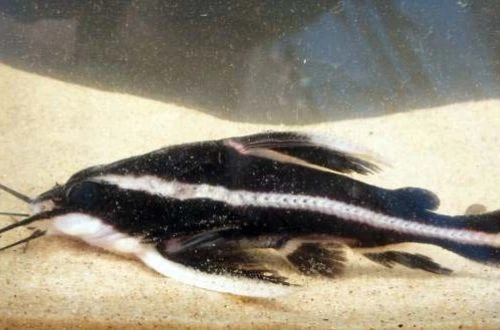
Platydoras hancockii, also known as the Blue-eyed Platydoras, is a member of the Doradidae family, or Thorny Catfishes. This species of catfish originates from the vast waters of South America, where it can be found throughout the Amazon River basin—from Guyana and the eastern territories of Brazil to Peru and Bolivia.
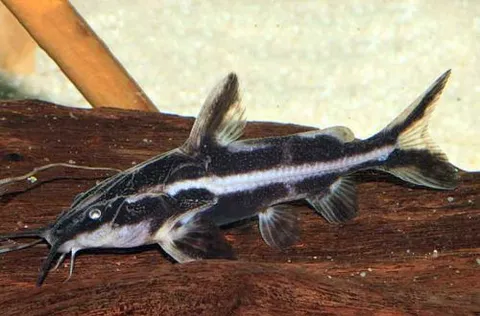
Adult specimens of this catfish can reach a length of up to 15 cm. Their bodies are covered with strong bony plates, forming reliable armor. The head and pectoral regions of the catfish form a continuous carapace, and a row of sharp spines can be observed along the lateral line. Their fins are rigid, with the first rays transformed into pointed blades. The coloration of the Blue-eyed Platydoras is dark gray, with a distinct light line running along the entire body. Males are distinguished by a more slender build compared to females.
The species inhabits the northern part of South America, including the Amazon, Rio Negro, Essequibo and Demerara river basins. In nature, it is found in freshwater coastal swamps, silty forest lakes, and river areas subject to seasonal flooding. It is a demersal fish, leading a secretive lifestyle in the bottom layers of the water, where it prefers to stay among roots, fallen leaves, and other natural shelters.
This catfish is characterized by a calm and non-aggressive disposition. The Blue-eyed Platydoras gets along perfectly with most other species of aquarium fish, even with those that do not always show friendliness to their neighbors. Thanks to its strong armor, it is reliably protected from potential predators, which allows it to be kept not only with peaceful species. It feels comfortable both alone and in a group of its own kind.
For keeping a single catfish, an aquarium of at least 130 liters is recommended. The most important element of the decor is a sufficient number of shelters where the fish can completely hide. These can be crevices, caves, or grottoes formed by driftwood or rock piles. Platydoras prefers subdued lighting, so it will seek refuge during the day. This catfish is completely safe for plants, so most rooted and floating species can be used for decoration. It is unpretentious and easily adapts to a wide range of hydrochemical parameters, which greatly simplifies its care. However, despite this, it is necessary to regularly perform essential procedures: weekly partial water changes, removal of organic waste, and preventive maintenance of equipment.
The diet of the Blue-Eyed Platydoras is omnivorous; it readily accepts most common foods. The fish will pick up anything it finds on the bottom, be it dry flakes, granules, live, or frozen foods. Most feeding occurs at night.
Reproduction in captivity is not well studied. It is known that in nature, the fish build a nest of air bubbles and fragments of aquatic plants near the water surface. The male cares for the offspring, guarding the clutch. Spawning stimulation in aquarium conditions is difficult, so successful cases of obtaining fry are extremely rare.
The species has high resistance to unfavorable environmental conditions, which is due to its natural ability to survive when water bodies dry up. No specific diseases characteristic only of this catfish have been identified. The main dangers are mechanical skin damage during transportation or careless netting, as well as the risk of burns from contact with heating elements of aquarium equipment.
When choosing individuals, attention should be paid to the integrity of the bony plates and fins, the absence of visible wounds, ulcers, or white film on the body. A healthy fish should show activity at dusk and have clear eyes. It is recommended to avoid purchasing specimens with signs of emaciation or damaged barbels. It should be noted that under stress or fright, catfish can make characteristic sounds, which is a natural reaction of the species.
The essentials: size, tank volume, water parameters and care
An adult reaches 15 cm in length. Plan the tank around the maximum size: the fish quickly outgrows a cramped setup.
The recommended volume is 130 L. A smaller tank speeds up nitrate build-up and raises stress levels.
Temperature 23–28 °C, pH 6–8, hardness 5–19 dGH. Stability matters more than exact values: sudden swings are harder on the fish than a small deviation from the ideal.
Around 15 years when kept properly. Lifespan depends directly on tank volume, water quality and a varied diet.
Temperament: peaceful (regular). Keep this in mind when choosing tank mates.
Recommended setup: both solitary and in group (flexible). Ignoring this is a common cause of stress and disease.
Diet type: sinking (any). Feed small portions that are finished within a couple of minutes — overfeeding does more harm than underfeeding.
The scientific name of the species is Platydoras hancockii, family Doradidae (Thorny Catfishes). It also appears in the literature as: Amblydoras hancockii, Doras hancockii.
The water suits 197 of 208 plants in the catalogue — the easiest ones are shown first.
Afzelius's AnubiasAnacharisAnubiasBrazilian PennywortDwarf CloverDwarf CloverDwarf HygrophilaDwarf SagittariaDwarf ValGuppy GrassHornwortJava FernJava MossMoneywortMud SwordNair's LagenandraNarrow Leaf AnacharisNarrow-leaf CloverStringy MossSüsswassertangTaiwan MossTape GrassTemple PlantUssuri Watermilfoil
Matched by family, categories and overlapping keeping conditions
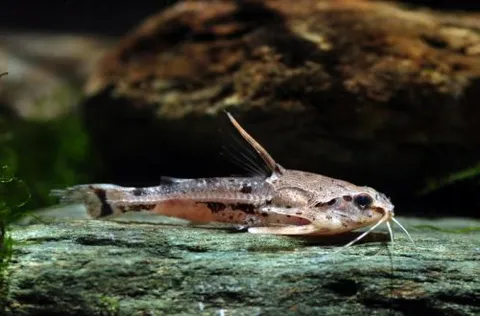
Amblydoras nauticus
The marbled talking catfish, known scientifically as Amblydoras nauticus, is a member of the family Doradidae, or thorny catfishes. This species is attractive due to its unpretentiousness and ease of keeping. It…
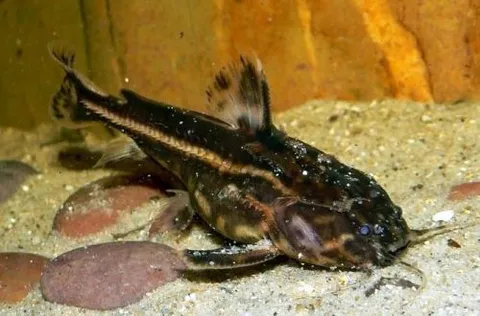
Acanthodoras cataphractus
Acanthodoras cataphractus, commonly known as the Chocolate Talking Catfish or Chocolate Doradid, belongs to the family Doradidae (Thorny Catfishes). It is also called the Spiny Catfish. This fish is not frequently found…
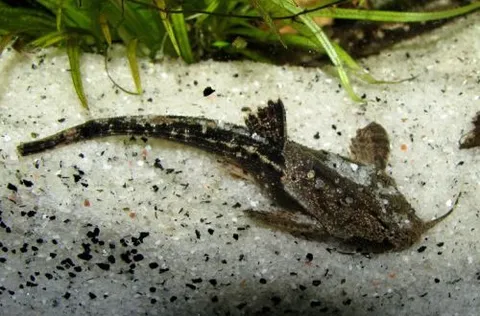
Bunocephalus coracoideus
The Bunocephalus coracoideus, or driftwood catfish, is a very curious fish, distinguished by its unusual body shape. Thanks to this unique appearance, in Latin America, it is affectionately called Guitarrita, meaning…
Orinocodoras eigenmanni
Orinocodoras eigenmanni, also known as the Striped Raphael Catfish or Orinoco Raphael Catfish, belongs to the family Doradidae (thorny catfishes). This catfish originates from South America, specifically the Orinoco…