Temperature20 – 25 °C
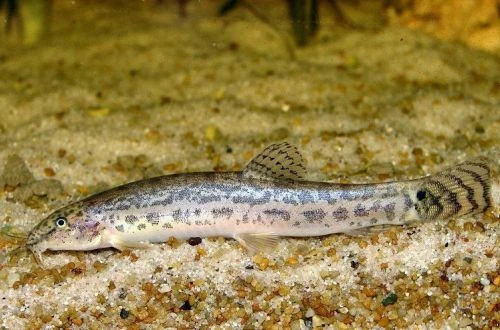
The scientific name Lepidocephalichthys berdmorei, or Burmese Loach, belongs to the family Cobitidae. This name refers to Burma, the modern state of Myanmar in Southeast Asia, where this species originates. The fish is considered one of the most common representatives of its genus and is excellent for aquarists, especially beginners.
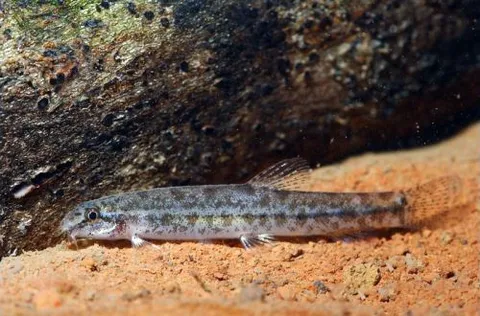
Adults typically reach a length of 8–10 cm, but specimens up to 12 cm can be found. Females are generally slightly larger than males. A distinctive feature of the fish is an elongated cylindrical body with a small head. Its paired pelvic and pectoral fins are positioned horizontally, and the tail has a rounded, truncated shape. The body coloration resembles sand with dark yellow iridescence. Irregular speckles forming a characteristic pattern can be seen on the back and sides of the fish. A distinct black spot is present at the base of the caudal fin.
The natural range of this species extends from Bangladesh and north-eastern India to the southern provinces of Thailand. The Burmese Loach is found in all major river basins of the region, including the Brahmaputra, Irrawaddy, Chao Phraya, and Mekong. It prefers the upper reaches of rivers with flowing, clean water, where the substrate consists of rocks, pebbles, as well as submerged tree roots and snags. Depending on the season, for example, during the dry period, the natural environment can transform significantly. Water bodies may become stagnant or slow-flowing, heavily overgrown with algae, and have low oxygen levels.
This species is characterized by a peaceful disposition towards both its own kind and other fish species. However, like many other fish, it may consume fry and eggs from clutches. It is advisable to avoid cohabitation with territorial or aggressive bottom dwellers, such as some species of loaches, cichlids, or catfish.
For a group of 3–4 Burmese Loaches, an aquarium of 60–70 liters is recommended. The aquarium decor can be anything, but it is important to provide heavy stony substrates and an abundance of shelters at the bottom, preferably one for each fish, so they feel secure. Creating an internal current, mimicking a mountain stream, is highly desirable. This can be achieved with a powerful filtration system with extra capacity or by installing an additional pump. If there is a current in the aquarium, it is better to choose undemanding live plants such as Anubias, mosses, or ferns, which can be attached to rocks or driftwood. It is worth noting that a strong current is not a strictly mandatory condition for this species; the fish can adapt well to other conditions, for example, an aquarium densely overgrown with greenery. Unlike many other inhabitants of flowing waters, the Burmese Loach is relatively tolerant of organic waste accumulation, which is associated with its ability to survive in water bodies with low oxygen content. Nevertheless, it should not be introduced into biologically immature aquariums, and when kept with other species from similar habitats, appropriate equipment is necessary.
In its natural habitat, the Burmese Loach feeds on insect larvae, small crustaceans, and other zooplankton. In aquarium conditions, it readily accepts most popular protein foods. The daily diet can include dry flakes and pellets, supplemented with live or frozen Artemia, Daphnia, and bloodworms.
Under aquarium conditions, the breeding of this species is practically unstudied, and reliable data on obtaining offspring in captivity is absent. In nature, the fish are seasonal spawners. Scientific studies confirm the possibility of stimulating spawning with hormonal preparations for industrial or laboratory purposes, but for the amateur aquarium, this process is not accessible or well-established.
The occurrence of diseases in aquarium fish is most often associated with unsuitable living conditions, which weaken their immune system and make them susceptible to various infections. At the first signs of illness, the primary task is to check the hydrochemical parameters of the water, including the compliance of pH and dGH levels, as well as the absence of exceeding permissible concentrations of nitrogen cycle products or other pollutants. Often, bringing all parameters back to normal contributes to recovery. If symptoms persist, medication may be required.
When purchasing, choose active individuals that show no signs of lethargy and have no visible damage to the skin or fins. It is important to examine the fish for signs of emaciation, as loaches can tolerate transportation and stress poorly. Avoid individuals with sunken eyes or unnatural spots on the body, which may indicate diseases or poor conditions in the retail aquarium. Remember that this species has sharp suborbital spines that can get caught in a net, so caution should be exercised when transferring them.
The essentials: size, tank volume, water parameters and care
An adult reaches 8–10 cm in length. Plan the tank around the maximum size: the fish quickly outgrows a cramped setup.
The recommended volume is 60 L. A smaller tank speeds up nitrate build-up and raises stress levels.
Temperature 20–25 °C, pH 6–8, hardness 2–15 dGH. Stability matters more than exact values: sudden swings are harder on the fish than a small deviation from the ideal.
Around 5 years when kept properly. Lifespan depends directly on tank volume, water quality and a varied diet.
Temperament: peaceful (regular). Keep this in mind when choosing tank mates.
Recommended setup: small group (3–4 individuals). Ignoring this is a common cause of stress and disease.
Diet type: sinking (any). Feed small portions that are finished within a couple of minutes — overfeeding does more harm than underfeeding.
The scientific name of the species is Lepidocephalichthys berdmorei, family Cobitidae (Loaches). It also appears in the literature as: Acanthopis berdmorei, Acanthopsis berdmorei, Cobitis berdmorei.
The water suits 196 of 208 plants in the catalogue — the easiest ones are shown first.
Afzelius's AnubiasAnacharisAnubiasBrazilian PennywortDwarf CloverDwarf CloverDwarf HygrophilaDwarf SagittariaDwarf ValGuppy GrassHornwortJava FernJava MossMoneywortMud SwordNarrow Leaf AnacharisNarrow-leaf CloverStringy MossSüsswassertangTaiwan MossTape GrassTemple PlantUssuri WatermilfoilWater Wisteria
Matched by family, categories and overlapping keeping conditions
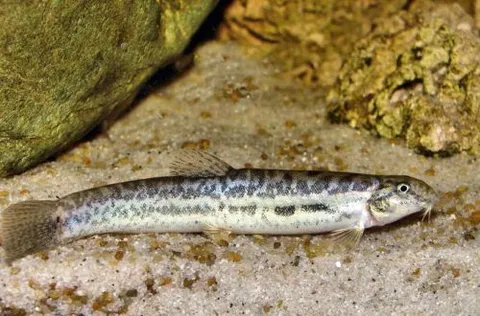
Lepidocephalichthys guntea
The fish known as the Peppered Loach or Guntea Loach (scientific name Lepidocephalichthys guntea) belongs to the family Cobitidae (Loaches). It is valued in aquaristics, although its coloration sometimes seems modest.…
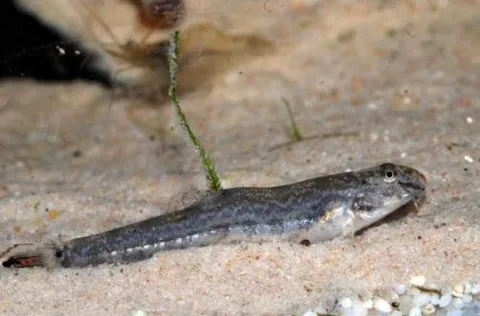
Lepidocephalichthys annandalei
The scientific name Lepidocephalichthys annandalei refers to a fish known as the Peacock Eel or Annandale's Loach, belonging to the family Cobitidae (Loaches). It owes its name to Dr. N. Annandale, who was the director…
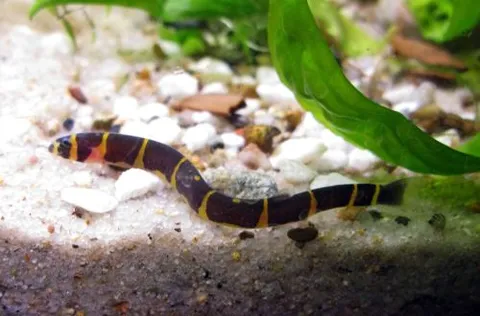
Pangio semicincta
Pangio semicincta, known as the Half-banded Kuhli Loach, belongs to the family Cobitidae. These fish are often sold under the name Pangio kuhlii, but it is important to note that this is a completely different species,…
Lepidocephalichthys hasselti
Hasselt's Loach, scientifically known as Lepidocephalichthys hasselti, belongs to the family Cobitidae. This species of aquarium fish is known for its hardiness and undemanding nature regarding keeping conditions.…