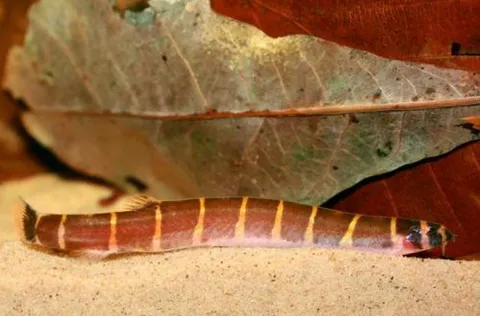
Myers's Loach
Pangio myersi
The fish known as Myers's Loach, or Pangio myersi by its scientific name, is a member of the Cobitidae family, which includes loaches. It was named in honor of Dr. George Sprague Myers of Stanford University, whose…
Pangio semicincta, known as the half-banded kuhli loach, belongs to the family Cobitidae. It is often sold under the name Pangio kuhlii, but this is a different species and is extremely rare in the hobby. The confusion arose from a taxonomic error: researchers once grouped Pangio semicincta and the kuhli loach (Pangio kuhlii) into a single species. This classification persisted from 1940 to 1993, when it was first challenged; the species were finally separated in 2011.
Adults reach 9 to 10 cm in length. The body is elongated and snake-like, with small fins and a distinctive tail. Sensitive barbels around the mouth help them find food in soft substrate. The coloration is brown, the belly is yellowish-white, and the body is marked with rings. Males and females are difficult to tell apart, as sexual dimorphism is not pronounced.
This species is native to Southeast Asia, including peninsular Malaysia and large Sunda Islands such as Sumatra and Borneo. They prefer shallow waters: old oxbow lakes, swamps, and shaded forest streams. They thrive in areas with stagnant water, dense aquatic vegetation for shelter, and soft, silted substrate or leaf litter to hide in.
The half-banded kuhli loach is peaceful and calm, coexisting well with its own kind and with other fish of similar size and temperament. In nature they often live in large groups, so keep at least 5–6 in the aquarium.
A group of 4–5 fish requires a tank of at least 50 litres. Use soft sandy substrate, as the half-banded kuhli loach will actively sift through it. Provide some driftwood to form hideouts and small caves, with shade-loving plants nearby. Indian almond leaves help recreate natural conditions. Keep lighting dimmed, and floating plants provide extra shade. Minimize water flow. Maintain stable conditions with weekly partial water changes (keeping pH and dGH the same) and regular removal of decaying plant matter, uneaten food, and waste.
In nature these fish eat small crustaceans, insects and their larvae, and plant debris, which they find by sifting substrate. In the aquarium offer sinking foods such as dry flakes, pellets, and frozen bloodworms, daphnia, and brine shrimp.
Breeding is seasonal. Changes in water chemistry trigger spawning. However, breeding this loach in the aquarium is quite difficult. There are no reliable reports of successful captive breeding of the half-banded kuhli loach.
Health problems occur mainly after injury or in unsuitable conditions, which weakens the immune system and leads to disease. At the first sign of illness, check water parameters for excess toxic substances (nitrite, nitrate, ammonia). Correct any imbalances, then treat.
When selecting a half-banded kuhli loach, choose active individuals at dusk or in dimmed light. A healthy fish has clean skin with no visible damage, sores, spots, or signs of wasting. Check that the barbels are intact; their absence or damage usually indicates poor past care. Avoid fish showing lethargy, lying on their side, or behaving unusually during the day without good reason. Inspect the skin carefully, as their small scales make them very prone to bacterial and fungal infection. Look for signs of stress, such as erratic dashing around the tank, which may indicate poor water quality in the seller's tank.
There are no pair reviews for this species yet — check tankmates in the matcher.
All tankmatesThe water suits 197 of 208 plants in the catalogue — the easiest ones are shown first.
Afzelius's AnubiasAnacharisAnubiasBrazilian PennywortDwarf CloverDwarf CloverDwarf HygrophilaDwarf SagittariaDwarf ValGuppy GrassHornwortJava FernJava MossMoneywortMud SwordNair's LagenandraNarrow Leaf AnacharisNarrow-leaf CloverStringy MossSüsswassertangTaiwan MossTape GrassTemple PlantUssuri Watermilfoil
Matching water does not mean the plant will stay intact.
The essentials: size, tank volume, water parameters and care
An adult reaches 10 cm in length. Plan the tank around the maximum size: the fish quickly outgrows a cramped setup.
The recommended volume is 50 L. A smaller tank speeds up nitrate build-up and raises stress levels.
Temperature 21–26 °C, pH 3.5–7, hardness 1–8 dGH. Stability matters more than exact values: sudden swings are harder on the fish than a small deviation from the ideal.
Around 10 years when kept properly. Lifespan depends directly on tank volume, water quality and a varied diet.
Temperament: peaceful (regular). Keep this in mind when choosing tank mates.
Recommended setup: small group (5–6 individuals). Ignoring this is a common cause of stress and disease.
Diet type: sinking (any). Feed small portions that are finished within a couple of minutes — overfeeding does more harm than underfeeding.
The scientific name of the species is Pangio semicincta, family Cobitidae (Loaches). It also appears in the literature as: Acanthophthalmus semicinctus.
Matched by family, categories and overlapping keeping conditions
Pangio myersi
The fish known as Myers's Loach, or Pangio myersi by its scientific name, is a member of the Cobitidae family, which includes loaches. It was named in honor of Dr. George Sprague Myers of Stanford University, whose…
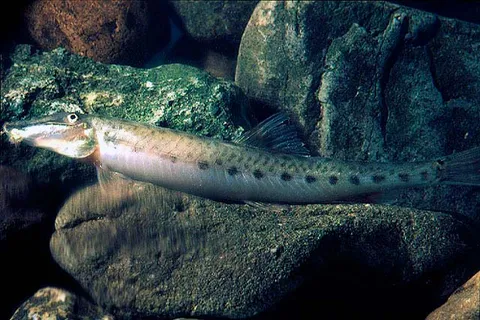
Acantopsis octoactinotos
Acantopsis octoactinotos, or the Long-nosed Loach, belongs to the family Cobitidae. This species is native to Southeast Asia, where it is found in the river systems of northern Borneo — the Indonesian part and the…
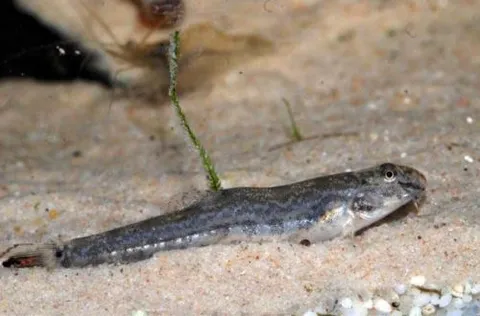
Lepidocephalichthys annandalei
The scientific name Lepidocephalichthys annandalei refers to a fish known as the Peacock Eel or Annandale's Loach, belonging to the family Cobitidae (Loaches). It owes its name to Dr. N. Annandale, who was the director…
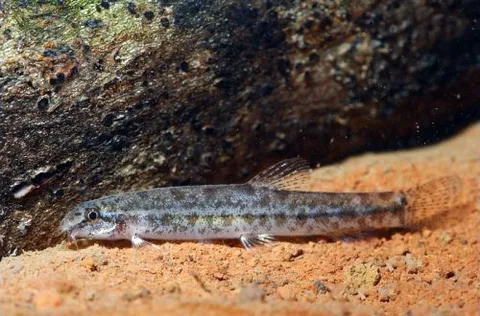
Lepidocephalichthys hasselti
Hasselt's Loach, scientifically known as Lepidocephalichthys hasselti, belongs to the family Cobitidae. This species of aquarium fish is known for its hardiness and undemanding nature regarding keeping conditions.…