Temperature24 – 30 °C
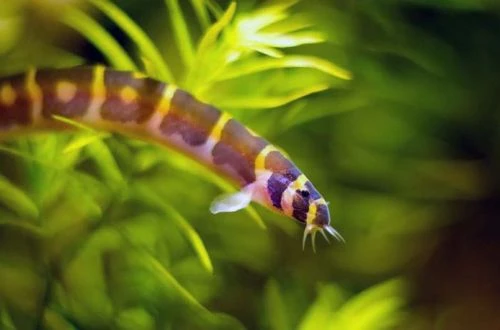
The Kuhli Loach, also known as the Coolie Loach, bears the scientific name Pangio kuhlii and belongs to the family Cobitidae (loaches). This fish originates from Southeast Asia, particularly common on the islands of Indonesia. Its natural habitats vary from swift mountain streams to calm peat swamps.
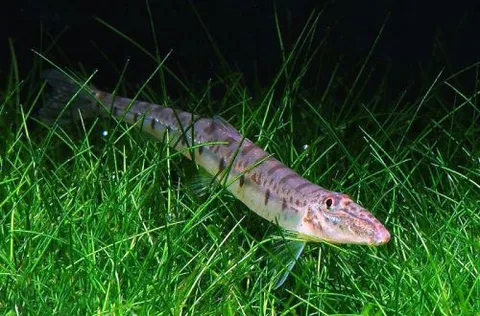
Adults can reach a length of up to 12 cm. With its elongated body, this fish resembles an eel or a graceful snake. Its striped pattern consists of large brownish segments separated by bright yellow rings. A dark spot is noticeable on the caudal fin, and the fins themselves are relatively small. Two pairs of barbels can be seen near its mouth. Confusion often arises between closely related species of the genus Acanthophthalmus due to very subtle differences that are only apparent to specialists. As a result, the same species is often sold under various names. For example, the Kuhli Loach may be known as the Half-banded Loach or Myers' Loach, and vice versa. However, for aquarists, such confusion is not significant, as these fish exhibit similar requirements for their living conditions.
In nature, it inhabits Southeast Asia, including the islands of Java, Sumatra, and Malaysia. It prefers slow-moving or stagnant bodies of water: forest streams, backwaters, swamps, and areas with peat water. A typical biotope is characterized by soft sandy substrate, fallen leaves, driftwood, and dense vegetation that creates shaded areas. The water in such places is usually soft, slightly acidic, and rich in humic substances.
These are peaceful and calm fish that feel more comfortable in a group of their own kind. They are active at night and prefer to hide in shelters during the day. They get along well with other closely related species and are compatible with many aquarium inhabitants of comparable size. When choosing tank mates, it is recommended to prefer species that inhabit the upper or middle water layers. However, caution should be exercised when choosing catfish, loaches, and cichlids: some of them may exhibit territorial behavior or aggression.
For a group of 4–5 Kuhli Loaches, the optimal aquarium volume starts from 70–80 liters. This species is perfectly suitable even for beginner aquarists, as it is easy to keep if a few simple rules are followed. An important condition is to provide a soft substrate, into which the fish like to burrow, as well as various hiding places, for example, made of driftwood. Another critical point: due to their tendency to hide in narrow crevices, the fish can easily get into the openings of the filtration system. Therefore, it is extremely important to reliably protect all open pipes and other underwater communications in the aquarium. Otherwise, keeping these fish is not difficult. Regular aquarium maintenance and prevention of organic waste accumulation, as well as sharp fluctuations in hydrochemical parameters, are key to their well-being. In their natural environment, they eat everything they find on the bottom, sifting the substrate with their mouths. In the aquarium, they also readily pick up food scraps not eaten by other fish. However, this should not be relied upon as the main food source. It is important to regularly feed them sinking foods (flakes, granules, etc.) to avoid underfeeding, preferably shortly before the lights are turned off.
In nature, the diet of these fish consists of everything they can find on the bottom, sifting substrate particles with their mouths. A similar situation is observed in the aquarium, where they readily pick up uneaten food scraps left by other inhabitants. Nevertheless, their diet should not be based solely on residual food. To ensure complete nutrition, it is necessary to regularly offer them sinking foods, such as flakes or granules. It is advisable to feed the fish shortly before the aquarium lights are completely turned off.
Breeding in an aquarium is considered difficult and occurs rarely. These are egg-laying fish, and spawning is often triggered by seasonal changes in conditions, mimicking the rainy season. To stimulate spawning, groups of individuals are used in spacious, densely planted aquariums with subdued lighting and soft water. The eggs are laid among plants or mosses, where they become vulnerable to predation by adult fish. Fry grow slowly and require microscopic live foods in the initial stages of development.
The species is highly sensitive to water quality and sudden parameter changes. Due to the absence of full scales, the fish are extremely susceptible to skin parasites and fungal infections, such as ichthyophthiriasis. Incorrect substrate selection, for example, using sharp gravel, leads to injuries to soft tissues and barbels, which opens the way for secondary bacterial infections. Prevention includes maintaining stable levels of nitrogenous compounds, using only soft sand, and mandatory quarantine for new individuals.
When purchasing, choose active fish with clean skin, free from visible ulcers, spots, or signs of emaciation. Healthy individuals show curiosity but may be timid and hide in shelters initially. It is important to avoid acquiring fish with damaged barbels or film on their bodies, as this indicates poor conditions in the store. It is recommended to purchase a group of 5–6 individuals, as solitary keeping causes them significant stress.
The essentials: size, tank volume, water parameters and care
An adult reaches 12 cm in length. Plan the tank around the maximum size: the fish quickly outgrows a cramped setup.
The recommended volume is 70 L. A smaller tank speeds up nitrate build-up and raises stress levels.
Temperature 24–30 °C, pH 5.5–7, hardness 1–10 dGH. Stability matters more than exact values: sudden swings are harder on the fish than a small deviation from the ideal.
Around 10 years when kept properly. Lifespan depends directly on tank volume, water quality and a varied diet.
Temperament: peaceful (regular). Keep this in mind when choosing tank mates.
Recommended setup: small group (5–6 individuals). Ignoring this is a common cause of stress and disease.
Diet type: sinking (any). Feed small portions that are finished within a couple of minutes — overfeeding does more harm than underfeeding.
The scientific name of the species is Pangio kuhlii, family Cobitidae (Loaches). It also appears in the literature as: Acanthophtalmus kuhli, Acanthophthalmus fasciatus, Acanthophthalmus kuhlii.
The water suits 197 of 208 plants in the catalogue — the easiest ones are shown first.
Afzelius's AnubiasAnacharisAnubiasBrazilian PennywortDwarf CloverDwarf CloverDwarf HygrophilaDwarf SagittariaDwarf ValGuppy GrassHornwortJava FernJava MossMoneywortMud SwordNair's LagenandraNarrow Leaf AnacharisNarrow-leaf CloverStringy MossSüsswassertangTaiwan MossTape GrassTemple PlantUssuri Watermilfoil
Matched by family, categories and overlapping keeping conditions
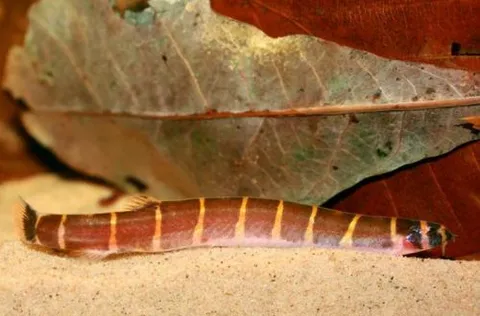
Pangio myersi
The fish known as Myers's Loach, or Pangio myersi by its scientific name, is a member of the Cobitidae family, which includes loaches. It was named in honor of Dr. George Sprague Myers of Stanford University, whose…
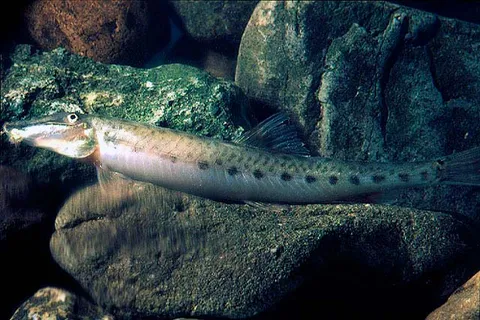
Acantopsis octoactinotos
Acantopsis octoactinotos, or the Long-nosed Loach, belongs to the family Cobitidae. This species is native to Southeast Asia, where it is found in the river systems of northern Borneo — the Indonesian part and the…
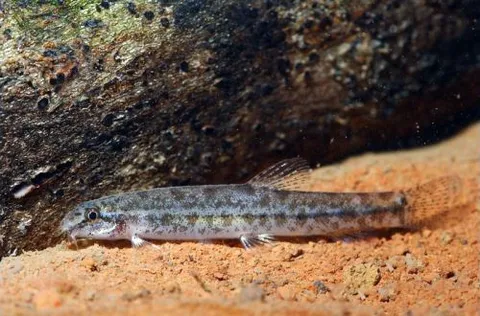
Lepidocephalichthys hasselti
Hasselt's Loach, scientifically known as Lepidocephalichthys hasselti, belongs to the family Cobitidae. This species of aquarium fish is known for its hardiness and undemanding nature regarding keeping conditions.…
Acantopsis dialuzona
Belonging to the family Cobitidae, the Horseface Loach (Acantopsis dialuzona) is a peaceful and calm aquarium fish. It can be successfully kept together with many species of tropical fish. Its keeping conditions do not…