Temperature23 – 30 °C
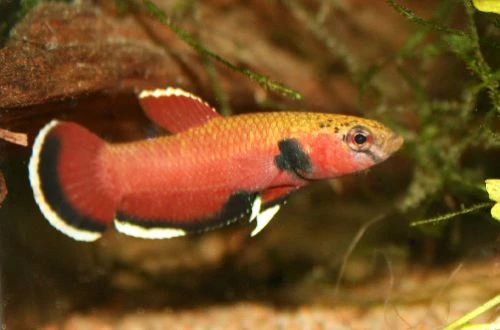
Betta channoides, also known as Channa's Betta or Chan's Fighting Fish, is a member of the Osphronemidae family. Despite belonging to the group of fighting fish, this species is distinguished by its peaceful and calm disposition. However, keeping Betta channoides can present certain difficulties in water preparation, making it not the most suitable choice for beginner aquarists.
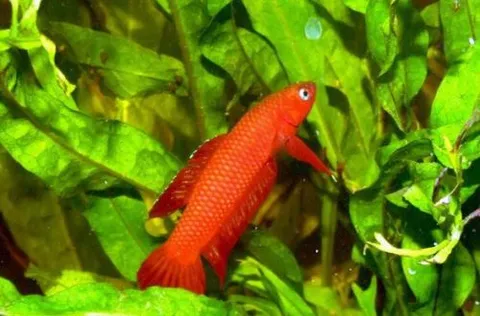
Adults reach approximately 4 cm in length. A distinguishing feature of males is their larger size and bright red coloration; their fins and tail are adorned with black and white edging. Females appear more modest, their attire consisting of dark and grey shades.
Its natural habitat is in Southeast Asia, on the Indonesian island of Borneo. These fish inhabit the Mahakam River basin, flowing through the province of East Kalimantan. They prefer small streams, backwaters, and swampy areas, staying closer to the banks, among roots, snags, and dense thickets of aquatic vegetation.
The classification of Betta channoides as a fighting fish often leads to misconceptions about its behavior. In reality, it exhibits almost none of the "fighting" traits; this is more a classification within the Osphronemidae family. Although males may compete for the attention of females, serious clashes usually do not occur. In a spacious aquarium, it is entirely possible to keep several males and females together, but for smaller volumes, it is recommended to limit to a single pair. Due to their size, they cannot compete with larger species. The optimal choice for tank mates are small, peaceful fish that can adapt to similar environmental conditions.
For the comfortable keeping of one or two fish, an aquarium of at least 40 liters is necessary. Although Betta channoides does not have strict requirements for decor, creating an environment close to its natural habitat is preferable. This includes using dark substrate, natural driftwood, shade-loving and floating plants, as well as a leaf litter. Leaves not only complement the decor but also contribute to the formation of the water's chemical composition, characteristic of natural bodies of water, by releasing tannins as they decompose. It is important to prevent the accumulation of organic waste, such as food remnants and excrement, which can disrupt the nitrogen cycle. The aquarium requires regular care, including weekly partial water changes with fresh water, as well as cleaning the substrate, walls, and decor elements from plaque and contaminants. When changing water, it is necessary to ensure that the pH and dGH parameters of the new water match those of the "old" water. The choice of aquarium equipment is determined by the volume of the tank, the number of inhabitants, and, of course, the aquarist's budget. Special attention should be paid to the filtration system, as it is considered mandatory. For small volumes, a simple air-driven sponge filter will suffice.
In natural conditions, the diet of Betta channoides consists of small invertebrates and various zooplankton. In aquarium conditions, they successfully adapt to alternative food sources. The daily menu can include dry foods, such as flakes and granules, in combination with live or frozen daphnia, artemia, bloodworms, and others.
During evolution, some Betta species, including Betta channoides, developed a unique breeding method that ensures the protection of offspring. After spawning, the male collects the fertilized eggs directly into his mouth. The eggs remain in his mouth for 10–21 days. Throughout this period, the male completely abstains from food and tries to hide in a secluded corner of the aquarium. The female, in turn, actively "patrols" the surrounding territory, warding off any potential threats. With the appearance of fry, parental instincts gradually fade, however, the young can safely remain near the adults without fear of being eaten.
Most health problems in fish often arise from unsuitable keeping conditions. Maintaining a stable and comfortable habitat is a key factor for successful keeping. If symptoms of illness appear, the first step is to check the water quality. If deviations are found, it is important to take immediate measures to eliminate them. If the symptoms do not disappear or worsen, medicinal treatment may be required.
When purchasing, choose active fish with clean fins and no visible damage or sores on their bodies. Avoid individuals that appear emaciated, stay at the water surface, or show signs of apathy. Since this species is sensitive to environmental conditions, it is advisable to assess the water quality in the store's aquarium: it should be clear, without a strong unpleasant odor. Remember that males have brighter coloration and a broader head shape, while females have a more modest grayish or orange coloration.
The essentials: size, tank volume, water parameters and care
An adult reaches 4 cm in length. Plan the tank around the maximum size: the fish quickly outgrows a cramped setup.
The recommended volume is 40 L. A smaller tank speeds up nitrate build-up and raises stress levels.
Temperature 23–30 °C, pH 4–6, hardness 1–5 dGH. Stability matters more than exact values: sudden swings are harder on the fish than a small deviation from the ideal.
Around 4 years when kept properly. Lifespan depends directly on tank volume, water quality and a varied diet.
Temperament: peaceful (regular). Keep this in mind when choosing tank mates.
Recommended setup: mixed (solitary / pair / group). Ignoring this is a common cause of stress and disease.
Diet type: any (universal). Feed small portions that are finished within a couple of minutes — overfeeding does more harm than underfeeding.
The scientific name of the species is Betta channoides, family Osphronemidae.
The water suits 171 of 208 plants in the catalogue — the easiest ones are shown first.
African Onion PlantAmazon FrogbitAmazon SwordAnacharisAnubiasArrowhead CryptDwarf CloverDwarf CloverDwarf HygrophilaDwarf SagittariaGuppy GrassHornwortJava FernJava MossMoneywortMud SwordNair's LagenandraNarrow Leaf AnacharisNarrow-leaf CloverStringy MossSüsswassertangTaiwan MossTemple PlantUssuri Watermilfoil
Matched by family, categories and overlapping keeping conditions
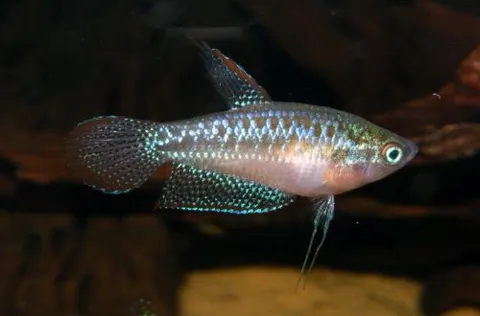
Trichopsis pumila
The Dwarf Gourami, or Pumila, known scientifically as Trichopsis pumila, is a member of the Osphronemidae family. This aquarium fish is popular due to its interesting coloration, as well as its ease of care and…
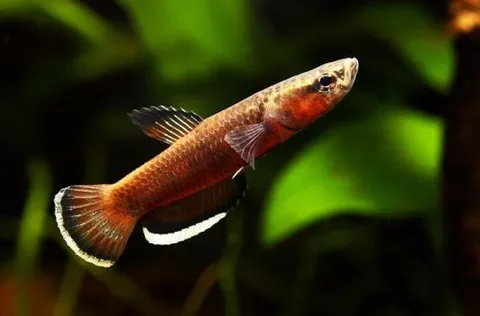
Betta albimarginata
Betta albimarginata, or the White-Seam Betta (scientific name Betta albimarginata), belongs to the family Osphronemidae. This miniature fish has a bright and attractive appearance, but these characteristics mainly apply…
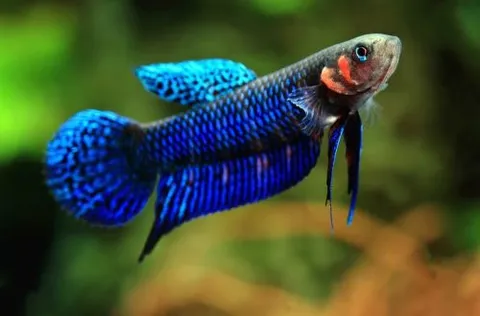
Betta hendra
The scientific name Betta hendra was given to Hendra's Betta, or Betta hendra, within the family Osphronemidae. This species was named after the Indonesian naturalist Hendra Tommy, who first discovered it. This fish is…
Betta uberis
Betta uberis, or Betta Ubera, is classified in the family Osphronemidae. This species of Betta fish is not recommended for beginner aquarists, as it requires maintaining very strict hydrochemical water parameters.