Acestrorhamphidae

Chocolate Tetra

Hyphessobrycon vilmae

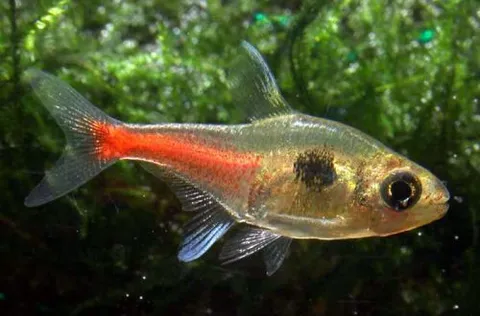
Hyphessobrycon vilmae, also called the chocolate neon tetra, belongs to the family Acestrorhamphidae (formerly Characidae). The species was named after Wilma Schultz, wife of the ethnographer and fish collector Harald Schultz (1909–1966), who collected the type specimen. The chocolate tetra is suited to most freshwater tanks: it is undemanding, easy to breed, and gets on well with other peaceful fish.

Tank
from 54 L (14 gal)
Temperature
20 – 26 °C (68 – 79 °F)
Size in aquarium
3 cm (1.2 in)
Acidity
pH 5–7
Natural rangeRange on the map
  • Amazonas area
  • Mato Grosso area
  • Brazil

Tank conditions

Plan the tank stocking
Temperature
20 – 26 °C (68 – 79 °F)
Water pH
Slightly acidic (5) – Neutral (7)
Water dH
Very soft (2) – Hard (12)
Water salinity
no salt (freshwater)
Size in aquarium
3 cm (1.2 in)
Lifespan
4 years
Temperament
Peaceful (regular)
Toward small fish
not a predator
Required aquarium volume
from 54 L (14 gal)
Lighting
dimmed
Substrate
rocky rock formations, boulders, etc.
Water flow
weak
Swimming level
middle level
Feeding
Small Small / appropriate size / pieces
Keeping
Group (8–10 individuals)
Jumping
low
  • Lifespan. A lifespan to expect under good care, not a measured value: it depends heavily on tank volume, water quality and diet — and for selectively bred forms, on their origin as well.
  • Toward small fish. Based on the Predators category in the catalog or the temperament in the species parameters. “A risk to small fish” means the species is not a predator by habit, yet will swallow any fish that fits in its mouth.
  • Required aquarium volume. This is a husbandry recommendation, not a measured value: the volume depends on the keeping mode (group (8–10 individuals)), footprint, decor and tank mates.

Care and keeping

Description

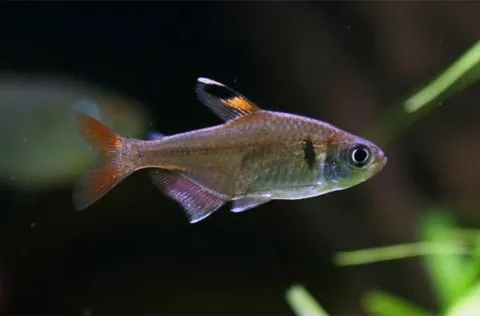
Adults reach 3 cm. Males and females look similar; sexual dimorphism is weak. The body is marked by a broad black stripe running from the head to the tail along the midline, dividing the darker yellow back from the silvery belly. The fins sometimes show red pigmentation.

Habitat

This fish occurs in South America in the upper Tapajós basin. The Tapajós is a right-bank tributary of the Amazon, rising in the Brazilian states of Amazonas and Mato Grosso. The chocolate tetra favours small streams running through tropical forest. These waters have sandy substrates with abundant wood.

Behavior and Compatibility

The chocolate tetra is peaceful and schooling. Keep it in a group of at least 8–10 individuals. With fewer fish it becomes overly shy, especially if larger species are nearby. It is compatible with other non-aggressive freshwater fish of similar size.

Care and Maintenance

A group of 8–10 needs a minimum tank of 54 litres. Tank design is not critical and depends on your taste. However, the chocolate tetra looks best in a setup that mimics its natural habitat: dim lighting, dense aquatic plants, and wood. Dried leaves of certain trees placed on the substrate make a good addition. Like leaves in natural rivers, these gradually decompose and release tannins, making the water chemistry similar to the fish's home waters. The leaves also form a base for microbial colonies such as Paramecium, which provide valuable live food for fry. Long-term success depends on several factors, with water quality being key. These fish need stable conditions, so avoid sharp swings in water chemistry or temperature, and prevent dangerous levels of ammonia, nitrite and nitrate. The balance of the tank ecosystem depends on adequate equipment—mainly efficient filtration—and regular maintenance. Maintenance means a weekly partial water change, checking water parameters, removing organic waste (uneaten food, droppings) and replacing leaves if you use them.
Diet

Feeding poses no difficulty. In the home tank they readily eat most common foods: flakes and granules are fine as a daily diet. You can vary their food with live or frozen items such as Artemia or Daphnia if you wish.

Breeding and Reproduction

Breeding follows the pattern typical of characins. Females scatter eggs among plants or on the open substrate; males then fertilize them. There is no fixed breeding season; different fish breed at different times. These fish show no parental care, so the eggs will usually be eaten. To preserve the brood, transfer the fertilized eggs to a separate tank with water identical to the main tank. Otherwise they will be consumed.

Diseases

No diseases are known to strike this species alone. Given suitable conditions—clean water, a balanced diet and peaceful tank mates—health problems are rare. Poor conditions are the usual cause of illness; they weaken immunity and leave the fish open to infections always present in the tank. If you notice early signs of illness—lethargy, weight loss, refusing food or clamped fins—first check your water parameters. Often good conditions restore health on their own. If the fish is too weak or has visible damage, medicine may be needed.

How to choose

When buying, look for active fish with intact skin. Healthy ones school together, show curiosity and respond eagerly to food. Avoid thin fish, those with torn fins or unnatural coating on the body. Bear in mind that stress in the shop makes colours pale, but the fish should not seem apathetic or hide in corners. Buy a group of at least 8–10 individuals: this species suffers severe stress if kept alone.

Compatibility

There are no pair reviews for this species yet — check tankmates in the matcher.

All tankmates

Plants and this fish

Matching water does not mean the plant will stay intact.

Frequently asked questions

The essentials: size, tank volume, water parameters and care

How big does Chocolate Tetra get?

An adult reaches 3 cm in length. Plan the tank around the maximum size: the fish quickly outgrows a cramped setup.

What size aquarium does Chocolate Tetra need?

The recommended volume is 54 L. A smaller tank speeds up nitrate build-up and raises stress levels.

What water parameters does Chocolate Tetra need?

Temperature 20–26 °C, pH 5–7, hardness 2–12 dGH. Stability matters more than exact values: sudden swings are harder on the fish than a small deviation from the ideal.

How long does Chocolate Tetra live?

Around 4 years when kept properly. Lifespan depends directly on tank volume, water quality and a varied diet.

Is Chocolate Tetra aggressive?

Temperament: peaceful (regular). Keep this in mind when choosing tank mates.

How many Chocolate Tetra should be kept together?

Recommended setup: group (8–10 individuals). Ignoring this is a common cause of stress and disease.

What does Chocolate Tetra eat?

Diet type: small / appropriate size / pieces. Feed small portions that are finished within a couple of minutes — overfeeding does more harm than underfeeding.

What is the scientific name of Chocolate Tetra?

The scientific name of the species is Hyphessobrycon vilmae, family Acestrorhamphidae.

Similar fishes

Matched by family, categories and overlapping keeping conditions

Three-lined Tetra

Three-lined Tetra

Hyphessobrycon heterorhabdus

Acestrorhamphidae

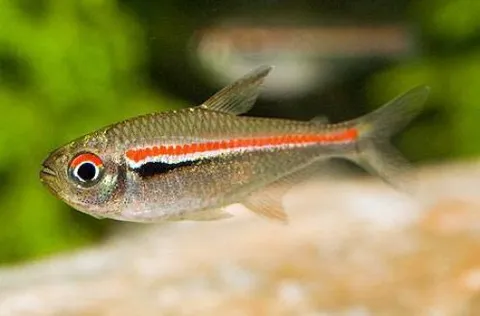
The Three-lined Tetra, scientifically known as Hyphessobrycon heterorhabdus, belongs to the Acestrorhamphidae family. Despite its modest size, this miniature tetra still requires a sufficiently spacious aquarium to…

Schultz's Tetra

Schultz's Tetra

Megalamphodus haraldschultzi

Acestrorhamphidae

Timari Tetra, or Schultz's Tetra (Megalamphodus haraldschultzi), is a member of the Characin family. It is often called the Red Dwarf Tetra due to its striking coloration. This picturesque miniature fish is ideal for…

Yellow Phantom Tetra

Yellow Phantom Tetra

Hyphessobrycon roseus

Acestrorhamphidae

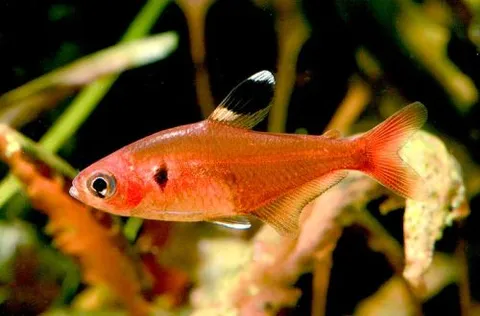
The Yellow Phantom Tetra, scientifically known as Hyphessobrycon roseus, belongs to the Acestrorhamphidae family. This freshwater fish is notably popular among aquarists due to its ease of care and breeding. It also…

False Pristella Tetra

False Pristella Tetra

Hyphessobrycon simulatus

Acestrorhamphidae

Hyphessobrycon simulatus, or the False Pristella Tetra (also known as the False Transparent Tetra), belongs to the Acestrorhamphidae family. As its name suggests, this fish bears a resemblance to the Pristella Tetra,…

Other scientific names and conservation status

Categories
Characins
Conservation status
Least concernLC