Temperature20 – 26 °C
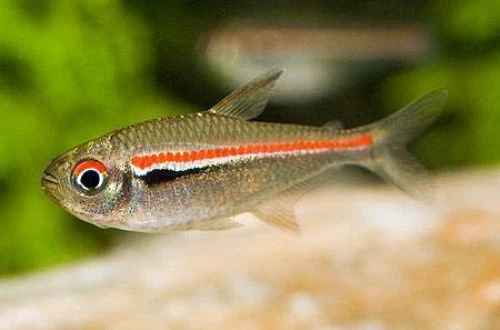
The Three-lined Tetra, scientifically known as Hyphessobrycon heterorhabdus, belongs to the Acestrorhamphidae family. Despite its modest size, this miniature tetra still requires a sufficiently spacious aquarium to provide it with the necessary swimming room. Otherwise, this fish is unpretentious and easy to care for, making it an excellent choice even for aquarists without much experience.
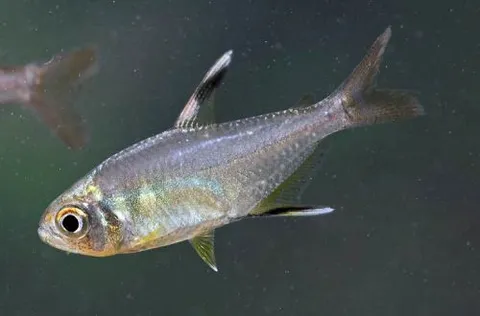
Adults of this fish reach approximately 3 cm in length. Males are usually slimmer than females, which can be noticeably larger. The body color is dark, with a gray back and a silvery belly. A distinctive feature of the species is a characteristic three-colored stripe running along the entire length of the body from head to tail. This stripe consists of black, yellowish, and reddish lines. Due to the similarity of this coloration to the flag of Belgium, the fish received the unofficial name "Belgian Flag Tetra."
The natural habitat of this species is in South America, covering the territory of the eastern Brazilian states of Pará and Maranhão. The fish inhabits the basins of the Tocantins and Xingu rivers, as well as numerous other water bodies that flow into the Atlantic Ocean along the eastern coast of Brazil. It can be found in small streams winding through humid tropical forests. Unlike the Amazon, where distinct dry and wet seasons are observed, the natural conditions here are not subject to strong seasonal fluctuations. The beds of these water bodies are often shaded by dense tree canopies and riparian vegetation. The water in them is crystal clear and transparent, and the bottom is covered with sandy substrates, a layer of fallen leaves, and branches. Aquatic plants are generally absent in such places.
Thanks to its peaceful nature, this species is perfectly suited for keeping in a community tank with other freshwater fish of similar size, provided there are no aggressive or territorial inhabitants. It is recommended to acquire tetras in groups of 8–10 individuals; the larger the school, the better the fish feel. If kept alone, they can become overly timid.
For a school of 8–10 Three-lined Tetras, aquariums with a volume of 70–80 liters are recommended. It is desirable that the decor recreates the natural habitat of these fish as much as possible. The main condition is to provide sufficient free swimming space and to include several shelters along the edges of the tank. Heavily branched natural snags are excellent for this purpose. The presence of live aquatic plants is not mandatory, but if they are used, it is important to prevent their excessive growth. A useful addition will be placing fallen leaves of certain tree species on the bottom; this will not only give the decor a more natural look but also beneficially affect the water's chemical composition by acidifying it. During decomposition, the leaves release tannins and other humic substances, which mimics natural processes. To maintain stable water parameters, a weekly water change of 15–20% of the volume with fresh water is required, which can be combined with siphoning the substrate, as well as regular maintenance of aquarium equipment.
In natural conditions, the fish's diet includes everything that fits into its small mouth: this can be small invertebrates, crustaceans, filamentous algae, as well as fruits and plant seeds that have fallen into the water. In a home aquarium, these fish will gladly accept most available foods of suitable size, whether flakes, granules, or frozen or live brine shrimp, bloodworms, or daphnia.
Cases of fry appearing in Three-lined Tetras are quite common, and their breeding is well within the capabilities of even beginners. Fish adapted to home conditions do not have a pronounced breeding season. Sometimes, one only learns about a spawning event by the appearance of fry, if they haven't been eaten by the adults. The breeding strategy of this species is simple: the fish scatter their eggs chaotically, without creating a nest. Parental instincts are not developed in them, so after fertilization, the eggs are left unattended. The hatched fry should be moved to a separate aquarium with similar water conditions. Feeding such tiny creatures can pose difficulties in finding suitable food. If leaves were used in the main aquarium, a colony of microorganisms, such as paramecia, might have formed during their decomposition. In such a case, bottom water from the main aquarium can be poured into the fry tank, and a portion of leaves added. However, one should not rely entirely on paramecia; it is recommended to purchase special nutritional suspensions for fry in advance.
A balanced aquarium biosystem and optimal keeping conditions serve as the best guarantee against various diseases. If you notice changes in the fish's behavior, color, or the appearance of unusual spots and other symptoms, the first step should be to check the water parameters, and only then should treatment begin.
When selecting individuals, attention should be paid to their activity and the integrity of their skin. Healthy fish should exhibit natural schooling activity for the species, have no damaged fins, white spots, ulcers, or signs of emaciation. Avoid purchasing fish that appear sluggish, keep to themselves, or have an unnaturally bloated abdomen. Since the species is sensitive to transport and adaptation conditions, it is recommended to acquire a group of 8–10 individuals simultaneously. This will help reduce the stress level of the fish when moving to a new aquarium. Before purchasing, clarify the water parameters in which the fish were kept at the store to ensure a smooth transition to your aquarium's conditions.
The essentials: size, tank volume, water parameters and care
An adult reaches 3 cm in length. Plan the tank around the maximum size: the fish quickly outgrows a cramped setup.
The recommended volume is 70 L. A smaller tank speeds up nitrate build-up and raises stress levels.
Temperature 20–26 °C, pH 5.5–7.5, hardness 2–12 dGH. Stability matters more than exact values: sudden swings are harder on the fish than a small deviation from the ideal.
Around 5 years when kept properly. Lifespan depends directly on tank volume, water quality and a varied diet.
Temperament: peaceful (regular). Keep this in mind when choosing tank mates.
Recommended setup: group (8–10 individuals). Ignoring this is a common cause of stress and disease.
Diet type: small / appropriate size / pieces. Feed small portions that are finished within a couple of minutes — overfeeding does more harm than underfeeding.
The scientific name of the species is Hyphessobrycon heterorhabdus, family Acestrorhamphidae. It also appears in the literature as: Tetragonopterus heterorhabdus.
The water suits 198 of 208 plants in the catalogue — the easiest ones are shown first.
Afzelius's AnubiasAnacharisAnubiasBrazilian PennywortDwarf CloverDwarf CloverDwarf HygrophilaDwarf SagittariaDwarf ValGuppy GrassHornwortJava FernJava MossMoneywortMud SwordNair's LagenandraNarrow Leaf AnacharisNarrow-leaf CloverStringy MossSüsswassertangTaiwan MossTape GrassTemple PlantUssuri Watermilfoil
Matched by family, categories and overlapping keeping conditions
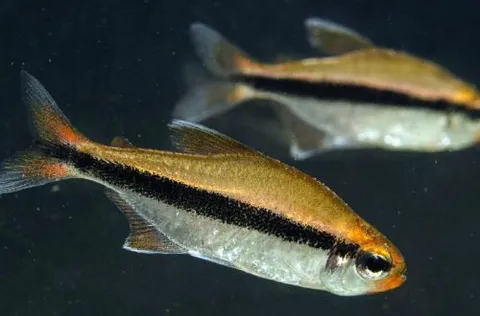
Hyphessobrycon vilmae
Hyphessobrycon vilmae, also known as the Chocolate Neon Tetra (scientific name Hyphessobrycon vilmae), belongs to the family Acestrorhamphidae. This name was given in honor of Wilma Schultz – the wife of the…
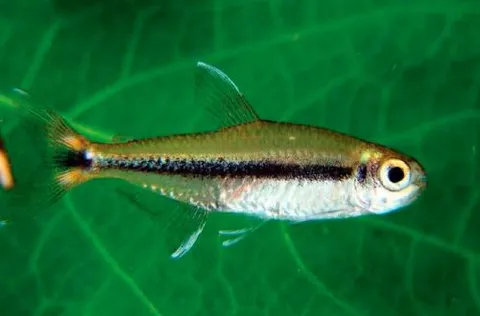
Hyphessobrycon stegemanni
The Savannah Tetra, scientifically known as Hyphessobrycon stegemanni, belongs to the Acestrorhamphidae family. Its care is straightforward, making it an excellent choice for most freshwater aquariums, as it coexists…
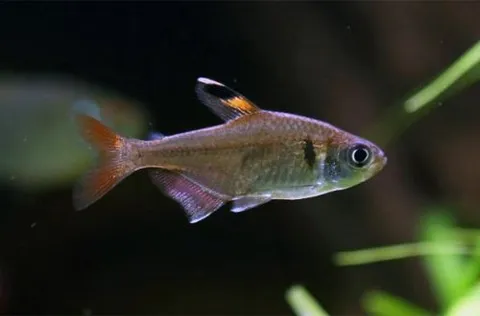
Hyphessobrycon simulatus
Hyphessobrycon simulatus, or the False Pristella Tetra (also known as the False Transparent Tetra), belongs to the Acestrorhamphidae family. As its name suggests, this fish bears a resemblance to the Pristella Tetra,…
Hemigrammus unilineatus
Hemigrammus unilineatus, known as the Trinidad Tetra, belongs to the family Acestrorhamphidae. This fish is a relative of popular species such as the Glowlight Tetra, Pulcher, and Golden Tetra. Its coloration is less…