Temperature20 – 25 °C
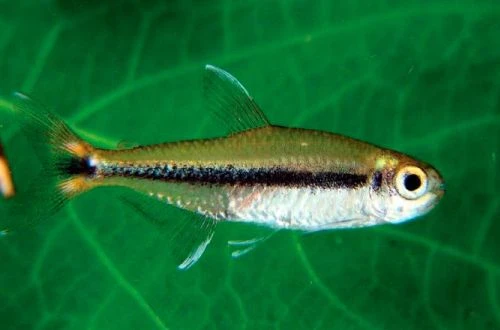
The Savannah Tetra, scientifically known as Hyphessobrycon stegemanni, belongs to the Acestrorhamphidae family. Its care is straightforward, making it an excellent choice for most freshwater aquariums, as it coexists well with many other inhabitants. The species' name indicates its origin: it inhabits savannah regions, specifically a unique South American region called the Cerrado. Interestingly, its Latin name is associated with Carlos Stegemann, a baker from São Paulo. This unusual dedication is due to Harald Schultz (1909–1966), a prominent Amazonian explorer and close friend of Stegemann, who decided to immortalize his friend's name by naming one of the fish he discovered after him.
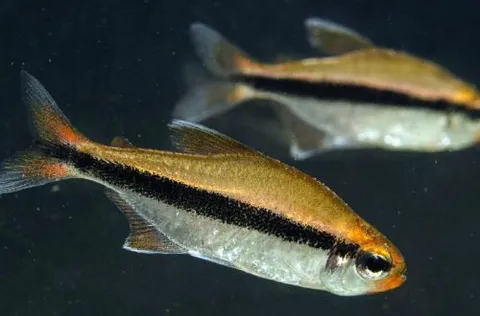
Adults of this species reach a length of 2 to 3 cm. Their coloration is predominantly gray, with a distinctive dark horizontal stripe running from the head to the tail. Differences between males and females are subtle; they look very similar. However, females, especially before spawning, may appear slightly larger.
The natural habitat of this species covers the middle basin of the Tocantins River in South America, including areas of the Tocantins and Maranhão states in Brazil. The fish is found in the region known as the Cerrado—a vast expanse of tropical savannas, recognized as the most biologically diverse savanna in the world, home to numerous endemic plant and animal species. Here, the fish inhabit numerous small rivers flowing through the region. Water levels and chemical composition can fluctuate significantly depending on the season. The riverbed consists of rock formations, stones of various sizes, and is abundant with submerged tree roots, fallen leaves, and branches. Currently, about half of the Cerrado's territory has been destroyed due to active human economic activity.
This is a peaceful and active fish that prefers to stay in groups. It is recommended to keep a school of at least 8–10 individuals. Due to its peaceful nature and adaptability to various conditions (compared to other tetras), this species is an excellent tank mate for other non-aggressive freshwater fish of comparable size.
The optimal aquarium volume for a school of 8–10 individuals should be at least 40–50 liters. The aquarium setup can be chosen at the aquarist's discretion or according to the needs of more demanding species, as it is not critical for the Savannah Tetra. The key factor for successful keeping is maintaining high water quality. It is essential to ensure stable water parameters, such as temperature and hydrochemical indicators, within the permissible range, and to prevent the accumulation of nitrogen cycle products (ammonia, nitrites, nitrates) to dangerous concentrations. This is achieved through regular aquarium maintenance, which includes partial water changes, timely substrate cleaning, and removal of organic waste, as well as using an adequate filtration system, which is a priority.
The Savannah Tetra is not picky about food; in a home aquarium, it readily accepts a variety of appropriately sized foods. Its daily diet can consist entirely of dry foods, such as flakes and granules, provided that high-quality products from reputable manufacturers are chosen. To enrich the diet, it is recommended to include small invertebrates, such as Artemia, Daphnia, or small bloodworms.
In their natural environment, Savannah Tetras breed during the rainy season, which stimulates changes in water composition. However, fish that have lived in aquariums for generations have lost this close connection to seasonal cycles, so under favorable conditions, spawning can occur throughout the year. The lack of pronounced seasonality means that fish spawn at different times. In large groups, fry can appear almost monthly. The Savannah Tetra does not care for its offspring and may eat its own eggs and fry. To preserve the young, fertilized eggs should be promptly transferred to a separate breeding tank, where water parameters should be identical to the main aquarium. Maintaining these conditions is ensured by a simple air-driven sponge filter and a heater. A separate light source is not required. In the first days after hatching, the fry feed on the remnants of their yolk sac, and then begin to actively swim in search of food. Given the tiny size of the fry, they need microscopic food, such as paramecia or specialized powdered mixtures.
Specific diseases that affect only this particular fish species have not been identified. When kept in suitable conditions, including high water quality, a balanced diet, and peaceful tank mates, health issues usually do not arise. The most common cause of illness is a deterioration of living conditions, which weakens the immune system and makes the fish susceptible to infections that are always present in their environment. Upon noticing initial signs of sickness (such as lethargy, emaciation, refusal to eat, or clamped fins), it is crucial to immediately check the basic water parameters. Often, restoring acceptable living conditions will lead to self-recovery, but if the fish is too weak or has suffered visible damage, medicinal treatment may be required.
When purchasing, select active individuals that stay in a school and exhibit natural behavior. It is important to carefully inspect the fish for any fin damage, ulcers, spots, or signs of emaciation. Avoid buying fish from tanks where dead specimens or individuals with clear signs of illness are observed. Since this species is often confused with other similar characins in trade, it is recommended to pay attention to the body shape and coloration characteristic of this species.
The essentials: size, tank volume, water parameters and care
An adult reaches 3–3.5 cm in length. Plan the tank around the maximum size: the fish quickly outgrows a cramped setup.
The recommended volume is 54 L. A smaller tank speeds up nitrate build-up and raises stress levels.
Temperature 20–25 °C, pH 5.5–7.5, hardness 1–12 dGH. Stability matters more than exact values: sudden swings are harder on the fish than a small deviation from the ideal.
Around 5 years when kept properly. Lifespan depends directly on tank volume, water quality and a varied diet.
Temperament: peaceful (regular). Keep this in mind when choosing tank mates.
Recommended setup: group (8–10 individuals). Ignoring this is a common cause of stress and disease.
Diet type: small / appropriate size / pieces. Feed small portions that are finished within a couple of minutes — overfeeding does more harm than underfeeding.
The scientific name of the species is Hyphessobrycon stegemanni, family Acestrorhamphidae. It also appears in the literature as: Hemigrammus stegemanni.
The water suits 197 of 208 plants in the catalogue — the easiest ones are shown first.
Afzelius's AnubiasAnacharisAnubiasBrazilian PennywortDwarf CloverDwarf CloverDwarf HygrophilaDwarf SagittariaDwarf ValGuppy GrassHornwortJava FernJava MossMoneywortMud SwordNarrow Leaf AnacharisNarrow-leaf CloverStringy MossSüsswassertangTaiwan MossTape GrassTemple PlantUssuri WatermilfoilWater Wisteria
Matched by family, categories and overlapping keeping conditions
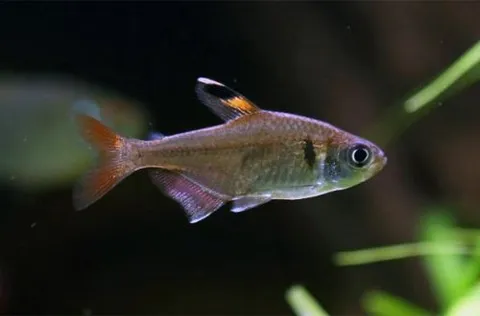
Hyphessobrycon simulatus
Hyphessobrycon simulatus, or the False Pristella Tetra (also known as the False Transparent Tetra), belongs to the Acestrorhamphidae family. As its name suggests, this fish bears a resemblance to the Pristella Tetra,…
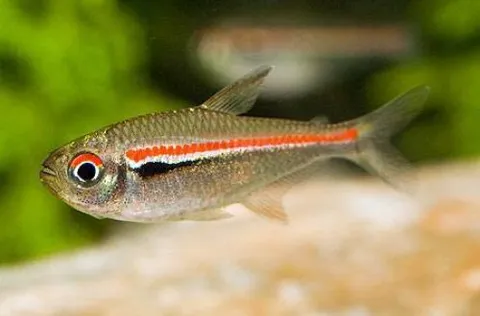
Hyphessobrycon heterorhabdus
The Three-lined Tetra, scientifically known as Hyphessobrycon heterorhabdus, belongs to the Acestrorhamphidae family. Despite its modest size, this miniature tetra still requires a sufficiently spacious aquarium to…
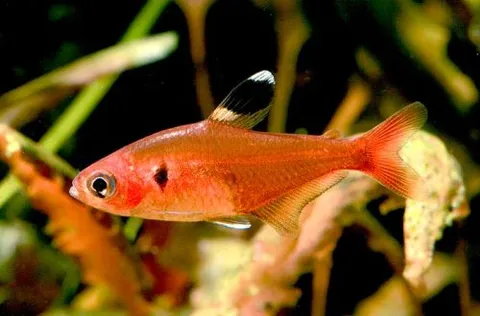
Megalamphodus haraldschultzi
Timari Tetra, or Schultz's Tetra (Megalamphodus haraldschultzi), is a member of the Characin family. It is often called the Red Dwarf Tetra due to its striking coloration. This picturesque miniature fish is ideal for…
Hyphessobrycon vilmae
Hyphessobrycon vilmae, also known as the Chocolate Neon Tetra (scientific name Hyphessobrycon vilmae), belongs to the family Acestrorhamphidae. This name was given in honor of Wilma Schultz – the wife of the…