Temperature17 – 28 °C
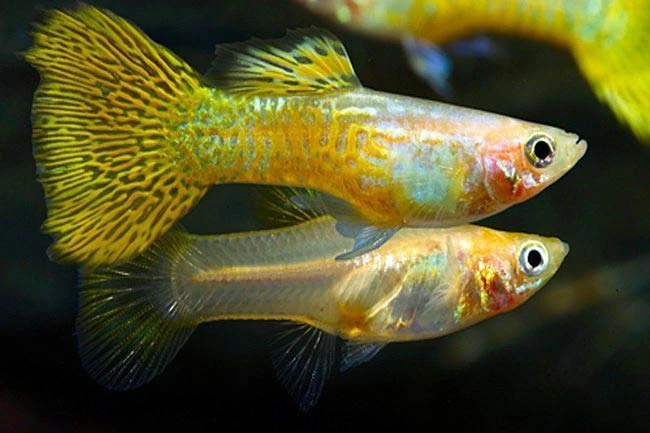
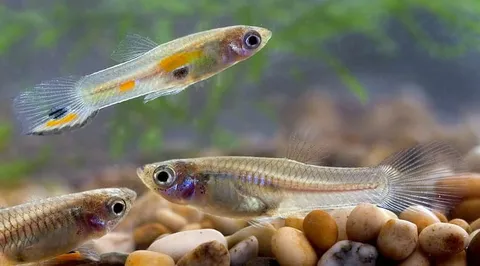
The Cobra Guppy, scientifically known as Poecilia reticulata (Cobra variety), belongs to the family Poeciliidae. Its distinctive feature is a pattern of vertical stripes running along the posterior part of its body. The coloration of these fish varies widely: green, red, blue, and yellow hues, as well as various combinations thereof, can be found. Particularly notable is the large, flowing caudal fin, adorned with numerous contrasting speckles and irregularly shaped spots. These characteristics primarily apply to males. Females, though larger, appear less vibrant and expressive.
The Cobra Guppy is a selectively bred form of Poecilia reticulata, distinguished by a characteristic pattern on its body resembling snakeskin, created by a combination of vertical stripes and mosaic spots. Males reach 3–4 cm in length and have large, flowing fins with contrasting speckles. Females are larger, growing up to 5–6 cm, but have less vibrant coloration and shorter fins.
In the wild, the guppy's ancestors inhabit fresh and brackish waters of South America and the Caribbean islands, such as Venezuela, Guyana, Trinidad, and Tobago. They prefer slow-moving river sections with dense vegetation. The Cobra variety is a result of artificial selection and is not found in natural conditions.
Peaceful and active fish, suitable for community tanks with similarly sized tankmates. Intraspecific conflicts are absent; males may show activity towards females but are not aggressive. It is recommended to avoid cohabitation with fin-nipping species, such as some types of barbs.
These fish are rightfully considered among the easiest species to keep, distinguished by their great unpretentiousness and excellent ability to adapt to various conditions. They can live in an aquarium with minimal decor or in a densely planted tank, giving the aquarist freedom in design choices. The Cobra Guppy is undemanding regarding water parameters, thriving in a wide range of pH and GH values, including brackish water. Temperature also does not play a critical role. They can stay for extended periods or permanently in unheated aquariums if these are located in living areas (apartments, houses). However, such adaptability should not be misleading: like other species, the Cobra Guppy is sensitive to the accumulation of organic waste and requires regular care. Essential procedures include weekly partial water changes and timely removal of food remnants, excrement, and other pollutants. Regarding feeding, the guppy's omnivorous nature and the abundance of available foods make it easy to choose an optimal diet. Dry foods in the form of flakes or granules will be a good choice. Regarding behavior and compatibility: intraspecific conflicts are absent. Both females and males, especially, demonstrate a peaceful disposition. Despite some competition between males, it does not escalate into fights. The Cobra Guppy is compatible with most species of similar size and temperament. It is recommended to avoid cohabitation with fish prone to damaging other fish's fins, for example, some types of barbs.
An omnivorous species, in nature, it feeds on small invertebrates and algae. In the aquarium, they accept all types of food: dry flakes and granules, frozen or live products. To maintain health and vibrant coloration, it is recommended to diversify the diet with plant supplements, such as lettuce or spinach leaves.
A livebearing species that does not require complex conditions for breeding. Fertilization occurs inside the female, after which she gives birth to fully formed fry every 3–6 weeks. In a community tank, fry survival is low, so it is recommended to move pregnant females to a separate container with fine-leaved plants.
They are sensitive to the accumulation of nitrogenous compounds (nitrites and nitrates) in the water, which can lead to fin rot or a general weakening of the immune system. Prevention includes regular water changes, maintaining substrate cleanliness, and adhering to environmental parameters. In case of poor health, short-term use of table salt at a concentration of up to 1–2 grams per liter is permissible.
When purchasing, choose active fish with clean fins showing no signs of damage, film, or spots. It is important to look for the absence of emaciation and sunken bellies. It is recommended to acquire specimens from reputable breeders, as selectively bred forms require stable keeping conditions from birth.
The essentials: size, tank volume, water parameters and care
An adult reaches 3–6 cm in length. Plan the tank around the maximum size: the fish quickly outgrows a cramped setup.
The recommended volume is 40 L. A smaller tank speeds up nitrate build-up and raises stress levels.
Temperature 17–28 °C, pH 7–8.5, hardness 10–30 dGH. Stability matters more than exact values: sudden swings are harder on the fish than a small deviation from the ideal.
Around 3 years when kept properly. Lifespan depends directly on tank volume, water quality and a varied diet.
Temperament: peaceful (regular). Keep this in mind when choosing tank mates.
Recommended setup: mixed (solitary / pair / group). Ignoring this is a common cause of stress and disease.
Diet type: any (universal). Feed small portions that are finished within a couple of minutes — overfeeding does more harm than underfeeding.
The scientific name of the species is Poecilia reticulata, family Poeciliidae. It also appears in the literature as: Acanthophacelus guppii, Acanthophacelus reticulatus, Girardinus guppii.
The water suits 114 of 208 plants in the catalogue — the easiest ones are shown first.
African Onion PlantAfzelius's AnubiasAmazon FrogbitAmazon SwordAnacharisAnubiasArrowhead CryptDwarf CloverDwarf CloverDwarf HygrophilaDwarf SagittariaDwarf ValGuppy GrassHornwortJava MossMoneywortMud SwordNair's LagenandraNarrow Leaf AnacharisNarrow-leaf CloverStringy MossTaiwan MossTape GrassUssuri Watermilfoil
Matched by family, categories and overlapping keeping conditions
Poecilia reticulata
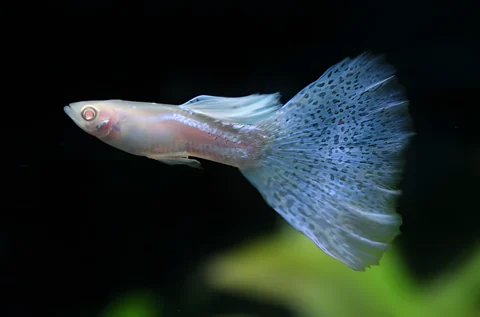
The Albino Guppy, belonging to the Poeciliidae family, is known by its scientific name Poecilia reticulata (Albino variety). A distinctive feature of this fish is the congenital absence of melanin – the black pigment in…
Poecilia reticulata
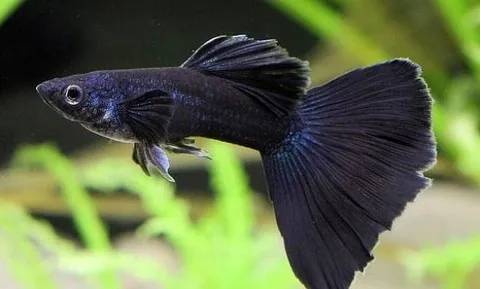
Black Monk Guppies, also known as Black Guppies, are a breed of Poecilia reticulata (Black strain) from the Poeciliidae family. One of the main features of this variety is the pronounced dark body coloration in males.…
Poecilia reticulata
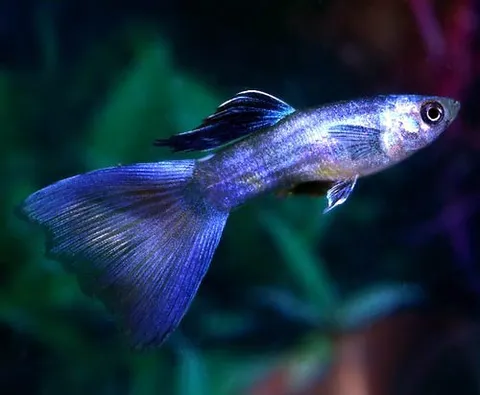
Blue Guppies, known scientifically as Poecilia reticulata (Blue variety), belong to the Poeciliidae family. This name is a generalization and encompasses various breeds where blue is the dominant color. It is mainly…
Poecilia reticulata
The Common Guppy, also known as the Wild Guppy (scientific name Poecilia reticulata), belongs to the family Poeciliidae. It is distinguished from the numerous selective breeding forms developed by humans by its more…