Temperature15 – 24 °C
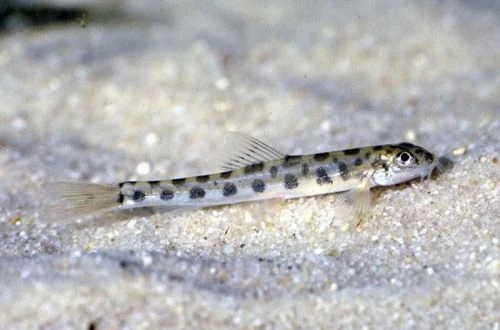
The Common Loach, scientifically known as Nemacheilus corica, belongs to the family Nemacheilidae. This fish originally hails from Asia, where it can be found in modern-day India, Pakistan, Nepal, and Bangladesh. There are suggestions of its presence in Afghanistan as well, but reliable confirmation is currently difficult.
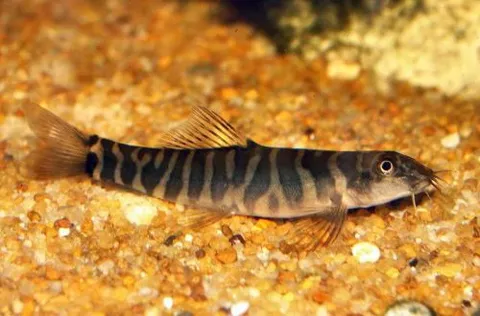
Adults of this species reach approximately 4 cm in length. A distinctive feature is their elongated body with relatively short fins. These fins serve the fish not so much for swimming, but rather for firmly holding onto the substrate, counteracting the current. Loaches prefer to "walk" along the bottom rather than actively swim. Their coloration is usually gray, and their belly is silvery. Dark spots are symmetrically arranged on the sides of the body, forming a characteristic pattern.
The Common Loach inhabits the foothills of the Himalayas, in the basins of the Ganges and Brahmaputra rivers in Nepal, India, and Bangladesh. In nature, it lives in clear rivers and streams with moderate to fast currents, preferring areas with sandy or rocky bottoms. These water bodies are characterized by high dissolved oxygen content and seasonal fluctuations in water level associated with monsoon periods.
In natural conditions, these fish live in groups, but each individual strives to occupy its own territory. For this reason, in small aquariums, when space is insufficient, clashes over bottom territory are possible. Unlike many of their relatives, skirmishes among Common Loaches can be quite intense, sometimes leading to injuries. They coexist well with other peaceful species of comparable size. They get along excellently with rasboras, danios, bettas, and other non-aggressive species. However, they should not be kept with catfish and other bottom-dwelling fish that might provide excessive competition for these loaches.
The size of the aquarium should be chosen considering the number of inhabitants. For a group of 3–4 loaches, a tank of 50 liters or more will be needed; the length and width of the aquarium are more important than its height. It is advisable to zone the decor so that each fish can have its own section. For example, if you have 4 loaches, it is recommended to create four separate zones with large elements in the center of each – these could be snags, large stones, or dense plant thickets. Since loaches live in fast-flowing rivers, the presence of current in the aquarium will be beneficial. This can be provided by a separate pump or by installing a more powerful filtration system. Hydrochemical water parameters, such as pH and dGH, can be within a fairly wide range, making them undemanding. Nevertheless, it is important to avoid sharp fluctuations in these parameters.
The fish are not demanding about their food composition. Most popular sinking foods, such as flakes and granules, will be readily eaten by them.
Reliable information on breeding in aquarium conditions is unavailable. In nature, the species is an egg-layer and does not exhibit parental care. Spawning presumably occurs during the monsoon rains, when eggs are laid among the substrate and develop in the interstitial spaces of the gravel.
Specific diseases for this species have not been described. Fish are sensitive to water quality and the accumulation of organic pollutants, which can lead to a deterioration of health. Prevention involves maintaining water cleanliness, ensuring good aeration, and avoiding sharp temperature fluctuations, to which the species is poorly adapted.
When purchasing, choose individuals with clean fins, no visible skin damage, and no ulcers. A healthy fish should be active, attentive to its surroundings, and have normal body condition. It is recommended to avoid individuals that appear lethargic, emaciated, or show signs of rapid breathing, which may indicate stress or hidden infections.
The essentials: size, tank volume, water parameters and care
An adult reaches 4 cm in length. Plan the tank around the maximum size: the fish quickly outgrows a cramped setup.
The recommended volume is 54 L. A smaller tank speeds up nitrate build-up and raises stress levels.
Temperature 15–24 °C, pH 6–7.2, hardness 2–15 dGH. Stability matters more than exact values: sudden swings are harder on the fish than a small deviation from the ideal.
Around 5 years when kept properly. Lifespan depends directly on tank volume, water quality and a varied diet.
Temperament: peaceful, active/mobile. Keep this in mind when choosing tank mates.
Recommended setup: small group (3–4 individuals). Ignoring this is a common cause of stress and disease.
Diet type: mixed diet (meat + plant-based). Feed small portions that are finished within a couple of minutes — overfeeding does more harm than underfeeding.
The scientific name of the species is Nemacheilus corica, family Nemacheilidae. It also appears in the literature as: Acoura cinerea, Cobites cinerea, Cobitis corica.
The water suits 196 of 208 plants in the catalogue — the easiest ones are shown first.
Afzelius's AnubiasAnacharisAnubiasBrazilian PennywortDwarf CloverDwarf CloverDwarf HygrophilaDwarf SagittariaDwarf ValGuppy GrassHornwortJava FernJava MossMoneywortMud SwordNarrow Leaf AnacharisNarrow-leaf CloverStringy MossSüsswassertangTaiwan MossTape GrassTemple PlantUssuri WatermilfoilWater Wisteria
Matched by family, categories and overlapping keeping conditions
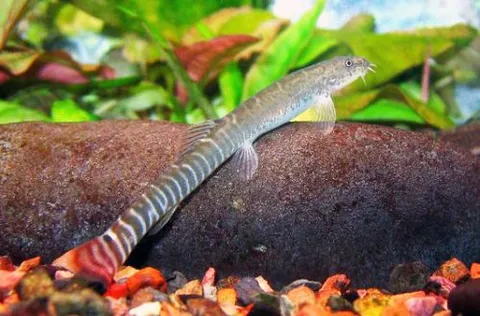
Aborichthys elongatus
Aborichthys elongatus, also known as the Red-tailed Loach, bears the scientific name Aborichthys elongatus and is classified in the family Nemacheilidae. This species is not frequently encountered in pet stores, which…
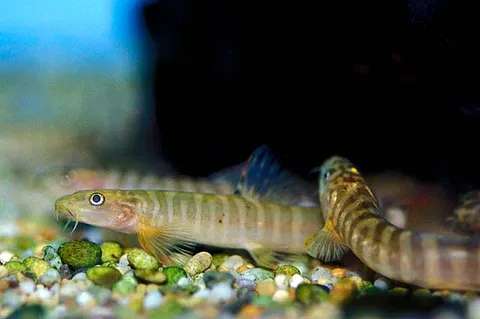
Schistura notostigma
Schistura notostigma, commonly known as the Ceylon loach, belongs to the family Nemacheilidae (river loaches). This fish is endemic to the island of Sri Lanka, formerly known as Ceylon. Its natural habitat is…
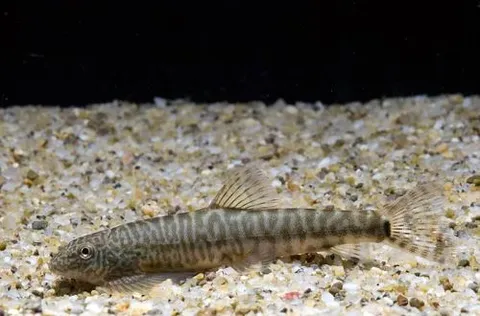
Erromyzon sinensis
Erromyzon sinensis, otherwise known as the Chinese Erromyzon, belongs to the family Balitoridae, or river loaches. This is the scientific name of the species. Outside of Asia, it is not often found in aquariums. This…
Mustura maepaiensis
The fish, known scientifically as Mustura maepaiensis, belongs to the family Nemacheilidae and is called Schistura Mae Hong Son. This name comes from the mountainous province of Mae Hong Son in north-western Thailand,…