Temperature22 – 28 °C
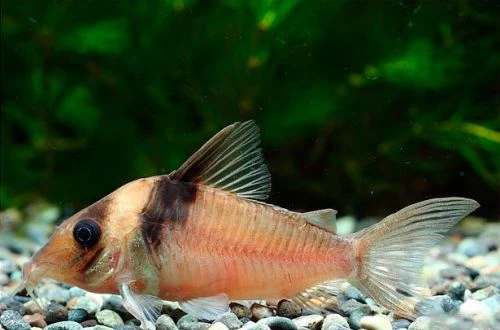
Corydoras virginiae, scientifically known as Corydoras virginiae, belongs to the family Callichthyidae — armored or callichthyid catfishes. This name was given to the fish in honor of Virginia Schwarz, wife of Adolf Schwarz, a major South American exporter of tropical fish. The natural habitat of this species is in South America, where it is endemic to the Ucayali River basin, located in Peru.
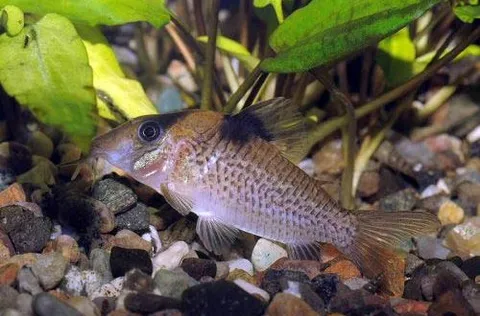
Adults of this species reach a size of 5 to 6 cm in length. A distinctive feature is their silvery or beige hue with characteristic black markings that run through the eyes and cover the front part of the body, starting from the base of the dorsal fin. The fins and tail remain translucent, devoid of color pigment.
The species inhabits South America, specifically the Ucayali River basin in Peru. Members of the genus lead a bottom-dwelling lifestyle in freshwater bodies with soft to moderately hard water and a tropical climate.
A peaceful schooling species, active in the bottom layer of the water. It is recommended to keep them in groups of 6 or more individuals, as fish kept alone may show signs of stress. They get along well with other non-aggressive fish species that occupy the middle and upper layers of the aquarium.
For long-term and successful keeping of a group of 4–6 Corydoras virginiae, an aquarium of at least 80 liters will be required, with clean, warm, slightly acidic, and soft water. Decor is not critical, but it is important to provide a soft substrate and several shelters at the bottom. Maintaining water balance directly depends on the stable operation of the filtration system; regular weekly partial water changes with fresh water and timely removal of organic waste – such as food remnants and excrement – are also necessary. In the absence of live plants, these wastes can quickly pollute the water, thereby disrupting the nitrogen cycle. As for feeding, there are usually no difficulties in choosing suitable food, as corydoras are omnivorous. They readily accept almost any type of food: from dry flakes and granules to live foods such as bloodworms and brine shrimp. In terms of behavior, they prefer to stay in small groups. Although solitary or pair keeping is allowed, it is still not recommended. They get along perfectly with other peaceful fish species.
An omnivorous species. In nature, it feeds on small benthic invertebrates and organic detritus. In the aquarium, they accept high-quality dry foods in the form of sinking tablets or granules, as well as frozen foods such as bloodworms, daphnia, or brine shrimp.
Breeding is typical for most members of the genus. A stimulus for spawning is a partial water change with cooler, fresh water, which mimics the rainy season. The female lays her eggs on the substrate, for example, on fine-leaved plants or the aquarium walls. They do not exhibit parental care.
The species has a typical corydoras sensitivity to water quality and substrate cleanliness. Under poor keeping conditions, damage to the barbels and bacterial skin infections are possible. Prevention includes regular water changes, gravel vacuuming, and maintaining stable environmental parameters.
When purchasing, choose active individuals with clean skin free of spots, ulcers, and fin damage. It is important to check the condition of the barbels: they should be intact, without signs of atrophy. Avoid fish that appear emaciated or exhibit apathetic behavior, constantly lying on the bottom.
The essentials: size, tank volume, water parameters and care
An adult reaches 5–6 cm in length. Plan the tank around the maximum size: the fish quickly outgrows a cramped setup.
The recommended volume is 80 L. A smaller tank speeds up nitrate build-up and raises stress levels.
Temperature 22–28 °C, pH 6–7.5, hardness 1–12 dGH. Stability matters more than exact values: sudden swings are harder on the fish than a small deviation from the ideal.
Around 5 years when kept properly. Lifespan depends directly on tank volume, water quality and a varied diet.
Temperament: peaceful (regular). Keep this in mind when choosing tank mates.
Recommended setup: small group (5–6 individuals). Ignoring this is a common cause of stress and disease.
Diet type: sinking (any). Feed small portions that are finished within a couple of minutes — overfeeding does more harm than underfeeding.
The scientific name of the species is Corydoras virginiae, family Armored Catfish (Callichthyidae).
The water suits 197 of 208 plants in the catalogue — the easiest ones are shown first.
Afzelius's AnubiasAnacharisAnubiasBrazilian PennywortDwarf CloverDwarf CloverDwarf HygrophilaDwarf SagittariaDwarf ValGuppy GrassHornwortJava FernJava MossMoneywortMud SwordNair's LagenandraNarrow Leaf AnacharisNarrow-leaf CloverStringy MossSüsswassertangTaiwan MossTape GrassTemple PlantUssuri Watermilfoil
Matched by family, categories and overlapping keeping conditions
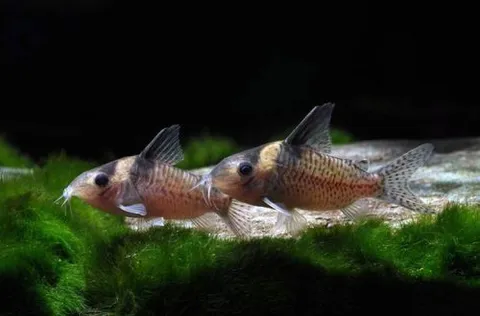
Corydoras delphax
Corydoras delphax, also known as the Pigmy Corydoras, bears the scientific name Corydoras delphax. Scientists may have given this catfish such a name due to its habit of actively rooting in the substrate with its nose…
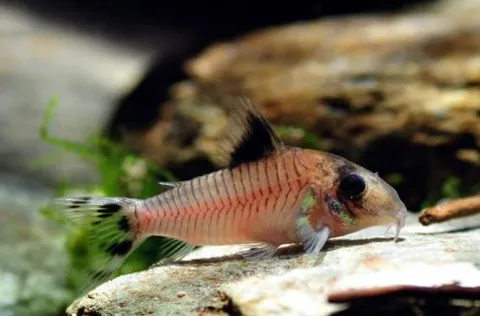
Corydoras condiscipulus
Corydoras condiscipulus, or the Condiscipulus Catfish (scientific name Corydoras condiscipulus), belongs to the family Callichthyidae, known as armored or callichthyid catfishes. The name itself comes from the Latin…
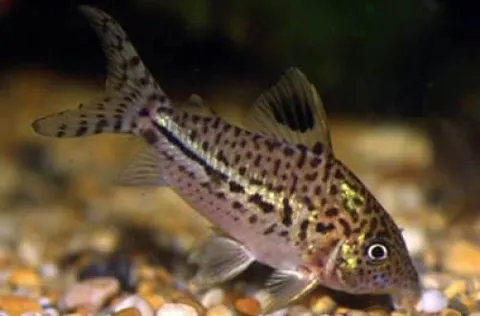
Corydoras gomezi
The scientific name Corydoras gomezi was given to this species of fish, belonging to the family of armored, or callichthyid, catfishes. It was named in honour of Dr Juan A. Gomez. These wild catfishes inhabit the upper…
Corydoras ephippifer
Corydoras ephippifer, also known as the Saddle Corydoras, bears the scientific name Corydoras ephippifer. It is a member of the Callichthyidae family, which includes armored or callichthyid catfishes. Its name is…