Temperature18 – 26 °C
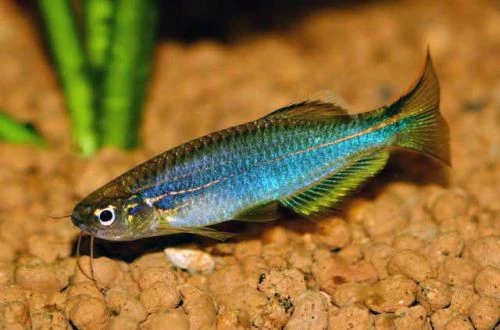
Danio Hikari, scientifically known as Danio sp. "Hikari," belongs to the carp family (Cyprinidae). This species entered the aquarium hobby in 2002. Initially, it was considered a variety of Danio kerryi, but DNA studies conducted in the USA confirmed its status as an independent species. These fish are undemanding to keep and easy to breed, making them an excellent choice for beginner aquarists. They coexist well with many other aquarium inhabitants.
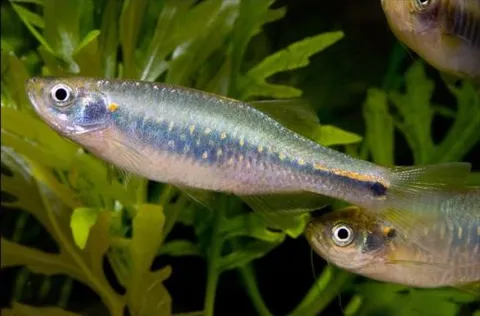
Adults can reach a length of 5–6 cm. Males are typically light gray, with distinct blue and yellow stripes running along their entire body. Females are most often blue, and although they also have longitudinal stripes, they are less pronounced than in males.
The natural habitat of this species is in Southeast Asia, specifically in southern Myanmar (Burma), within the Tanintharyi administrative region. These danios inhabit the Tenasserim River basin, found in its smaller tributaries and slow-flowing rivers that run under the dense canopy of tropical rainforest.
This active and peaceful fish coexists wonderfully with many other non-aggressive freshwater species of similar size. Danio Hikari prefer to live in groups of at least 8–10 individuals. In smaller numbers, they may become lethargic and slow, and their lifespan can sometimes be significantly reduced.
For comfortable keeping of a small school of Danio Hikari, an aquarium of at least 100 liters will be required. For decoration, dark substrate and an abundance of plants, both natural and artificial, are preferable. Various snags and other shelters will also be very useful. It is important to provide subdued lighting, as it has been observed that with excessive light in a sparsely planted aquarium, the fish's coloration may become faded. Success in keeping them largely depends on maintaining stable water parameters—temperature, as well as pH and dGH values—within an acceptable range. For this, it is necessary to use specialized aquarium equipment such as filters and heaters, and to perform regular maintenance. This includes partial water changes, as well as cleaning the substrate and decorative elements from organic waste and buildup. An important point: the aquarium should be equipped with a lid, if not already provided, to prevent the fish from jumping out.
In their natural environment, Danio Hikari feed on small aquatic insects and their larvae, as well as crustaceans and worms. In an aquarium setting, they readily accept most common types of food, whether dry, live, frozen, or freeze-dried, which eliminates problems with their nutrition.
Breeding this species in a home aquarium presents no particular difficulties. Under favorable conditions, spawning occurs regularly. The fish scatter many eggs, which, after falling to the bottom, are left to fend for themselves. Danios lack a developed parental instinct, so they do not care for their offspring. The incubation period lasts approximately 24–36 hours, and within a couple of days, the fry begin to swim freely. It should be noted that despite the ease of organizing the spawning itself, ensuring the survival of the fry can cause certain difficulties. The young often fall victim to other aquarium inhabitants and may also have trouble finding suitable food. To ensure the safety and comfortable conditions for the fry, a separate tank can be used. The eggs should be transferred there immediately after spawning. A tank of about 20 liters, filled with water from the main aquarium and equipped with a simple air-driven filter and heater, is sufficient. It is recommended to feed the young specialized powdered foods or Artemia nauplii.
In a balanced aquarium ecosystem that meets the needs of this species, diseases are rare. Most often, ailments are provoked by deteriorating environmental conditions, contact with already sick fish, or mechanical damage. If the fish shows clear signs of illness, medicinal treatment should be applied.
When choosing Danio Hikari, preference should be given to active individuals that display pronounced schooling behavior and are constantly in motion. Healthy fish should have clean fins without signs of erosion, smooth scales without spots or film, and clear, bright eyes. Avoid individuals that keep to themselves, appear lethargic, have visible injuries, or an unnaturally swollen abdomen. Since this species is schooling, it is recommended to acquire a group of 8–10 individuals at once. This will help the fish adapt more quickly to new conditions, reduce stress levels after transport, and allow them to display more vibrant natural coloration. When purchasing, it is important to ensure that the fish in the store are kept in suitable conditions, as stress from improper care can weaken their immune system and provoke the development of diseases.
The essentials: size, tank volume, water parameters and care
An adult reaches 6 cm in length. Plan the tank around the maximum size: the fish quickly outgrows a cramped setup.
The recommended volume is 100 L. A smaller tank speeds up nitrate build-up and raises stress levels.
Temperature 18–26 °C, pH 6.5–7.5, hardness 1–12 dGH. Stability matters more than exact values: sudden swings are harder on the fish than a small deviation from the ideal.
Around 4 years when kept properly. Lifespan depends directly on tank volume, water quality and a varied diet.
Temperament: peaceful (regular). Keep this in mind when choosing tank mates.
Recommended setup: group (8–10 individuals). Ignoring this is a common cause of stress and disease.
Diet type: small / appropriate size / pieces. Feed small portions that are finished within a couple of minutes — overfeeding does more harm than underfeeding.
The scientific name of the species is Danio sp. «Hikari», family Cyprinids (Cyprinidae).
The water suits 197 of 208 plants in the catalogue — the easiest ones are shown first.
Afzelius's AnubiasAnacharisAnubiasBrazilian PennywortDwarf CloverDwarf CloverDwarf HygrophilaDwarf SagittariaDwarf ValGuppy GrassHornwortJava FernJava MossMoneywortMud SwordNair's LagenandraNarrow Leaf AnacharisNarrow-leaf CloverStringy MossSüsswassertangTaiwan MossTape GrassTemple PlantUssuri Watermilfoil
Matched by family, categories and overlapping keeping conditions
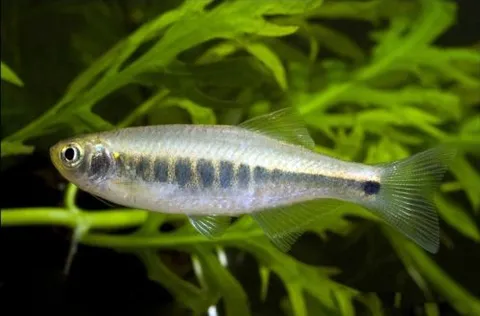
Danio absconditus
Danio absconditus, known as the Hidden Danio, belongs to the family Cyprinidae. This species was discovered relatively recently, in 2015. The intriguing name "Hidden" does not describe the fish's behavior but is related…
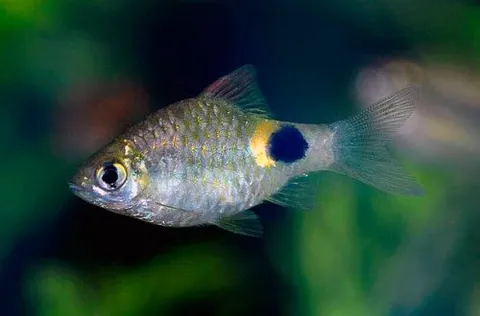
Puntius terio
Puntius terio, known as the One-spot Barb, belongs to the Cyprinidae family. Despite its naturally wide habitat range and relative unpretentiousness in keeping, this fish is not often found in home aquariums. Its modest…
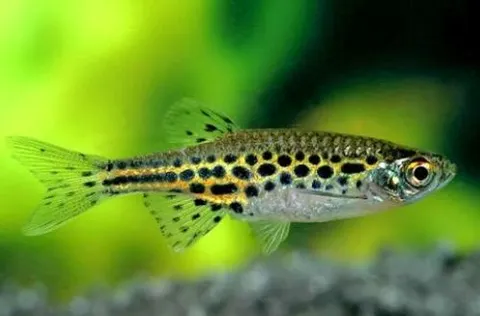
Danio tinwini
Danio tinwini, also known as the Gold-ring Danio or Burmese Spotted Danio, bears the scientific name Danio tinwini and belongs to the family Cyprinidae. It received one of its names in honor of U Tin Win, a prominent…
Danio feegradei
Danio feegradei, also known as Feegrade's Danio or Yoma Danio, is a member of the Cyprinidae family. The fish received its scientific name in honor of E. S. Feegrade, a public health service officer in Burma, while its…