Temperature28 – 34 °C
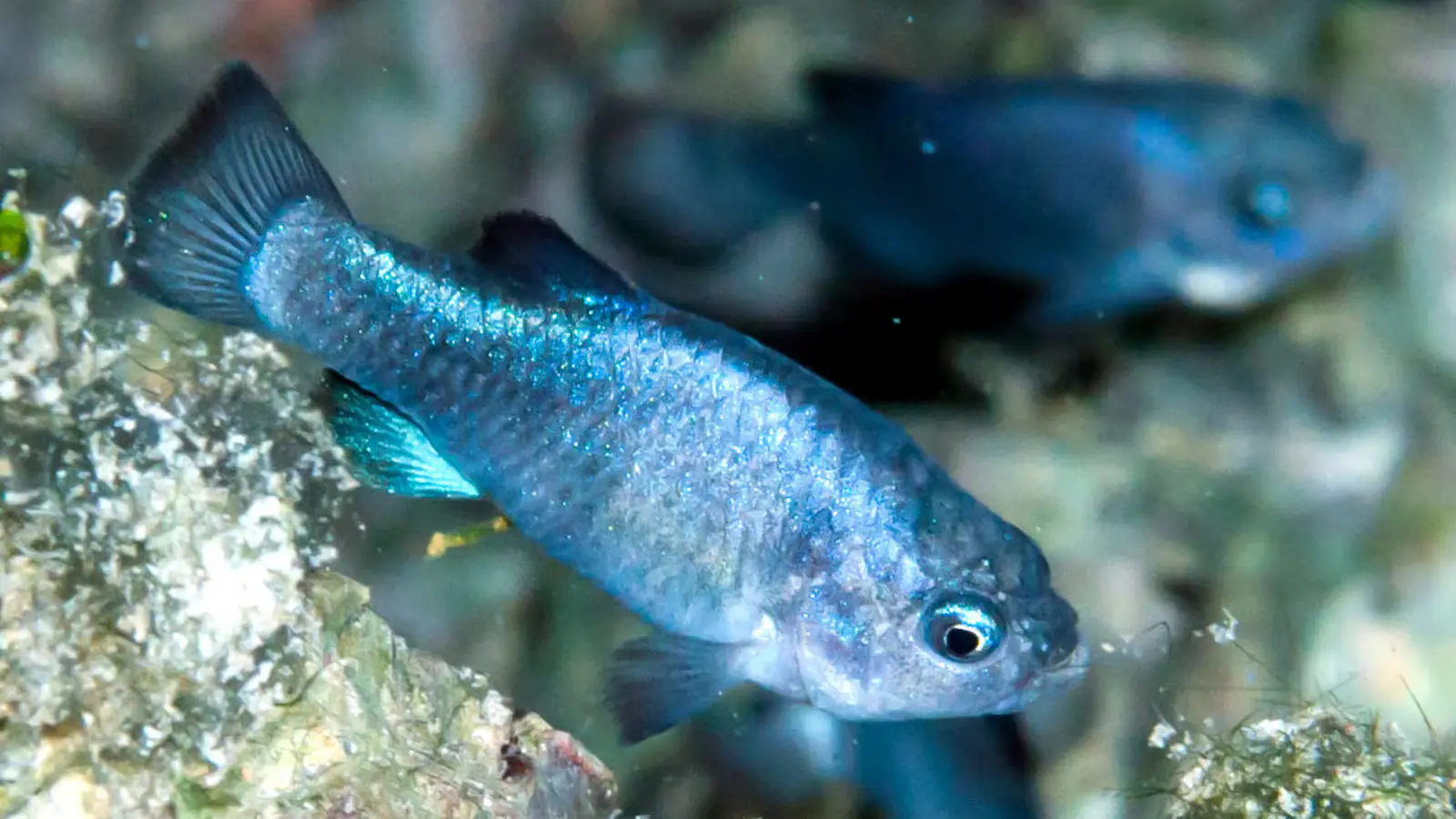
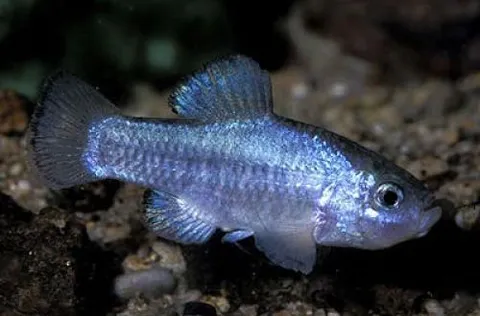
Cyprinodon diabolis, also known as the Devils Hole Pupfish, belongs to the family Cyprinodontidae. This fish is one of the most astonishing and rare in the world, its natural habitat being a small oasis located in the desert part of Nevada, USA, within Death Valley National Park.
Adults of this fish reach a length of about 3 cm. Their body is stocky, with a rather large head, and their fins are short, rounded, with a dark edge. Males may show bluish hues in their coloration, while females are grey-brown. The lifespan of the Devil's Hole pupfish is very short, lasting only 6–12 months. Sexual maturity occurs quickly, in just 3–10 weeks. The entire population fluctuates between 100–180 individuals. These fish are likely among the most geographically isolated organisms on Earth, having lived in this area for over 30,000 years, since the last Ice Age. At that time, the southwestern U.S. was covered with many rivers and interconnected lakes, where, among others, the ancestors of modern pupfish lived. Over the epochs, green savannas gave way to deserts, and much of the water virtually disappeared. To survive in the remaining water bodies, the fish had to rapidly evolve and adapt to harsh conditions. A similar astonishing adaptability is demonstrated by the related species, the Desert pupfish, which inhabits ephemeral water bodies in North America in California, Arizona, Nevada, and northern Mexico. The Devil's Hole pupfish is not intended for aquarium keeping; its capture is strictly prohibited. In 1976, the U.S. Supreme Court ruled to protect the water level in Devils Hole, which became critically important for the preservation of this species' habitat. Since 1982, the fish has been listed as an endangered species. The designation of the region as a national park prevented plans to turn it into a residential area. However, Devils Hole is only 140 kilometers from Las Vegas, near a busy highway leading to the city. Development is actively taking place around the national park, leading to an increased demand for groundwater, which is especially critical for the hot and arid regions of Nevada. Scientists have attempted to relocate part of the population to other regions and create conditions for spawning, but these efforts have largely been unsuccessful.
The Devils Hole Pupfish is endemic to a single body of water in the world – the Devils Hole cave lake, located in Death Valley National Park (USA, Nevada). The fish inhabits a submerged tectonic fissure at depths of up to 15–24 meters. Conditions in the biotope are extreme: the water stays at a near-constant 33 °C year-round, dissolved oxygen content is extremely low, and light is limited by the depth of the fissure.
Unlike most members of its genus, this species does not exhibit territorial behavior, which is due to its extremely limited habitat. The fish are active, spending most of their time in the illuminated zone near the cave entrance, where the main food source is available. Aggression within the species is virtually absent, as natural isolation and confinement have rendered territorial disputes meaningless.
Keeping this species in home aquariums is impossible and prohibited by law, as it is an endangered species under strict state protection. In nature, the fish are adapted to high water temperatures and a meager diet, consisting mainly of algae. Any attempts at artificial breeding outside their natural habitat face difficulties due to the specific geothermal parameters of the water and the unique ecosystem of the cave.
Algae actively growing on the limestone shelf and the microorganisms living among them form the basis of the food chain in this unique isolated ecosystem. There are no other food sources there.
Spawning occurs year-round, but the fish tend to synchronize the process. This is because individuals not involved in reproduction exhibit cannibalism towards eggs. Sexual maturity is reached quickly, at 2–3 months of age. In the wild, the survival of fry directly depends on the availability of algal growth, which serves as their primary food and shelter.
Information on specific diseases in aquarium conditions is absent, as the species is not an object of aquaristics. In its natural habitat, the population is extremely sensitive to any changes in water level and chemical composition caused by anthropogenic impact. Any disruption to the stability of the habitat leads to a sharp decline in the number of individuals.
The acquisition of the Devils Hole Pupfish is impossible. The species is on the verge of extinction, listed in the Guinness Book of World Records as the most protected fish species on Earth, and protected by U.S. law. Its habitat in Death Valley is strictly protected, fenced, and under constant monitoring by specialists.
The essentials: size, tank volume, water parameters and care
An adult reaches 2–3 cm in length. Plan the tank around the maximum size: the fish quickly outgrows a cramped setup.
The recommended volume is 100 L. A smaller tank speeds up nitrate build-up and raises stress levels.
Temperature 28–34 °C, pH 7.4–8.5, hardness 10–20 dGH. Stability matters more than exact values: sudden swings are harder on the fish than a small deviation from the ideal.
Around 1 years when kept properly. Lifespan depends directly on tank volume, water quality and a varied diet.
Temperament: peaceful (regular). Keep this in mind when choosing tank mates.
Recommended setup: pair (male/female). Ignoring this is a common cause of stress and disease.
Diet type: mixed diet (meat + plant-based). Feed small portions that are finished within a couple of minutes — overfeeding does more harm than underfeeding.
The scientific name of the species is Cyprinodon diabolis, family Killifish (Cyprinodontidae). It also appears in the literature as: Cyprinodon diabolus.
The water suits 79 of 208 plants in the catalogue — the easiest ones are shown first.
African Onion PlantAfzelius's AnubiasAmazon FrogbitAmazon SwordAnacharisAnubiasAsian WatermossBalansa Water TrumpetBarth's SwordBeckett's Water TrumpetDwarf CloverDwarf CloverDwarf HygrophilaDwarf SagittariaDwarf ValGuppy GrassHornwortJava MossMoneywortMud SwordNarrow Leaf AnacharisTaiwan MossTape GrassUssuri Watermilfoil
Matched by family, categories and overlapping keeping conditions
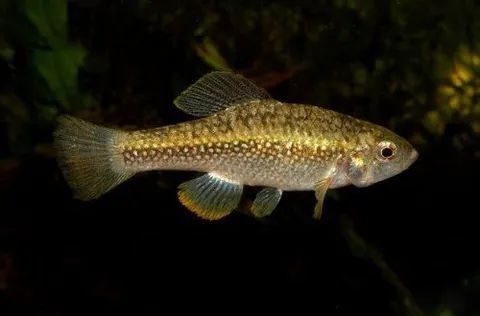
Cualac tessellatus
Cualac tessellatus, or the Checkered Killifish, belongs to the family Cyprinodontidae. This species is not commonly found in the aquarium hobby due to its narrow and shrinking habitat range. Nevertheless, it can be…
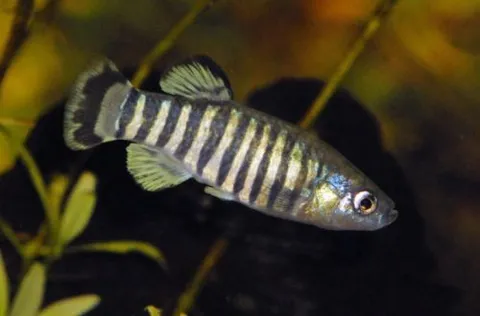
Aphaniops sirhani
Aphaniops sirhani, also known as the Azraq killifish, belongs to the family Cyprinodontidae. This attractive fish has a complicated history in its natural habitat: its natural range had almost disappeared by the early…
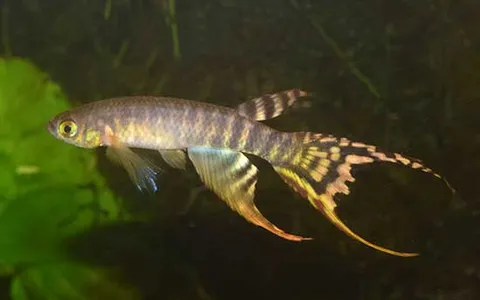
Aphyolebias peruensis
The Peruvian Aphyolebias, scientifically known as Aphyolebias peruensis, belongs to the family Rivulidae. This elegant fish has an elongated body and inhabits the pristine tropical forests of northern Peru. Its life…
Cyprinodon macularius
The Desert Pupfish, scientifically known as Cyprinodon macularius, belongs to the family Cyprinodontidae. This species is unique as a "living fossil," representing one of the oldest known bony fish. Its exceptional…