Temperature15 – 25 °C
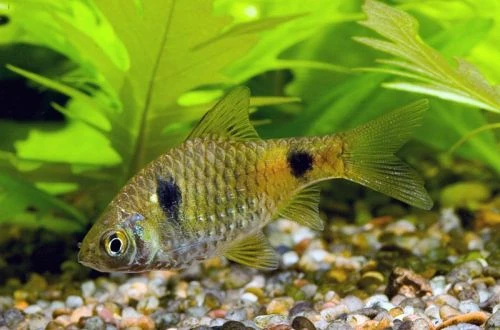
The Didi Barb, also known by its scientific name Pethia didi, belongs to the carp family (Cyprinidae). This fish is rarely seen in home aquariums because its coloration is not as vibrant as that of other barbs. Nevertheless, it is undemanding to care for, coexists easily with various species, and is suitable for breeding even by beginner aquarists.
Adult specimens reach approximately 4 cm in length. Their coloration is light-toned with yellow iridescence, and their fins are translucent. A distinctive feature of their body pattern is two dark strokes: the first is located immediately behind the gill cover, and the second is at the base of the tail. Sexual dimorphism is not pronounced. Males are usually slightly smaller than females but have a more intense coloration.
This species originates from Southeast Asia, specifically from the territory of Myanmar (formerly Burma). Its habitat includes the Irrawaddy River basin, where the fish prefers small tributaries and streams. These water bodies, flowing through tropical forests, often have bottoms covered with snags, fallen leaves, and a substrate of silt with sand and stones. The water in them is usually turbid, containing a large amount of suspended particles. Aquatic vegetation includes mosses, ferns, various plants, and algae.
This is a peaceful and active fish that is more comfortable in a school of 8 to 10 individuals. It coexists easily with other species of similar size and temperament, so selecting tank mates will not be difficult.
For a small group of Didi Barbs, an aquarium of 50–60 liters will be optimal. The decor can be chosen at your discretion. If you want to bring the conditions closer to their natural habitat, you can use dark substrate, snags, and thickets of floating and rooted shade-loving plants. Lighting should preferably be subdued. A key condition for successful keeping is maintaining consistently high water quality, avoiding sharp temperature fluctuations, as well as changes in pH and dGH. It is important to regularly perform several standard procedures: weekly partial water changes, removal of organic waste, checking and maintaining equipment, and monitoring hydrochemical parameters.
These fish are not particularly picky eaters. In a home aquarium, they readily accept most common foods of appropriate size, including dry, live, and frozen. It is important that vegetable components are present in their diet. These can be found already in the composition of prepared foods or added separately, for example, in the form of spirulina flakes.
The Didi Barb, like most cyprinids, uses a typical breeding strategy. During spawning, females scatter a large number of eggs in the water column, and males immediately fertilize them. The incubation period lasts approximately one day, and within 24 hours, the fry begin to swim freely. These fish do not exhibit parental care for their offspring. Eggs and hatched fry are left to fend for themselves from the first days and often become prey for adult fish in the community tank. If the goal is to preserve the offspring, a separate tank with the same water conditions will be needed, to which the eggs are transferred after spawning. This temporary spawning tank can be a small aquarium of 10 liters or more, equipped only with a simple air-driven sponge filter and a heater. Additional light is not needed; natural room lighting is sufficient. The decor of the spawning tank is not critical; for example, artificial plants can be used.
In a balanced aquarium ecosystem that meets the needs of this species, diseases are rare. Most often, ailments are provoked by deteriorating environmental conditions, contact with already sick fish, or mechanical damage. If the fish shows clear signs of illness, medicinal treatment should be applied.
When purchasing, choose active individuals that stay in a school and show natural curiosity about their surroundings. It is important to inspect the fish for any fin damage, ulcers, or white coating on the scales, as these signs may indicate the presence of infectious diseases. Avoid specimens with unnaturally bloated or, conversely, severely sunken bellies, as well as fish that constantly hide or display sluggish behavior. — Purchase a group of 8–10 individuals, as solitary keeping causes severe stress in fish. — Carefully inspect the aquarium in the store: there should be no dead individuals, as this indicates poor water quality or an unhealthy condition of the entire batch. — Ensure there are no visible parasites on the body and gill covers, as barbs are sensitive to transport and keeping conditions.
The essentials: size, tank volume, water parameters and care
An adult reaches 4 cm in length. Plan the tank around the maximum size: the fish quickly outgrows a cramped setup.
The recommended volume is 60 L. A smaller tank speeds up nitrate build-up and raises stress levels.
Temperature 15–25 °C, pH 6.5–7, hardness 0–5 dGH. Stability matters more than exact values: sudden swings are harder on the fish than a small deviation from the ideal.
Around 4 years when kept properly. Lifespan depends directly on tank volume, water quality and a varied diet.
Temperament: peaceful (regular). Keep this in mind when choosing tank mates.
Recommended setup: group (8–10 individuals). Ignoring this is a common cause of stress and disease.
Diet type: small / appropriate size / pieces. Feed small portions that are finished within a couple of minutes — overfeeding does more harm than underfeeding.
The scientific name of the species is Pethia didi, family Cyprinids (Cyprinidae). It also appears in the literature as: Puntius didi.
The water suits 195 of 208 plants in the catalogue — the easiest ones are shown first.
Afzelius's AnubiasAnacharisAnubiasBrazilian PennywortDwarf CloverDwarf CloverDwarf HygrophilaDwarf SagittariaDwarf ValGuppy GrassHornwortJava FernJava MossMoneywortMud SwordNarrow Leaf AnacharisNarrow-leaf CloverStringy MossSüsswassertangTaiwan MossTape GrassTemple PlantUssuri WatermilfoilWater Wisteria
Matched by family, categories and overlapping keeping conditions
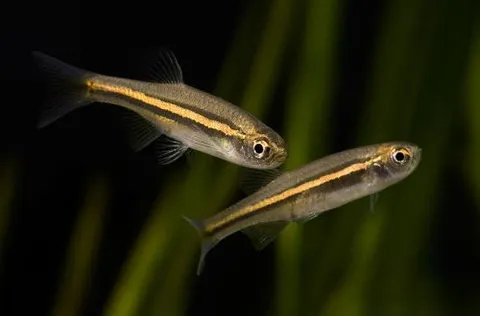
Danio jaintianensis
The Jaintia Danio, scientifically known as Danio jaintianensis, belongs to the family Cyprinidae. The fish is named after the Jaintia Hills, where it was first discovered. Although this species is not frequently…
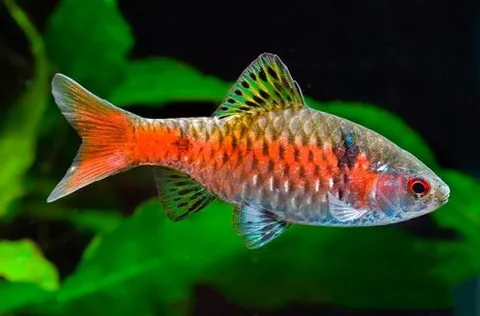
Pethia padamya
Scientifically named Pethia padamya, this species belongs to the Cyprinidae family and is known as the Odessa Barb. Despite its name, this fish does not inhabit Ukraine. It entered the aquarium hobby in the 1970s, but…
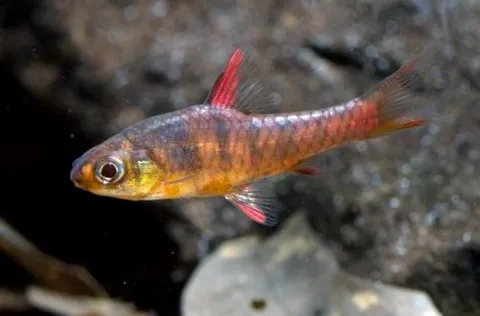
Enteromius jae
The Jae Barb, also known by its scientific name Enteromius jae, belongs to the family Cyprinidae. This miniature and picturesque fish can become a true gem in a nano aquarium. Its care and breeding are straightforward,…
Danio kyathit
The Orange Danio, also known as the Orange-finned Danio (scientific name Danio kyathit), belongs to the Cyprinidae family. This active and beautiful fish can adorn any freshwater aquarium. Its appeal is enhanced by its…