Temperature15 – 23 °C
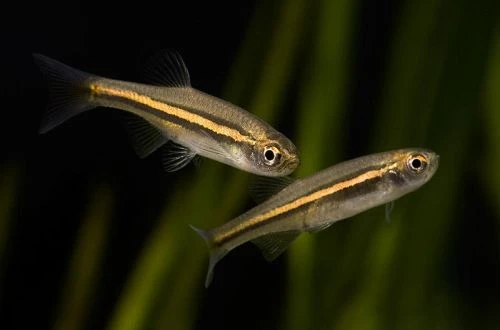
The Jaintia Danio, scientifically known as Danio jaintianensis, belongs to the family Cyprinidae. The fish is named after the Jaintia Hills, where it was first discovered. Although this species is not frequently encountered in home aquariums, its rarity does not mean it is demanding. On the contrary, Jaintia Danios are quite unpretentious and hardy, easily coexisting with many fish species of similar size.
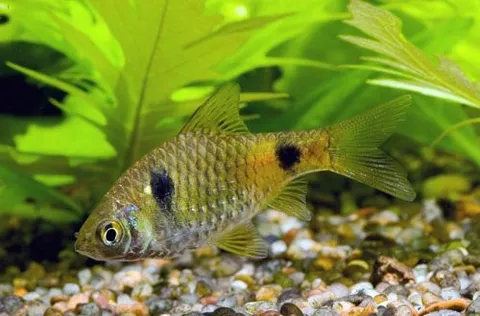
Adults reach a length of approximately 4 centimeters. The body coloration is gray, with a broad golden stripe running along the entire body, from head to tail. The fins of these fish are translucent. Sexual dimorphism is weakly expressed, and males are practically indistinguishable from females.
This species originates from northeastern India, specifically from the state of Meghalaya. The fish were found in river systems located at the foothills of the Jaintia Hills. In their natural habitat, they inhabit small streams and rivers that flow through hilly terrain covered by tropical forest. Although the current can be fast and even turbulent in many places, the fish prefer calmer areas where rocky substrates and dense riparian vegetation prevail.
Jaintia Danio is a peaceful and active fish. Given their temperature preferences, the choice of tank mates will be somewhat limited. Compatible species should be non-aggressive, comparable in size, and able to live in relatively cool water. These fish prefer to live in schools of at least 8–10 individuals.
For a school of 8–10 individuals, the optimal aquarium volume is around 70–80 liters. The aquascape can be chosen to your taste, but a combination of dark substrate and dense thickets of aquatic plants along the side walls is considered most preferable. Dim lighting is recommended. Moderate water flow will be welcomed, as it helps keep the fish active. Water movement is easily created by any internal filter, which in this case serves as a good supplement to its main function. Keeping Jaintia Danios will not cause much trouble, provided that proper water quality is maintained. To do this, in addition to an effective filtration system, several standard procedures must be performed regularly: weekly partial water changes, cleaning the bottom and decor elements of organic waste and plaque, and monitoring and, if necessary, adjusting pH and dGH levels. It is worth noting that this species is sensitive to high temperatures, with its maximum being only 23°C, so it can be kept in an unheated aquarium. It is important to remember that the aquarium should be equipped with a lid to prevent accidental jumping out of the fish.
This is an omnivorous species. They readily accept most common foods, whether dry, frozen, or live. If dry foods contain all the necessary vitamins and trace elements, the fish can be quite content with just them.
With the onset of the breeding season, which can last all year in an artificial environment, Jaintia Danios scatter many eggs among aquatic plants. Fry appear after 24–36 hours, and a few days later they begin to swim freely. Since the fish do not exhibit parental care, a significant portion of the fry perishes, becoming food for adult fish or suffering from a lack of food. In a community tank, their survival rate will be minimal unless the eggs are promptly transferred to a separate tank with similar water conditions. This improvised spawning tank usually has a volume of 20–30 liters and is equipped with a simple air-driven filter. Lighting and a heater are not required for it. The aquascape can be arbitrary.
In a balanced aquarium ecosystem that meets the needs of this species, diseases are rare. Most often, ailments are provoked by deteriorating environmental conditions, contact with already sick fish, or mechanical damage. If the fish shows clear signs of illness, medicinal treatment should be applied.
When choosing Jaintia Danio, it is important to assess the overall activity of the group in the aquarium: healthy fish should be mobile, curious, and stay in a school. Avoid individuals with signs of emaciation, scale damage, body film, or an unnaturally bloated abdomen, unless it is related to sexual dimorphism. In the store, pay attention to water clarity and the absence of dead fish nearby, as this species is sensitive to keeping conditions and stress during transportation. Given their agility, make sure the fish do not have fin injuries sustained during capture.
The essentials: size, tank volume, water parameters and care
An adult reaches 4 cm in length. Plan the tank around the maximum size: the fish quickly outgrows a cramped setup.
The recommended volume is 70 L. A smaller tank speeds up nitrate build-up and raises stress levels.
Temperature 15–23 °C, pH 6–7, hardness 1–8 dGH. Stability matters more than exact values: sudden swings are harder on the fish than a small deviation from the ideal.
Around 4 years when kept properly. Lifespan depends directly on tank volume, water quality and a varied diet.
Temperament: peaceful (regular). Keep this in mind when choosing tank mates.
Recommended setup: group (8–10 individuals). Ignoring this is a common cause of stress and disease.
Diet type: small / appropriate size / pieces. Feed small portions that are finished within a couple of minutes — overfeeding does more harm than underfeeding.
The scientific name of the species is Danio jaintianensis, family Cyprinids (Cyprinidae). It also appears in the literature as: Brachydanio jaintianensis.
The water suits 195 of 208 plants in the catalogue — the easiest ones are shown first.
Afzelius's AnubiasAnacharisAnubiasBrazilian PennywortDwarf CloverDwarf CloverDwarf HygrophilaDwarf SagittariaDwarf ValGuppy GrassHornwortJava FernJava MossMoneywortMud SwordNarrow Leaf AnacharisNarrow-leaf CloverStringy MossSüsswassertangTaiwan MossTape GrassTemple PlantUssuri WatermilfoilWater Wisteria
Matched by family, categories and overlapping keeping conditions
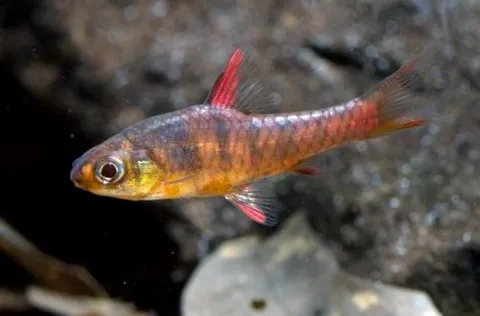
Enteromius jae
The Jae Barb, also known by its scientific name Enteromius jae, belongs to the family Cyprinidae. This miniature and picturesque fish can become a true gem in a nano aquarium. Its care and breeding are straightforward,…
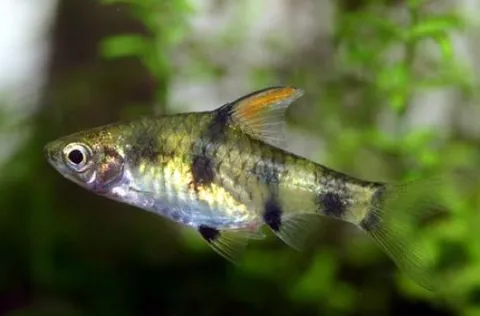
Pethia canius
Pethia canius, scientifically known as Pethia canius, belongs to the family Cyprinidae. The genus name Pethia is the Sinhalese collective name for small cyprinids, while the specific name “canius” appears to follow a…
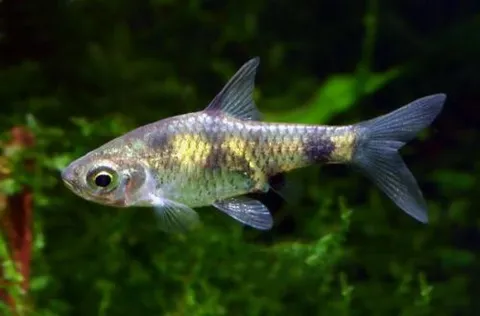
Pethia aurea
The small Golden Barb, scientifically known as Pethia aurea, belongs to the family Cyprinidae. This peaceful, undemanding, small-sized fish can be a wonderful addition to any small aquarium. Its care and breeding do not…
Pethia didi
The Didi Barb, also known by its scientific name Pethia didi, belongs to the carp family (Cyprinidae). This fish is rarely seen in home aquariums because its coloration is not as vibrant as that of other barbs.…