Temperature17 – 24 °C
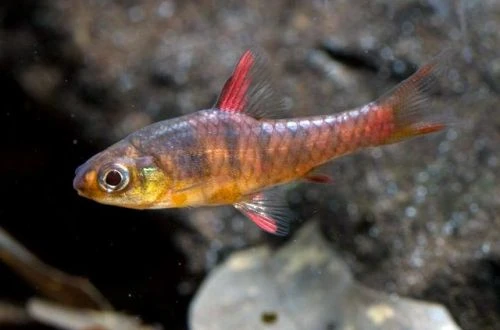
The Jae Barb, also known by its scientific name Enteromius jae, belongs to the family Cyprinidae. This miniature and picturesque fish can become a true gem in a nano aquarium. Its care and breeding are straightforward, and its compatibility with other species of similar size makes it an excellent choice. This fish is perfectly suited for beginner aquarists.
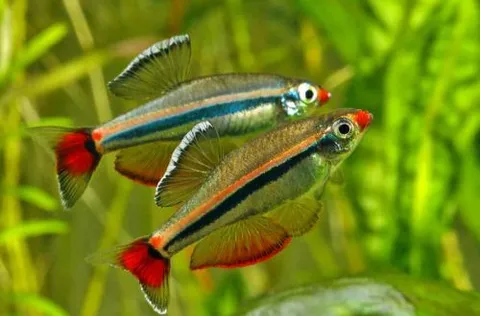
Adult fish reach a length of up to 4 cm. Males are distinguished by their vibrant coloration, predominantly red. However, their coloring can vary depending on their region of origin. For example, specimens imported from Cameroon often have a blood-red hue, while those from Gabon are mostly gray, with only their fins colored red. Females generally appear much more subdued.
The natural habitats of this species are found in equatorial Africa. Here, the Jae Barb inhabits shallow bodies of water such as rivers, streams, and swamps, located under the canopy of dense tropical forests. The water in these habitats has a rich “tea-like” tint, due to the high content of tannins. These substances are formed from the decomposition of fallen plant organic matter, including leaves, branches, and tree trunks.
This peaceful and calm fish coexists well with other non-aggressive species of comparable size. It is recommended to keep a mixed-sex group of at least 8–10 individuals. Intraspecific relationships are based on the dominance of alpha males, so weaker individuals often seek refuge from the attention of stronger tankmates.
For a small school of these fish, aquariums of 40 liters or more will be optimal. The decor should include a soft substrate, various driftwood shelters, and an abundance of shade-loving aquatic plants, including floating species. Floating plants further shade the aquarium. Lighting should be subdued. Adding dried leaves will not only give the decor a natural look but also tint the water brownish, enriching it with tannins. This recreates the conditions characteristic of the Jae Barb's natural habitat. Successful keeping is possible in soft, acidic water. Aquarium maintenance includes standard procedures: weekly partial water changes, cleaning the substrate and decor elements from organic deposits, equipment prophylaxis, and monitoring and maintaining stable pH, dGH, and oxidizability parameters.
As an omnivorous species, this fish readily accepts most common foods available for home aquariums, whether dry, freeze-dried, live, or frozen. When choosing food, it is important to prioritize products from reputable and established manufacturers. The quality of the food directly affects the health of the fish and the intensity of their coloration.
Despite many generations of Jae Barbs living in artificial aquarium environments, this species has retained its natural seasonal breeding pattern. Under favorable conditions, spawning can occur twice a year: from March to June and from September to November. Like most cyprinids, females scatter their eggs in the water column, and males fertilize them. The incubation period for the eggs lasts up to 7 days. However, parental instincts are not developed in these fish, and adult individuals tend to eat their offspring. If no measures are taken, fry survival will be extremely low. To save the fry, experienced aquarists prepare separate containers in advance, known as breeding tanks. These are usually small tanks of 10 liters or more; in some cases, even a simple three-liter jar filled with water from the main aquarium will suffice. Such an aquarium includes a heater and a simple air-driven sponge filter. A separate light source is not required. The decor can be anything. It is advisable to place used tree leaves on the bottom. They can be a valuable food source, as they often contain colonies of paramecia, which the fry can feed on during the first days of their lives.
In a balanced aquarium ecosystem, closely matching the requirements of this species, diseases are extremely rare. Diseases often arise from deteriorating habitat quality, contact with already sick fish, or physical injuries.
When purchasing, caution should be exercised, as this species is rarely available for sale and is often wild-caught. Choose active individuals that stay in a school and show no signs of emaciation or fin damage. Avoid fish with signs of sluggishness, damaged scales, or an unnaturally bloated abdomen. — Assess the condition of the fins: they should be intact, without signs of deterioration or white film. — Observe their behavior: healthy fish are curious and actively move around, while apathetic behavior can indicate stress or illness. — Ask the seller about their keeping conditions: Jae barb are sensitive to water parameters, so it's important to ensure that the fish are adapted to aquarium conditions, and not just recently arrived from transport containers.
The essentials: size, tank volume, water parameters and care
An adult reaches 4 cm in length. Plan the tank around the maximum size: the fish quickly outgrows a cramped setup.
The recommended volume is 40 L. A smaller tank speeds up nitrate build-up and raises stress levels.
Temperature 17–24 °C, pH 5–6.5, hardness 1–5 dGH. Stability matters more than exact values: sudden swings are harder on the fish than a small deviation from the ideal.
Around 4 years when kept properly. Lifespan depends directly on tank volume, water quality and a varied diet.
Temperament: peaceful (regular). Keep this in mind when choosing tank mates.
Recommended setup: group (8–10 individuals). Ignoring this is a common cause of stress and disease.
Diet type: small / appropriate size / pieces. Feed small portions that are finished within a couple of minutes — overfeeding does more harm than underfeeding.
The scientific name of the species is Enteromius jae, family Cyprinids (Cyprinidae).
The water suits 196 of 208 plants in the catalogue — the easiest ones are shown first.
Afzelius's AnubiasAnacharisAnubiasBrazilian PennywortDwarf CloverDwarf CloverDwarf HygrophilaDwarf SagittariaDwarf ValGuppy GrassHornwortJava FernJava MossMoneywortMud SwordNarrow Leaf AnacharisNarrow-leaf CloverStringy MossSüsswassertangTaiwan MossTape GrassTemple PlantUssuri WatermilfoilWater Wisteria
Matched by family, categories and overlapping keeping conditions
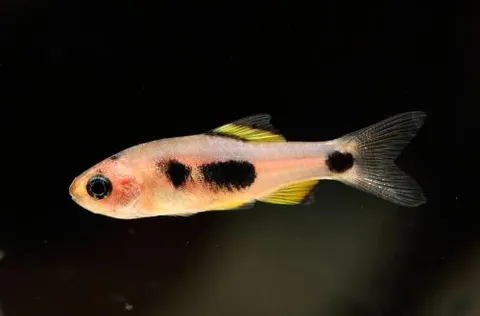
Enteromius hulstaerti
Enteromius hulstaerti, known as the Butterfly Barb or Moth Barb, belongs to the family Cyprinidae. This fish attracts attention with its beauty and does not cause much trouble in maintenance, but it is not often found…
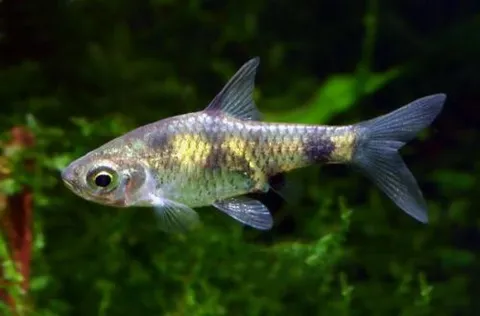
Pethia aurea
The small Golden Barb, scientifically known as Pethia aurea, belongs to the family Cyprinidae. This peaceful, undemanding, small-sized fish can be a wonderful addition to any small aquarium. Its care and breeding do not…
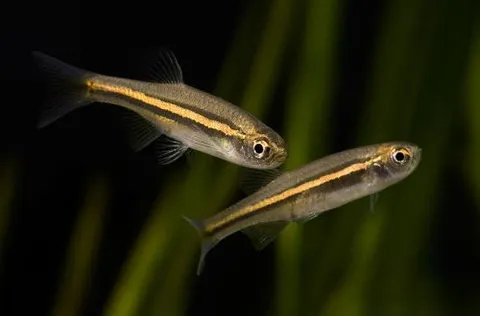
Danio jaintianensis
The Jaintia Danio, scientifically known as Danio jaintianensis, belongs to the family Cyprinidae. The fish is named after the Jaintia Hills, where it was first discovered. Although this species is not frequently…
Tanichthys micagemmae
The Vietnamese Cardinal, or Tanichthys micagemmae by its scientific name, belongs to the family Cyprinidae (Carps). This fish was first discovered in 2001 and quickly found its place in home aquariums. It became a…