Temperature16 – 22 °C
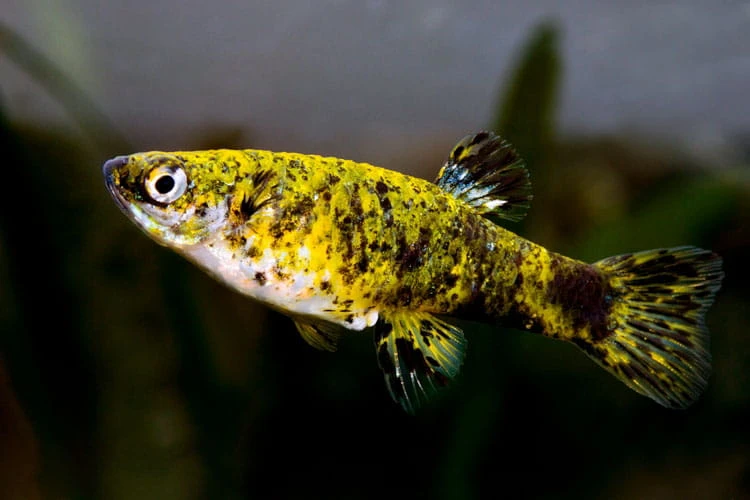
Girardinus, or Phalloceros caudimaculatus by its scientific name, is a member of the family Poeciliidae. This unpretentious species, easy to keep and breed, does not boast vibrant coloration, but its care will not cause difficulties. It is perfectly suited as a first aquarium fish, being hardy enough to forgive novice aquarists many mistakes in mastering this fascinating hobby.
This inconspicuous fish is characterized by its modest size. A distinctive feature is the significant difference in size between the sexes: females can be two or more times larger than males, and their bodies are more rounded and robust. Males, on the other hand, give the impression of graceful creatures. The fins of these fish are small and rounded. As for coloration, there is no dominant tone; various variations can be observed, such as silvery, yellowish, or specimens with a bluish tint. Numerous dark, irregularly shaped spots are randomly distributed over the entire body surface and sometimes on the fins. It is important to add that golden or yellow color variations were obtained through selective breeding and are not found in natural conditions.
Originally, this fish comes from the waters of South America, preferring overgrown streams with slow currents, backwaters, and lakes. However, today its wild populations can also be found on other continents. Girardinus were introduced there specifically to combat blood-sucking insects, as they actively feed on mosquito larvae.
Girardinus are distinguished by their peaceful and calm disposition. They get along well with other aquarium inhabitants of similar size and temperament. The most harmonious community is usually formed in the company of members of the Poeciliidae family.
This is an unpretentious species that can exist in diverse water conditions, from soft to very hard water, with a wide range of pH values. Any tap water, pre-settled for at least 24 hours, can be used to fill the aquarium. The minimum equipment set includes a filter and a lighting system. If there are enough plants in the aquarium, an aerator can be omitted. The optimal temperature for these fish is within 16–22 °C, but they can withstand short-term fluctuations from 10 to 30 °C. This feature allows them to be kept even without an additional heater. The aquarium decor is at the discretion of the aquarist. The only important condition is the presence of dense thickets of both rooted and floating plants. The recommended minimum tank volume is 50 liters for keeping 3–4 individuals. Weekly maintenance includes partial water changes (10–20% of the total volume). As needed, the substrate should be cleaned of organic waste, such as excrement and food residues, and algae removed from the glass. Behavior Girardinus are a peaceful and calm species. They get along well with other aquarium fish of similar size and temperament. The most harmonious community is usually formed with members of the Poeciliidae family. Breeding/Reproduction Breeding these fish is not difficult and does not require special conditions. In a home aquarium, spawning can occur year-round. Girardinus are live-bearing species, which means fry are born fully formed, without an egg stage. The incubation period takes place in the female's body and lasts 4–6 weeks. It is recommended to move the fry to a separate tank to avoid predation by adult fish.
Girardinus is an unpretentious and omnivorous fish that readily accepts all types of dry (flakes, granules), frozen, and live foods. It is recommended to choose products with a high protein content. These can include small insects, crustaceans and their larvae, such as mosquito larvae, as well as bloodworms, fruit flies, daphnia, and artemia. Fish should be fed 2–3 times a day, offering an amount of food they can consume in a few minutes. It is advisable to remove any leftover food from the aquarium.
Breeding Girardinus is not difficult and does not require special conditions. In home aquariums, spawning can occur at any time of the year. These fish are live-bearing species: fry are born fully formed, bypassing the egg stage. The entire incubation period, lasting 4–6 weeks, takes place within the female's body. It is recommended to move the fry to a separate tank to protect them from possible predation by adult individuals.
The species has a strong immune system when proper keeping conditions are met. Fish are sensitive to water quality and may show signs of stress with abrupt changes in its parameters, making them susceptible to bacterial infections and skin parasites. Prevention includes maintaining a stable environment, regular small water changes, and the presence of dense plant thickets that provide shelter. Avoid overpopulation and overfeeding, as the accumulation of organic waste promotes the development of pathogenic microflora.
When selecting individuals, attention should be paid to the fish's activity and the cleanliness of their skin: there should be no white film, ulcers, or visible parasites on the body. A healthy Girardinus has clear eyes, tightly clamped fins, and actively reacts to movement near the glass. Avoid specimens with an unnaturally bloated or, conversely, severely sunken abdomen, as well as fish that stay at the water surface or constantly hide in the corner of the aquarium, as this may indicate hidden diseases or chronic stress.
The essentials: size, tank volume, water parameters and care
An adult reaches 3–7 cm in length. Plan the tank around the maximum size: the fish quickly outgrows a cramped setup.
The recommended volume is 50 L. A smaller tank speeds up nitrate build-up and raises stress levels.
Temperature 16–22 °C, pH 7–8, hardness 5–25 dGH. Stability matters more than exact values: sudden swings are harder on the fish than a small deviation from the ideal.
Around 3 years when kept properly. Lifespan depends directly on tank volume, water quality and a varied diet.
Temperament: peaceful, active/mobile. Keep this in mind when choosing tank mates.
Recommended setup: harem (1 male and several females). Ignoring this is a common cause of stress and disease.
Diet type: any (universal). Feed small portions that are finished within a couple of minutes — overfeeding does more harm than underfeeding.
The scientific name of the species is Phalloceros caudimaculatus, family Poeciliidae. It also appears in the literature as: Girardinus caudimaculatus, Phalloceros caudomaculatus.
The water suits 113 of 208 plants in the catalogue — the easiest ones are shown first.
African Onion PlantAfzelius's AnubiasAmazon FrogbitAmazon SwordAnacharisAnubiasArrowhead CryptAsian WatermossDwarf CloverDwarf CloverDwarf HygrophilaDwarf SagittariaDwarf ValGuppy GrassHornwortJava MossMoneywortMud SwordNarrow Leaf AnacharisNarrow-leaf CloverStringy MossTaiwan MossTape GrassUssuri Watermilfoil
Matched by family, categories and overlapping keeping conditions
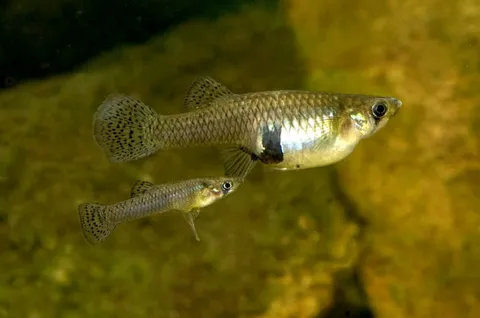
Gambusia holbrooki
Gambusia, also known as the Mosquito fish, bears the scientific name Gambusia holbrooki and is a member of the Poeciliidae family. This lively and very active fish is renowned for its hardiness. It easily adapts to…
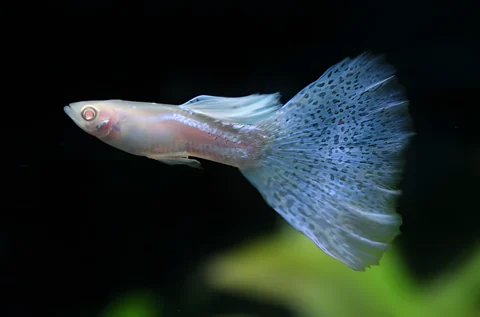
Poecilia reticulata
The Albino Guppy, belonging to the Poeciliidae family, is known by its scientific name Poecilia reticulata (Albino variety). A distinctive feature of this fish is the congenital absence of melanin – the black pigment in…
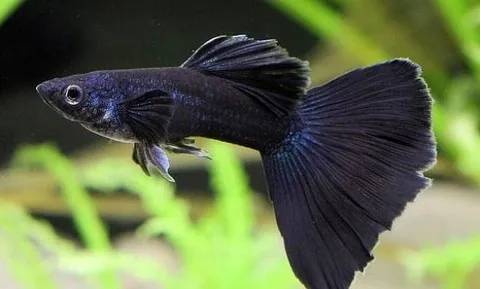
Poecilia reticulata
Black Monk Guppies, also known as Black Guppies, are a breed of Poecilia reticulata (Black strain) from the Poeciliidae family. One of the main features of this variety is the pronounced dark body coloration in males.…
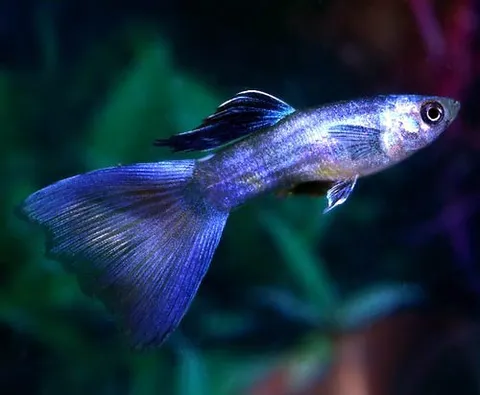
Poecilia reticulata
Blue Guppies, known scientifically as Poecilia reticulata (Blue variety), belong to the Poeciliidae family. This name is a generalization and encompasses various breeds where blue is the dominant color. It is mainly…