Temperature23 – 28 °C
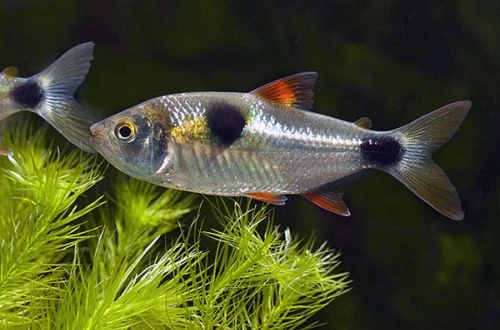
The scientific name Exodon paradoxus is firmly established for this fish, which belongs to the Characidae family. Its name contains the element “paradoxical,” likely reflecting the astonishing behavioral characteristics of this species. Despite being schooling fish, each individual exhibits a strong individuality, capable of attacking a conspecific at any moment. This behavior manifests if a conspecific appears weakened, sick, or simply when there is a need for food. These creatures, though small, can attack even large predators, as if following the principle: bite first, ask questions later. Life in their schools is bustling, but particular aggression is shown during feeding. If you are interested in piranhas but cannot provide a large aquarium and sufficient food, Exodon paradoxus can be an excellent alternative.
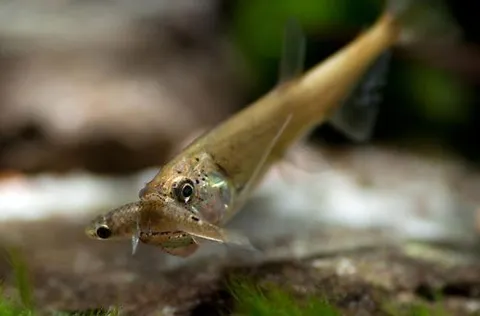
These are fairly small fish: in an aquarium adults usually reach 10 cm in length, though some literature quotes up to 15 cm. In a home aquarium, their growth is usually less — up to 10 cm. Sexual dimorphism is minimal: males differ with slightly more elongated dorsal and anal fins and appear slimmer. The predominant coloration is silvery, with red fins. Characteristic features are two large dark spots: one located on the body behind the gill covers, the other at the base of the tail. The unique structure of their mouth, with sharp, protruding teeth, allows them to tear fragments from the bodies of other fish, like pincers.
These fish are widely distributed in a significant part of the Brazilian Amazon, and also found in Guyana (South America). Their usual habitats are sections of rivers flowing through savannas and other steppe landscapes, such as pastures or agricultural lands. In such biotopes, moderate currents and sandy substrates are characteristic.
Despite their modest size, these fish are extremely dangerous and bloodthirsty creatures. They should be kept exclusively in a species-only aquarium. No other fish, even large and predatory, will feel safe in their presence. Exodons can resemble a group of small aggressors who are also ready to attack each other; outwardly, this creates the impression of constant internal conflicts. The aquarist should be prepared for the appearance of outcast fish, weakened due to lack of food or injuries. If timely measures are not taken, they can quickly be killed and eaten.
The minimum recommended aquarium volume is 120 liters. The decor can be varied, but a sandy substrate and several snags are often used for decoration. However, given the behavioral characteristics of these fish, it is advisable to provide several shelters in the form of dense plant thickets, supplemented with branched snags or decorative elements such as sunken ships or castles. These places will allow fish under attack from conspecifics to find refuge and recover, which will be inevitable. Exodons produce a significant amount of waste, and uneaten meaty food scraps heavily pollute the water. Only a high-performance filtration system, combined with weekly partial water changes (15–20% of the volume) with fresh water, can cope with this. In addition to cleanliness, optimal keeping conditions include moderate current and lighting, a water temperature range of 23–28°C, and a pH from acidic to slightly acidic with any water hardness (from soft to hard).
This carnivorous species in its natural environment feeds on various insects, small crustaceans, and also small fish if they can fit into their mouth. Otherwise, Exodons will, if possible, bite off fins, tails, scales, and body parts from other fish, or from weakened or sick conspecifics. In aquarium conditions, they accept all types of meaty foods, including chopped mussels, shrimp, fish pieces, worms, and insects. Despite living in a school, during feeding, the principle of “every fish for itself” applies. Therefore, it is important to ensure that all fish receive a sufficient portion of food. Otherwise, over time, some individuals may weaken from hunger, and their fate will be sad.
Breeding these fish in a home aquarium is possible, though it presents certain difficulties. There are many nuances, making success accessible only to the most persistent or experienced aquarists. The optimal solution is to set up a separate spawning aquarium. A tank of 40 liters or more will suffice, with just a few plants. A fine-mesh net or a layer of glass marbles about 1 cm in diameter is placed on the bottom. This design protects the eggs from the parents, as they fall through the net or roll into the gaps between the marbles. The equipment set is similar to the main aquarium, but the filtration system should consist of a simple sponge filter to avoid sucking in fry. A stimulus for spawning is a gradual reduction in water hardness to 1–5 dGH and establishing a slightly acidic pH value within 6.0–6.5. After some time, some fish noticeably round out — these are females full of eggs. Future breeders (the strongest and healthiest individuals are chosen) are placed in a separate tank, prepared in advance and filled with water from the main aquarium, where they should spend about a week. It is important to regularly change the water in the spawning aquarium and remove waste products, as a weak filter will not be able to provide sufficient cleaning. Spawning can be initiated by lowering the temperature to 23°C by replacing water with cooler water during the day. After egg-laying, the fish are returned. Fry appear within 2–3 days. They should be fed microscopic food, such as Artemia nauplii and/or infusoria, then they can transition to adult Artemia and Daphnia. It is also worth noting that fry may feed on each other, but this is normal practice for them and should not cause surprise.
Paradoxical Exodons are generally resistant to diseases. The only real threat to them is poisoning from the decomposition products of organic waste, such as excrement and uneaten food particles. Thus, regular and thorough aquarium maintenance minimizes the risk of diseases.
When purchasing Exodons, it is important to acquire the entire group at once, as adding new individuals to an established school often leads to aggression and injuries. The optimal group size is at least 10–12 individuals, which helps distribute intraspecific aggression. Avoid buying single fish or too small groups, as this inevitably leads to the death of weaker individuals. When inspecting them at the store, ensure there are no damages to fins, scales, and eyes, which are common signs of skirmishes between fish. Healthy individuals should be active and show interest in food. Given their predatory nature and sharp teeth, use thick bags for transport to avoid punctures. It is advisable to prepare a quarantine tank in advance for the adaptation of new fish before introducing them into the main aquarium.
The essentials: size, tank volume, water parameters and care
An adult reaches 10 cm in length. Plan the tank around the maximum size: the fish quickly outgrows a cramped setup.
The recommended volume is 120 L. A smaller tank speeds up nitrate build-up and raises stress levels.
Temperature 23–28 °C, pH 5.5–7.5, hardness 0–20 dGH. Stability matters more than exact values: sudden swings are harder on the fish than a small deviation from the ideal.
Around 8 years when kept properly. Lifespan depends directly on tank volume, water quality and a varied diet.
Temperament: predator (dangerous to small, incompatible). This is a predatory species — any fish small enough to fit in its mouth will eventually be eaten.
Recommended setup: large group (10+ individuals). Ignoring this is a common cause of stress and disease.
Diet type: meat / protein (live, frozen, fresh). Feed small portions that are finished within a couple of minutes — overfeeding does more harm than underfeeding.
The scientific name of the species is Exodon paradoxus, family Characidae. It also appears in the literature as: Epicyrtus exodon, Epicyrtus paradoxus, Hystricodon paradoxus.
The water suits 198 of 208 plants in the catalogue — the easiest ones are shown first.
Afzelius's AnubiasAnacharisAnubiasBrazilian PennywortDwarf CloverDwarf CloverDwarf HygrophilaDwarf SagittariaDwarf ValGuppy GrassHornwortJava FernJava MossMoneywortMud SwordNair's LagenandraNarrow Leaf AnacharisNarrow-leaf CloverStringy MossSüsswassertangTaiwan MossTape GrassTemple PlantUssuri Watermilfoil
Matched by family, categories and overlapping keeping conditions
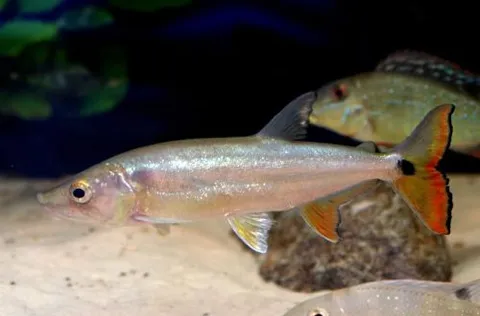
Acestrorhynchus altus
The Redtail Barracuda, scientifically known as Acestrorhynchus altus, belongs to the family Acestrorhynchidae. Its appearance, combining a streamlined, dynamic physique with jaws full of teeth, clearly indicates its…
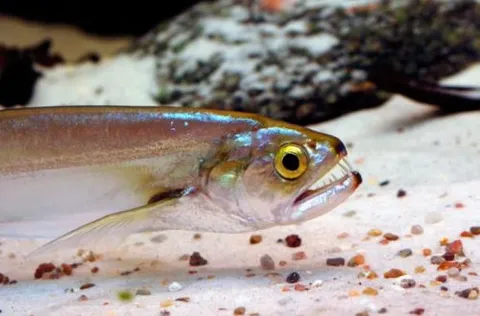
Rhaphiodon vulpinus
The fish known as the Biara, or Chaparrin, with the scientific name Rhaphiodon vulpinus, belongs to the family Cynodontidae. This large predator is not suitable for beginner aquarists. It requires a very spacious…
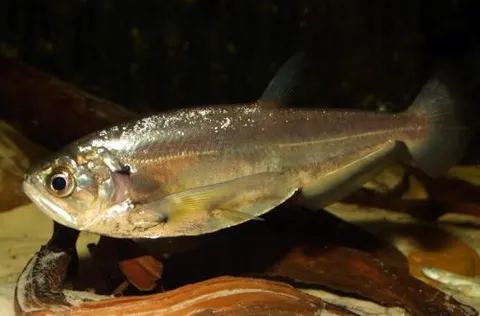
Hydrolycus scomberoides
The scientific name Hydrolycus scomberoides, belonging to the family Cynodontidae, is given to the Vampire Tetra, a true predator from South American rivers. This species is not recommended for beginner aquarists due to…
Hydrolycus armatus
The Vampire Fish, or Payara (scientific name Hydrolycus armatus), belongs to the family Cynodontidae. This species is one of the largest predators inhabiting the river systems of South America. It is not suitable for…