Temperature24 – 28 °C
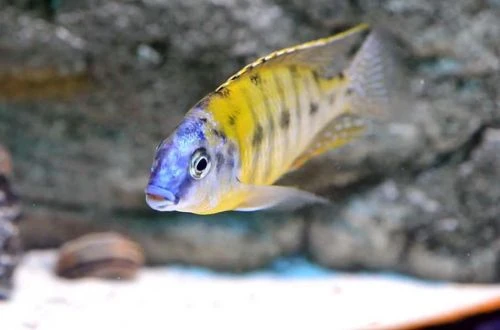
Protomelas fenestratus, known as Fenestratus, belongs to the Cichlidae family. This species is endemic and found exclusively in Lake Malawi, located on the African continent.
Adult fish of this species typically reach a length of about 14 cm. Their heads are iridescent blue, and their bodies acquire yellowish-orange hues; males, however, have significantly brighter and more expressive coloration. The pectoral and anal fins are adorned with a reddish color with small light specks, while the dorsal fin has a blue tint with a red border. These are their main external characteristics.
Fenestratus is endemic to Lake Malawi in East Africa. In nature, this cichlid inhabits transitional zones where sandy bottom areas alternate with rocky ridges. The fish prefer to stay in the middle water layers, actively exploring the substrate in search of food. The water parameters characteristic of their biotope are stable, with a high alkaline reaction and significant hardness.
The requirements for the hydrochemical composition of water for Fenestratus significantly narrow the range of compatible species. In addition, the rather aggressive behavior of males during spawning makes this list even shorter. Suitable neighbors include Mbuna cichlids of a similar size or large, but peaceful fish. Males show greater belligerence towards each other, so it is recommended to keep only one male with several females in a single aquarium.
For keeping an adult group of these fish, an aquarium of at least 200 L will be required. The decor can be quite simple: usually, sandy substrate and various compositions of large stones or rock fragments are used. These are used to create shelters such as caves and grottoes. Simple ceramic pots placed on their side, or other decorative elements, are also suitable. Water conditions for Fenestratus are specific: their habitat is characterized by high hardness (dGH value) and alkaline pH values. To maintain optimal water quality, it is recommended to replace 15–20% of the total volume weekly, and to regularly clean the substrate of accumulated organic waste.
Fenestratus readily accept various types of food: dry, frozen, and live. It is important that their daily diet includes both meaty and plant-based components, with meaty ones predominating. Specialized foods developed for Malawian cichlids and offered by many well-known manufacturers will be an ideal solution.
At the beginning of the breeding period, the male chooses a specific territory at the bottom of the aquarium, where he digs a small pit that will become the spawning site. He then actively invites females, sometimes showing some aggression in the process. For this reason, it is important to provide harem keeping: this will allow the male's attention to be dispersed among several potential partners. When the female is ready to spawn, she accepts the male's courtship, lays eggs, and immediately after fertilization, collects them into her mouth. For three weeks, she will incubate the eggs, and then the fry, in her mouth, protecting them from potential threats. Only after this are the fry released into free swimming. It is important to note that during this entire time, the female will not be able to eat, so it is necessary to provide the fish with sufficient food before spawning begins. This behavior, where fry are incubated in the mouth, is characteristic of most Lake Malawi cichlids; it has evolved and is an adaptation to high competition in their natural habitat.
The main cause of most diseases in these fish is unsuitable keeping conditions and poor-quality nutrition. If initial symptoms are observed, it is first necessary to check water parameters and the concentration of dangerous substances such as ammonia, nitrites, and nitrates. If the indicators deviate from the norm, they should be brought back into order, and only then should treatment begin.
When purchasing, choose active fish with clean fins and no visible body damage. It is important to avoid individuals with signs of emaciation, sunken bellies, or unnatural behavior, such as a constant desire to hide in the corner of the aquarium. It is recommended to acquire young individuals, as they adapt more easily to new keeping conditions. Before purchasing, it is advisable to clarify the conditions in which the fish were kept to minimize stress during relocation.
The essentials: size, tank volume, water parameters and care
An adult reaches 15 cm in length. Plan the tank around the maximum size: the fish quickly outgrows a cramped setup.
The recommended volume is 200 L. A smaller tank speeds up nitrate build-up and raises stress levels.
Temperature 24–28 °C, pH 7.6–8.8, hardness 10–25 dGH. Stability matters more than exact values: sudden swings are harder on the fish than a small deviation from the ideal.
Around 8 years when kept properly. Lifespan depends directly on tank volume, water quality and a varied diet.
Temperament: semi-peaceful (including aggression during spawning / intraspecific conflicts). Keep this in mind when choosing tank mates.
Recommended setup: harem (1 male and several females). Ignoring this is a common cause of stress and disease.
Diet type: any (universal). Feed small portions that are finished within a couple of minutes — overfeeding does more harm than underfeeding.
The scientific name of the species is Protomelas fenestratus, family Cichlids (Cichlidae). It also appears in the literature as: Cyrtocara fenestrata, Haplochromis fenestratus, Protomelas fenustratus.
The water suits 113 of 208 plants in the catalogue — the easiest ones are shown first.
African Onion PlantAfzelius's AnubiasAmazon FrogbitAmazon SwordAnacharisAnubiasArrowhead CryptDwarf CloverDwarf CloverDwarf HygrophilaDwarf SagittariaDwarf ValGuppy GrassHornwortJava MossMoneywortMud SwordNair's LagenandraNarrow Leaf AnacharisNarrow-leaf CloverStringy MossTaiwan MossTape GrassUssuri Watermilfoil
Matched by family, categories and overlapping keeping conditions
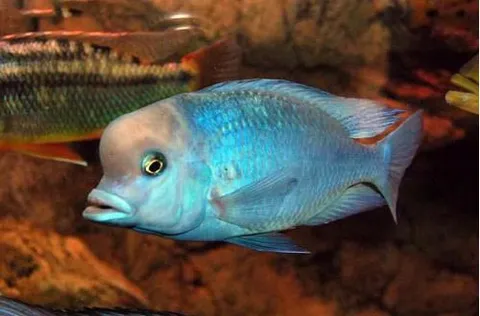
Cyrtocara moorii
Cyrtocara moorii, also known as the Blue Dolphin Cichlid, belongs to the Cichlidae family. The fish gets its name from its distinctive head shape: the presence of a nuchal hump and an elongated mouth give it a…
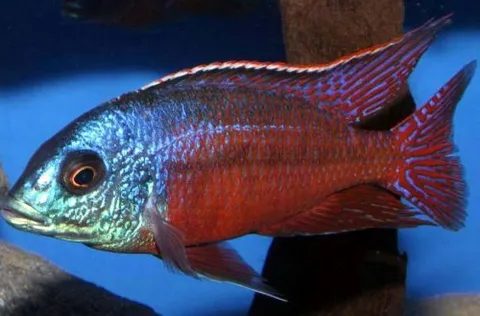
Protomelas taeniolatus
Protomelas, or the 'Red Empress' Cichlid, also known by its scientific name Protomelas taeniolatus (formerly classified as Haplochromis taeniolatus), is a member of the Cichlidae family. A distinguishing feature of this…
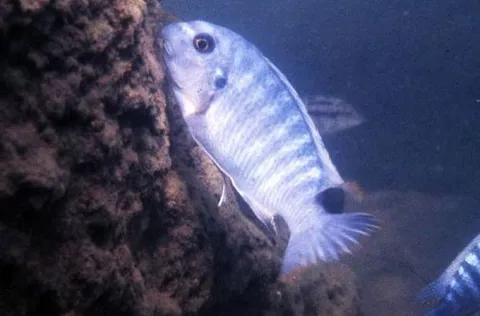
Labeotropheus fuelleborni
Labeotropheus fuelleborni, also known as the Tapir Cichlid or Blue Mbuna, bears the scientific name Labeotropheus fuelleborni and belongs to the family Cichlidae. This species is endemic to Lake Malawi, located in East…
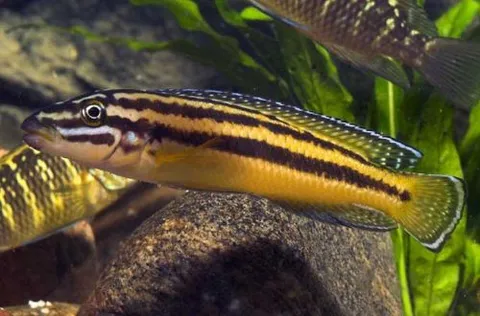
Julidochromis regani
Julidochromis regani, with the scientific name Julidochromis regani, belongs to the family Cichlidae. This cichlid is quite popular among aquarists. Like many members of its family, it can show aggression towards…