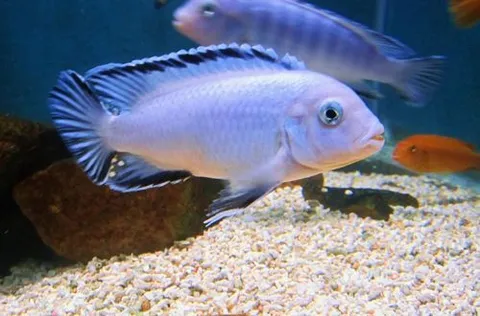
Blue Pindani
Chindongo socolofi
The fish known as Pseudotropheus socolofi or Blue Pindani is officially named Chindongo socolofi and belongs to the extensive Cichlidae family. Before the classification revision in 2016, its common name was…
Labeotropheus fuelleborni, also known as the Tapir Cichlid or Blue Mbuna, bears the scientific name Labeotropheus fuelleborni and belongs to the family Cichlidae. This species is endemic to Lake Malawi, located in East Africa. As part of the Mbuna cichlid group, it inhabits the shoreline among numerous rock formations. It can often be found in shallow waters, as well as in areas with active water turbulence. These fish exhibit aggression towards other species, which complicates the selection of suitable tank mates and precludes their cohabitation in a community tank. However, they are undemanding in terms of conditions and breed quite easily at home.
Adults reach approximately 17 cm in length. Their coloration is predominantly blue, with indistinct vertical stripes, sometimes with an orange tint on the sides of the body. Males are distinguished by brighter coloration and the presence of yellow spots on the anal fin. The Tapir Cichlid has a unique mouth structure: it protrudes, resembling a tapir's nose, which gave rise to one of its common names. This feature allows the fish to effectively scrape algae from rocks and stones, as well as to firmly cling to them, resisting strong currents.
The species is endemic to Lake Malawi in Africa. In nature, the fish inhabit shallow areas along rocky shores and islands, preferring zones with high water turbulence and significant oxygen content. Thanks to their special mouth structure, they are able to effectively scrape algae from rocks in strong surf conditions, where other cichlid species cannot maintain their position.
This species exhibits aggression and territoriality, getting along poorly with both conspecifics and representatives of other families. It is recommended to keep them in a species-specific tank with a ratio of several females per male. Keeping multiple males is only possible in very spacious tanks, where each male is allocated at least 150–160 liters of space and numerous reliable shelters are provided.
For comfortable keeping of a small group of adult Labeotropheus fuelleborni, an aquarium of at least 160 liters will be required. In terms of decor, a sandy substrate combined with piles of rocks and rock fragments is preferred, which should be arranged to form shelters in the form of caves and crevices. Live plants are not necessary, as the fish may eat them. The pH and dGH of the water should be high. Maintaining the necessary hydrochemical parameters is ensured by an efficient filtration system combined with weekly water changes (10% to 15% of the volume). It is advisable to use filters with media capable of increasing water hardness to avoid sharp fluctuations in dGH. In addition, supplementary aeration should be provided, as Labeotropheus fuelleborni is sensitive to low dissolved oxygen content in the water.
In their natural habitat, their diet consists mainly of algae, as well as small invertebrates and crustaceans found among vegetation. In a home aquarium, it is recommended to offer specialized foods for Malawian cichlids, which contain all the necessary plant components and other additives.
Under favorable conditions, the Tapir Cichlid is very likely to produce offspring. During the breeding season, the male selects a specific area on the aquarium bottom that will serve as a spawning site, most often a cave or grotto. He then begins active courtship, which can sometimes appear quite aggressive. During this period, his coloration becomes significantly brighter, clearly indicating the start of the breeding season. When the female is ready, she accepts the courtship and lays several dozen eggs, immediately collecting them in her mouth. At the same moment, the male releases milt, and fertilization of the eggs occurs inside the female's mouth. The male then does not participate in the protection and care of the offspring. The entire incubation period, as well as the first weeks of the fry's life, are spent in the female's mouth. During this time, she completely refuses food and can noticeably lose weight. If feeding was irregular or the diet was poor before spawning, the female will likely release the fry prematurely or, worse, eat them. During spawning, to prevent possible attacks from the male, it is advisable to move tank mates to another tank (if any), or conversely, place the cichlids there and return them after the breeding period. To preserve the fry, they are kept in a separate aquarium with identical water conditions.
The main cause of most diseases in these fish is unsuitable keeping conditions and poor-quality nutrition. If initial symptoms are observed, it is first necessary to check water parameters and the concentration of dangerous substances such as ammonia, nitrites, and nitrates. If the indicators deviate from the norm, they should be brought back into order, and only then should treatment begin.
When purchasing, choose active fish with clean fins and no visible skin damage. It is important to pay attention to the belly: it should not be excessively sunken, which may indicate emaciation or internal parasitic infections. In the store, the fish should exhibit territorial behavior characteristic of the species, but avoid individuals that constantly hide in corners or appear extremely depressed, as this may indicate chronic stress or poor keeping conditions.
There are no pair reviews for this species yet — check tankmates in the matcher.
All tankmatesThe water suits 113 of 208 plants in the catalogue — the easiest ones are shown first.
African Onion PlantAfzelius's AnubiasAmazon FrogbitAmazon SwordAnacharisAnubiasArrowhead CryptDwarf CloverDwarf CloverDwarf HygrophilaDwarf SagittariaDwarf ValGuppy GrassHornwortJava MossMoneywortMud SwordNair's LagenandraNarrow Leaf AnacharisNarrow-leaf CloverStringy MossTaiwan MossTape GrassUssuri Watermilfoil
Matching water does not mean the plant will stay intact.
The essentials: size, tank volume, water parameters and care
An adult reaches 17 cm in length. Plan the tank around the maximum size: the fish quickly outgrows a cramped setup.
The recommended volume is 200 L. A smaller tank speeds up nitrate build-up and raises stress levels.
Temperature 24–28 °C, pH 7.6–8.8, hardness 10–25 dGH. Stability matters more than exact values: sudden swings are harder on the fish than a small deviation from the ideal.
Around 10 years when kept properly. Lifespan depends directly on tank volume, water quality and a varied diet.
Temperament: semi-peaceful (including aggression during spawning / intraspecific conflicts). Keep this in mind when choosing tank mates.
Recommended setup: harem (1 male and several females). Ignoring this is a common cause of stress and disease.
Diet type: plant-based with meat additives. Feed small portions that are finished within a couple of minutes — overfeeding does more harm than underfeeding.
The scientific name of the species is Labeotropheus fuelleborni, family Cichlids (Cichlidae). It also appears in the literature as: Labeotropheus curvirostris, Labeotropheus fuellerboni, Labeotropheus fulleborni.
Matched by family, categories and overlapping keeping conditions
Chindongo socolofi
The fish known as Pseudotropheus socolofi or Blue Pindani is officially named Chindongo socolofi and belongs to the extensive Cichlidae family. Before the classification revision in 2016, its common name was…
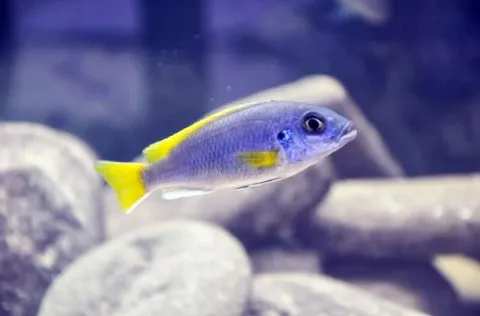
Pseudotropheus sp. «acei»
Pseudotropheus sp. "acei", known as Pseudotropheus Acei, is a representative of the Cichlidae family. This is a beautiful cichlid with a relatively peaceful temperament. It is well-suited for beginner aquarists, as it…
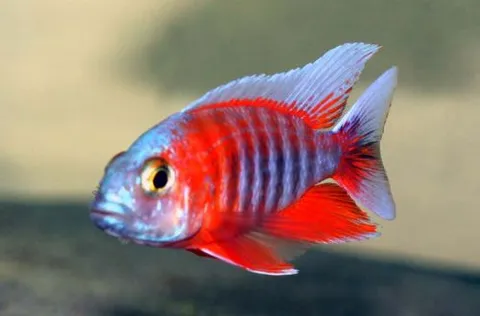
Aulonocara sp.
A selective variety of Aulonocara jacobfreibergi is known by the English trade name Aulonocara Eureka. This species is not found in the natural environment. It is still not precisely known where it was bred and who its…
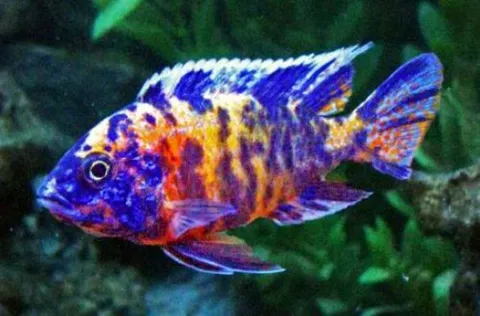
Aulonocara sp.
Aulonocara multicolor, also known by the trade English name Orange blotched (OB) Peacock cichlid, is a hybrid. It was obtained through the selective breeding of several Aulonocara species and artificial cross-breeding…