Temperature25 – 29 °C
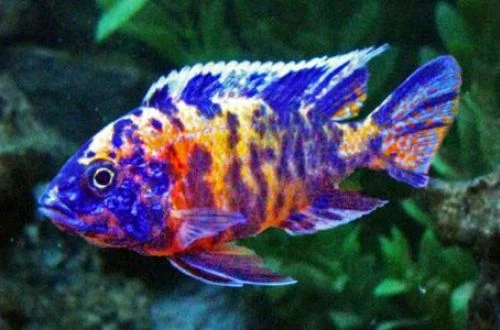
Aulonocara multicolor, also known by the trade English name Orange blotched (OB) Peacock cichlid, is a hybrid. It was obtained through the selective breeding of several Aulonocara species and artificial cross-breeding with females of spotted Mbuna cichlid forms.
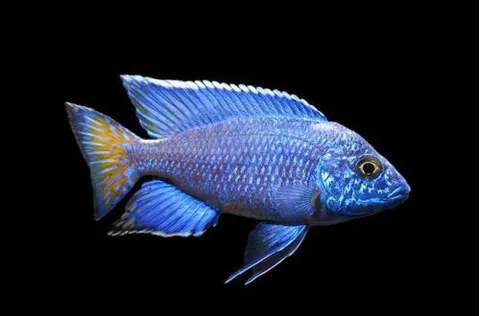
Males exhibit a variegated and vibrant body coloration, including yellow, orange, red, blue, and black spots. The diversity of colors is very wide: each fish has a unique, inimitable pattern. Females also have similar patterns, but their coloration appears noticeably paler. The size of adult individuals ranges from 12 to 17 cm or more, which is determined by the specific species involved in the breeding.
Aulonocara multicolor is a selectively bred form obtained through the hybridization of various species of the genus Aulonocara, therefore this species is not found in natural waters. The natural ancestors of these fish are endemics of Lake Malawi (Nyasa) in East Africa, predominantly inhabiting areas with sandy bottoms or rocky biotopes at depths of 5 to 30 meters. In nature, these cichlids prefer hard, alkaline water with a high content of dissolved oxygen.
Although Aulonocara multicolor carries the genes of Mbuna cichlids, known for their aggressive temperament, it has still retained the behavioral model of its direct ancestors. In a spacious, uncrowded aquarium, it is considered a relatively peaceful fish. These fish are compatible with other congeners, representatives of the Utaka cichlid group, and other species capable of tolerating an alkaline environment. In large tanks, from 1000 liters, cohabitation with Mbuna is permissible. In smaller aquariums, it is advisable to limit the number of males, as they may show excessive hostility towards each other in confined spaces.
The requirements for keeping these fish are similar to the conditions for other Aulonocara species. A group of 3–5 individuals will require an aquarium of 250–300 liters. The decor can be quite simple, including sandy, gravel, or combined substrate with rock formations. The latter are used to create caves and grottoes, serving as shelters or a territorial center for the dominant male. Aquatic plants are not an essential element, but if desired, several undemanding species with well-developed root systems capable of growing in an alkaline environment can be placed. It is important to remember that fish can uproot plants from the substrate, often damaging them. For long-term keeping, maintaining the hydrochemical composition of the water with high pH and dGH values is critical. Regular aquarium maintenance depends on its technical equipment. In most cases, the aquarist needs to perform procedures at least twice: changing water and removing organic waste (food remains, excrement). Usually, these two procedures are combined and performed once a week.
The daily diet of these fish should include a large amount of protein components, supplemented with some plant additives. Specialized foods for Aulonocara, produced by many manufacturers in the form of flakes and granules, will be a good choice. As supplementary food, live or frozen artemia, bloodworms, daphnia, and similar products can be offered.
The breeding process for these fish is similar to other representatives of the genus. With the onset of the breeding season, the male begins to actively court the female, sometimes excessively persistently. To disperse his attention, it is recommended to keep 4–6 females in the company. Females incubate fertilized eggs in their mouths for protection. The incubation period lasts 2–3 weeks, which is the most vulnerable time. If females are attacked by other aquarium inhabitants, especially the male, this can hinder the gestation of offspring. Being a hybrid, Aulonocara multicolor can interbreed with other representatives of the genus, which can lead to a deterioration of the color characteristics of the population.
The main threat to fish health is unsuitable keeping conditions. Poor nutrition, injuries, as well as low pH and dGH values provoke the appearance of various diseases. If the first symptoms are detected, it is necessary first to check the hydrochemical composition of the water and ensure the absence of dangerous concentrations of nitrogen cycle products. Often, eliminating external causes contributes to recovery. If the symptoms persist, medicinal treatment will be required.
When purchasing, choose active fish with clean skin, without signs of damage, ulcers, or white spots. It is important to pay attention to the condition of the eyes and fins: they should be intact, without signs of rot or deformities. It is recommended to avoid individuals with sunken bellies or unnaturally bloated abdomens, as this may indicate internal diseases or emaciation. In the store, fish should show curiosity and an adequate reaction to food; sluggish individuals or those constantly hiding in a corner may be signs of stress or illness.
The essentials: size, tank volume, water parameters and care
An adult reaches 17 cm in length. Plan the tank around the maximum size: the fish quickly outgrows a cramped setup.
The recommended volume is 250 L. A smaller tank speeds up nitrate build-up and raises stress levels.
Temperature 25–29 °C, pH 7.6–9, hardness 10–25 dGH. Stability matters more than exact values: sudden swings are harder on the fish than a small deviation from the ideal.
Around 8 years when kept properly. Lifespan depends directly on tank volume, water quality and a varied diet.
Temperament: semi-peaceful (including aggression during spawning / intraspecific conflicts). Keep this in mind when choosing tank mates.
Recommended setup: harem (1 male and several females). Ignoring this is a common cause of stress and disease.
Diet type: mixed diet (meat + plant-based). Feed small portions that are finished within a couple of minutes — overfeeding does more harm than underfeeding.
The scientific name of the species is Aulonocara sp., family Cichlids (Cichlidae).
The water suits 16 of 208 plants in the catalogue.
Amazon FrogbitAnubiasAsian WatermossChristmas MossFloating Water SpriteGiant VallisneriaGreater DuckweedJapanese RushJava MossJungle ValNair's LagenandraPinnate HygrophilaRed Root FloaterTaiwan MossWater LettuceWater Spangles
This fish digs through the substrate and pulls rooted plants out.
African Onion PlantAfzelius's AnubiasAmazon SwordAnacharisArrowhead CryptBalansa Water TrumpetBanana PlantBarth's SwordBeckett's Water TrumpetBoivin's AponogetonBroad-leaf Water SpriteBrookweedCognac AmmanniaCongo AnubiasCreeping JennyCreeping SpotflowerCrinkled AponogetonDark SwordDense MayacaDitch StonecropDwarf AmbuliaDwarf CloverDwarf CloverDwarf HairgrassDwarf HygrophilaDwarf RanalismaDwarf RotalaDwarf SagittariaDwarf ValDwarf Water TrumpetEelgrassFanwortFeathered LimnophilaFloating AponogetonFloating SpikerushFragrant HygrophilaGardner's Water LilyGiant CryptGolden AmmanniaGuppy Grass
Matched by family, categories and overlapping keeping conditions
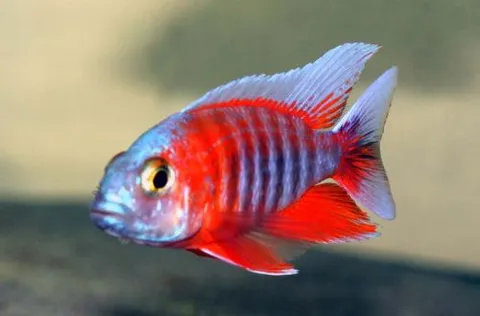
Aulonocara sp.
A selective variety of Aulonocara jacobfreibergi is known by the English trade name Aulonocara Eureka. This species is not found in the natural environment. It is still not precisely known where it was bred and who its…
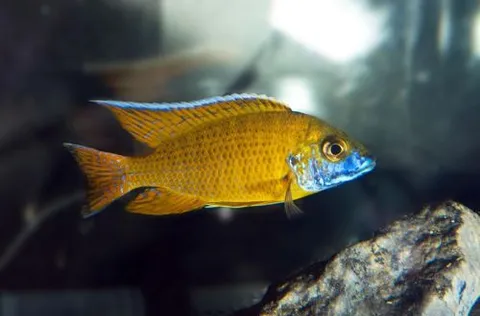
Aulonocara baenschi
Aulonocara baenschi, also known as the Yellow Peacock Cichlid, belongs to the family Cichlidae. This species is endemic to East Africa's Lake Malawi, preferring to inhabit primarily the so-called intermediate zones of…
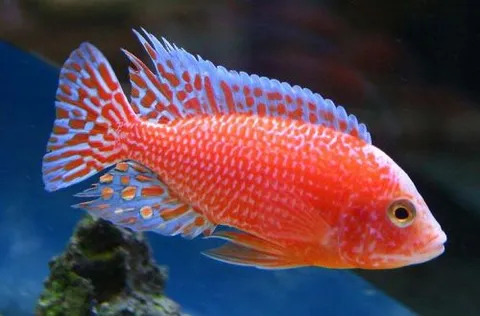
Aulonocara hybrid
Aulonocara Orchid Red (Red) is also known as Aulonocara Strawberry and Aulonocara Dragon. These names are calques from the English commercial names Aulonocara Dragon Blood and Aulonocara Strawberry.
Aulonocara stuartgranti
Aulonocara stuartgranti, also known as Stuartgranti Aulonocara or the Regal Peacock Cichlid, has the scientific name Aulonocara stuartgranti and belongs to the family Cichlidae. This fish is endemic to Lake Malawi in…