Temperature25 – 29 °C
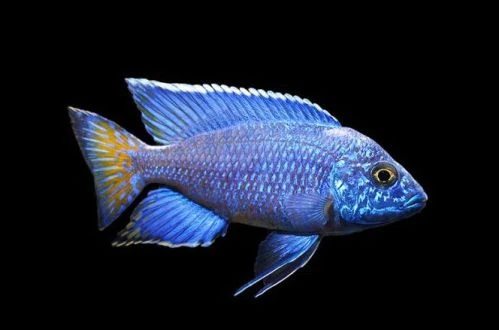
Aulonocara stuartgranti, also known as Stuartgranti Aulonocara or the Regal Peacock Cichlid, has the scientific name Aulonocara stuartgranti and belongs to the family Cichlidae. This fish is endemic to Lake Malawi in East Africa, where it is widely distributed along both the western and eastern shores. It can be found in regions where rocky areas alternate with sandy shoals. Keeping and breeding this fish is quite straightforward. Thanks to its relatively peaceful disposition, which distinguishes it from most other Malawian cichlids, it successfully coexists with many species.
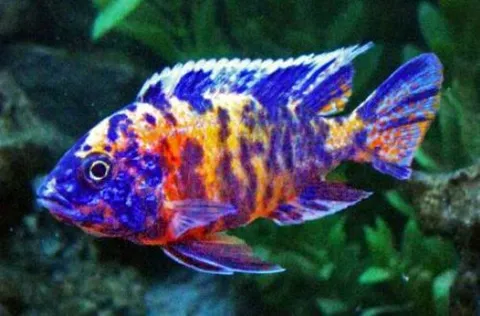
Adults of this cichlid reach approximately 12–13 cm in length. Males are distinguished by their blue coloration, complemented by orange speckles, the intensity of which can vary significantly. Females appear more modest: their main color is gray-brown, with characteristic dark horizontal stripes.
Aulonocara stuartgranti is endemic to Lake Malawi in East Africa. The species inhabits so-called transitional zones, where rocky shores give way to open sandy areas with scattered rocks. Fish are typically found at depths of 5 to 17 meters, where they sift sand in search of small invertebrates and crustaceans.
Male Aulonocara stuartgranti exhibit aggression towards each other. In a small aquarium, skirmishes over territory and females are inevitable. Additionally, they may attack fish whose coloration is similar to their own. Otherwise, these cichlids are quite peaceful towards representatives of other species. The optimal solution is to keep one male with several females (3 to 6) in the company of calm, medium-sized fish.
For comfortable keeping of a small group of adult fish, an aquarium of at least 150 liters will be required. Sand substrate is typically used for decoration. It can be supplemented with undemanding plants capable of thriving in hard water, such as Anubias, Vallisneria, or Sagittaria subulata. Several large stones or rocks will help create caves, grottoes, crevices, and other decorative shelters. It is important to maintain high pH and dGH values in the water. Installing a powerful filtration system and regular weekly water changes of 15–20% will help maintain the necessary hydrochemical conditions. It is advisable to use filters with materials that can increase water hardness to avoid sharp fluctuations in dGH.
In natural conditions, these fish feed at the bottom, sifting through the substrate with their mouths to separate small invertebrates, crustaceans, algae, and other organic particles. In a home aquarium, it is recommended to use specialized sinking foods for Malawian cichlids. Such foods should contain a balanced complex of both plant and protein components. Large flakes or pellets can be crushed if necessary for easier consumption by the fish. The use of homemade foods is not recommended. Feed small portions 3–4 times a day.
Under favorable conditions, the appearance of offspring from the Regal Peacock Cichlid is quite likely. The male selects a specific area of the aquarium bottom for spawning when the breeding season arrives. He then actively, and sometimes quite persistently, courts the female. When she is ready, she accepts his advances and lays several dozen eggs, which she immediately collects into her mouth. At the same moment, the male releases milt, and fertilization of the eggs occurs in the female's mouth. The entire incubation period, as well as the first weeks of life, the fry spend in the mother's mouth. During this time, the female completely refuses food and can noticeably lose weight. If feeding before spawning was irregular or the diet was insufficient, the female will likely release the fry prematurely or, in the worst case, may eat them. The male does not participate in the protection or care of the offspring. During spawning, it is recommended to temporarily remove other aquarium inhabitants, if any, to prevent possible attacks by the male. Alternatively, the cichlids can be moved to a separate aquarium, and returned after the breeding period. For safe rearing of the fry, they should subsequently be kept in a separate tank with identical water conditions.
Most diseases of Malawian cichlids are often caused by unsuitable keeping conditions or poor-quality food, which frequently leads to the development of "Malawi Bloat. If the first symptoms are detected, it is necessary to check water parameters for high concentrations of dangerous substances such as ammonia, nitrites, and nitrates. If necessary, all indicators should be normalized, and only then should treatment begin.
When selecting individuals, attention should be paid to the fish's activity and the cleanliness of its skin, the absence of fin damage, and signs of emaciation. Avoid fish with sunken bellies or unnatural behavior, such as a constant desire to hide in a corner. Keep in mind that young males may not yet have bright coloration, so when purchasing a group, it is best to choose individuals according to recommendations for sex ratio to minimize the risk of intraspecific aggression in the aquarium.
The essentials: size, tank volume, water parameters and care
An adult reaches 12–13 cm in length. Plan the tank around the maximum size: the fish quickly outgrows a cramped setup.
The recommended volume is 200 L. A smaller tank speeds up nitrate build-up and raises stress levels.
Temperature 25–29 °C, pH 7.6–9, hardness 10–25 dGH. Stability matters more than exact values: sudden swings are harder on the fish than a small deviation from the ideal.
Around 8 years when kept properly. Lifespan depends directly on tank volume, water quality and a varied diet.
Temperament: semi-peaceful (including aggression during spawning / intraspecific conflicts). Keep this in mind when choosing tank mates.
Recommended setup: harem (1 male and several females). Ignoring this is a common cause of stress and disease.
Diet type: mixed diet (meat + plant-based). Feed small portions that are finished within a couple of minutes — overfeeding does more harm than underfeeding.
The scientific name of the species is Aulonocara stuartgranti, family Cichlids (Cichlidae).
The water suits 108 of 208 plants in the catalogue — the easiest ones are shown first.
African Onion PlantAfzelius's AnubiasAmazon FrogbitAmazon SwordAnacharisAnubiasArrowhead CryptAsian WatermossDwarf CloverDwarf CloverDwarf HygrophilaDwarf SagittariaDwarf ValGuppy GrassHornwortJava MossMoneywortMud SwordNair's LagenandraNarrow Leaf AnacharisNarrow-leaf CloverTaiwan MossTape GrassUssuri Watermilfoil
Matched by family, categories and overlapping keeping conditions
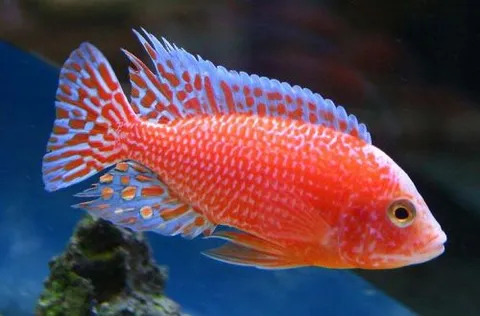
Aulonocara hybrid
Aulonocara Orchid Red (Red) is also known as Aulonocara Strawberry and Aulonocara Dragon. These names are calques from the English commercial names Aulonocara Dragon Blood and Aulonocara Strawberry.
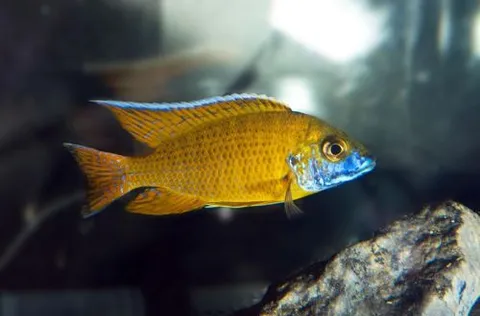
Aulonocara baenschi
Aulonocara baenschi, also known as the Yellow Peacock Cichlid, belongs to the family Cichlidae. This species is endemic to East Africa's Lake Malawi, preferring to inhabit primarily the so-called intermediate zones of…
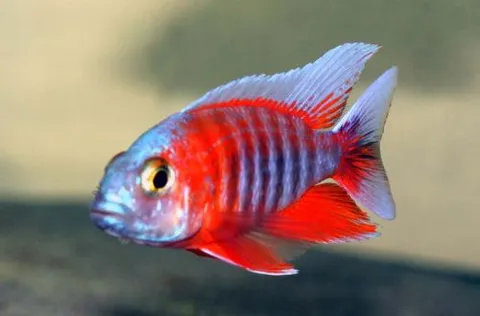
Aulonocara sp.
A selective variety of Aulonocara jacobfreibergi is known by the English trade name Aulonocara Eureka. This species is not found in the natural environment. It is still not precisely known where it was bred and who its…
Aulonocara sp.
Aulonocara multicolor, also known by the trade English name Orange blotched (OB) Peacock cichlid, is a hybrid. It was obtained through the selective breeding of several Aulonocara species and artificial cross-breeding…