Temperature22 – 28 °C
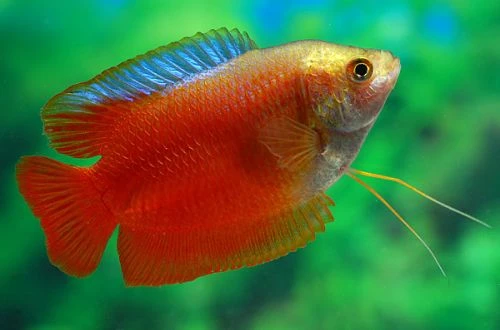
The Flame Gourami, also known as the Flame Dwarf Gourami and officially named Trichogaster lalius, is a member of the family Osphronemidae. This is an artificially bred variety, which appeared as a result of long and purposeful cross-breeding of various species over many generations. The goal of such selection was to fix a special coloration that truly makes an impression: a bright fiery body combined with a blue dorsal fin makes this fish a wonderful decoration for any home aquarium. In addition, it is characterized by good hardiness.
The fish's body has an oval shape and is somewhat flattened laterally; the fins are relatively large, with rounded edges. The main distinguishing feature of the Flame Gourami is, without a doubt, its coloration. Unlike many other Gourami species, the body of this fish has a uniform color, whether bright orange or red, without vertical pigmentation stripes. The dorsal fin, on the other hand, is contrastingly colored blue. Sometimes young individuals of this species are confused with Honey Gouramis due to their external resemblance. Therefore, when choosing fish in a store, it is important to examine them carefully to avoid disappointment in the future. Males are distinguished by a more expressive and vibrant appearance; their colors are rich and distinct, while females have noticeably paler coloration. In addition, differences are also observed in the shape of the fins: in females, they are rounded and curved. A pair of these fish usually stays together.
This species was bred selectively from the common Dwarf Gourami and therefore does not occur in natural conditions.
The Flame Gourami coexists well with many fish of similar size and temperament. These include various species of Rasboras, Corydoras catfish, and some slow-moving cyprinids. However, cohabitation with Barbs and similar fin-nipping fish, as well as with large, overly active, or aggressive species, should be avoided. Among Flame Gouramis, there is a clearly expressed internal hierarchy, in which the strongest male occupies the dominant position, subjugating not only other males but also females. In a compact aquarium, weaker fish will be constantly attacked and unable to find shelter, while in a large tank (from 100 liters), this problem is less pronounced. The optimal option is solitary keeping in a small aquarium or harem keeping in a large volume.
For a pair of Flame Gouramis, a relatively small aquarium, with a volume of 60 liters or more, will suffice. Since these fish possess a unique labyrinth organ that allows them to breathe atmospheric air, having a lid on the aquarium is desirable. A layer of air with increased humidity and a temperature higher than room temperature forms under the lid, which minimizes potential problems with this respiratory organ. The minimum set of necessary equipment includes a lighting system, an aerator, a heater, and an efficient filter. The filter should be installed so that it does not create too strong a water flow; for example, the outlet nozzles can be directed towards the tank wall to diffuse the flow. Maintaining high water quality is ensured by weekly water changes of a quarter of the total volume. These fish prefer aquariums with dense vegetation, both rooted and floating. To provide free swimming space, plants are best placed in groups. The presence of shelters is mandatory – these can be snags, roots, or artificial decorations. Creating such refuges helps the fish feel safe; otherwise, they become timid and shy. The substrate can be any, but a dark color will enhance the intensity of the fish's coloration.
This completely domesticated breed will not present difficulties with feeding. A wide range of specialized foods, designed specifically for Gouramis and containing all necessary vitamins and trace elements, is available in pet stores. If desired, the fish's diet can be enriched with live foods, such as bloodworms.
Successful breeding is only possible in a separate spawning aquarium. This will protect not only the fry from potential predation in the community tank, but also other inhabitants who may suffer from an aggressive male Flame Gourami fiercely guarding the clutch. A spawning tank of 20 liters or more will be sufficient, and the water parameters in it should be identical to the conditions of the community tank. The standard set of equipment for a spawning tank includes a lighting system, an aerator, a heater, and a simple sponge filter. The setup must include rooted and floating plants with small leaves. The stimulus for spawning is enhanced feeding with meat products: bloodworms, insect larvae, or frozen food should be added to the daily diet. Under favorable conditions, the female will begin to fill with eggs, which will manifest as a noticeable increase in her abdomen; at this point, she is transferred to a separate tank. The male is introduced only on the second or third day. All transfers are recommended to be carried out in the dark to minimize stress for the fish. While the female is developing eggs, the male begins to build a nest on the water's surface. The Flame Gourami approaches this process thoroughly, using not only air bubbles but also various aquarium materials (small twigs, pieces of leaves, roots, etc.). Upon completion of construction, the mating ritual begins: the male swims around his chosen partner, inviting her to the nest and touching her with his mouth. The female can lay up to 800 eggs, after which she should be immediately returned to the community tank. The male remains near the nest to guard the clutch, and at this time becomes quite aggressive, even towards the female. The fry hatch within 24 hours and begin to swim freely on the third day, which signals the removal of the male from the spawning tank.
These fish are exceptionally hardy and well-adapted to life in the confined space of an aquarium. In a balanced aquarium environment, with appropriate conditions and a stable biological system, health problems usually do not arise.
When purchasing, caution should be exercised, as this species is often susceptible to viral diseases, particularly iridovirus (DGIV). Avoid acquiring lethargic individuals with signs of emaciation, dull coloration, or the presence of tumors, as they may be infected and untreatable. In the store, fish are often in a weakened state, so it is important to carefully inspect the condition of their scales and fins for damage or signs of bacterial infections. Choose active fish with clear eyes and even breathing, avoiding specimens that constantly stay at the bottom or appear apathetic.
The essentials: size, tank volume, water parameters and care
An adult reaches 8 cm in length. Plan the tank around the maximum size: the fish quickly outgrows a cramped setup.
The recommended volume is 60 L. A smaller tank speeds up nitrate build-up and raises stress levels.
Temperature 22–28 °C, pH 6–8, hardness 5–19 dGH. Stability matters more than exact values: sudden swings are harder on the fish than a small deviation from the ideal.
Around 4 years when kept properly. Lifespan depends directly on tank volume, water quality and a varied diet.
Temperament: semi-peaceful (including aggression during spawning / intraspecific conflicts). Keep this in mind when choosing tank mates.
Recommended setup: pair (male/female). Ignoring this is a common cause of stress and disease.
Diet type: any (universal). Feed small portions that are finished within a couple of minutes — overfeeding does more harm than underfeeding.
The scientific name of the species is Trichogaster lalius, family Osphronemidae. It also appears in the literature as: Colisa lalia, Colisa unicolor, Colisha lalius.
The water suits 197 of 208 plants in the catalogue — the easiest ones are shown first.
Afzelius's AnubiasAnacharisAnubiasBrazilian PennywortDwarf CloverDwarf CloverDwarf HygrophilaDwarf SagittariaDwarf ValGuppy GrassHornwortJava FernJava MossMoneywortMud SwordNair's LagenandraNarrow Leaf AnacharisNarrow-leaf CloverStringy MossSüsswassertangTaiwan MossTape GrassTemple PlantUssuri Watermilfoil
Matched by family, categories and overlapping keeping conditions
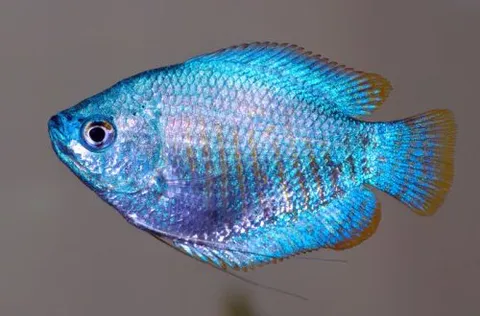
Trichogaster lalius
The Blue Dwarf Gourami, scientifically known as Trichogaster lalius, belongs to the family Osphronemidae. This beautiful miniature fish is an artificially bred variety of the common Dwarf Gourami. It stands out for its…
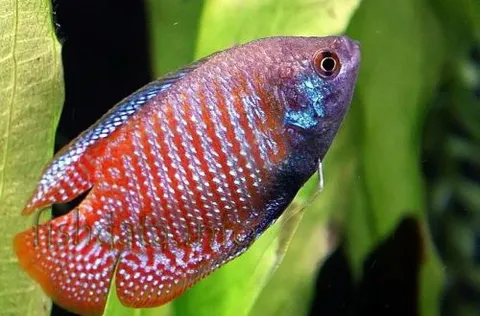
Trichogaster lalius
The Dwarf Gourami (Trichogaster lalius), a member of the Osphronemidae family, has maintained its status as one of the most sought-after aquarium species for many years. Its appeal stems not only from its vibrant…
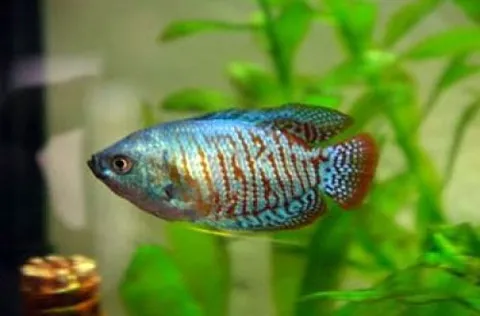
Trichogaster lalius
Trichogaster lalius, also known as the Neon Dwarf Gourami, is a member of the Osphronemidae family. This variety of Dwarf Gourami is widespread and highly popular, standing out among others due to the intensity of its…
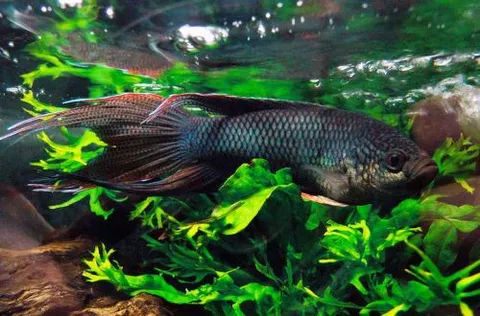
Macropodus spechti
The Black Paradise Fish, scientifically known as Macropodus spechti, belongs to the family Osphronemidae. Previously, it was often referred to as the Macropodus concolor, considered a color variation of the classic…