Temperature22 – 28 °C
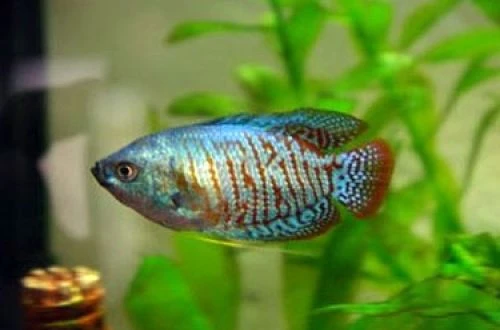
Trichogaster lalius, also known as the Neon Dwarf Gourami, is a member of the Osphronemidae family. This variety of Dwarf Gourami is widespread and highly popular, standing out among others due to the intensity of its coloration. The species was created artificially: it was obtained by cross-breeding individual fish and subsequently fixing desirable traits over many generations. As a result, a stable form was developed, and offspring from a pair of Neon Dwarf Gouramis invariably inherit the parental characteristics.
The body of the Neon Dwarf Gourami has a somewhat oval shape and is strongly compressed laterally. Its fins are quite large, with rounded edges. The ventral fins are thin, filamentous appendages equipped with sensory cells that help the fish explore its environment. The body coloration features a striking combination of bright vertical stripes, consisting of blue and dark red colors, making it difficult to identify a single dominant shade. The male stands out with more intense coloration, while females appear less vibrant in comparison. Differences are also evident in the fin shape: in females, the dorsal fin is rounded, while in males, it is pointed.
Since this species was created artificially, it is not found in natural bodies of water.
This is a peaceful and even timid species that thrives both in a species-only tank and in a community of other peaceful and calm small fish. Suitable tank mates include cyprinids (e.g., Rasboras or Neon Tetras) and catfishes. Avoid cohabitation with livebearers or active species such as Barbs or Bettas, etc. Intraspecific relationships can be complex: males compete with each other for the attention of females, engaging in real “battles.” In a small aquarium, a weaker individual will constantly be in danger, so the optimal solution is to keep a single pair (male/female) or a harem of one male and several females.
Thanks to their modest size, these small fish do not demand large aquarium volumes. A 60 L tank is perfectly sufficient for a pair of Neon Dwarf Gouramis. If more individuals are planned, calculate 25 L of water per fish. Essential equipment includes a filter, air pump, heater, and lighting system. It is important to choose the right filter: it should provide sufficient performance but create only a weak water current. Gouramis do not tolerate strong currents well, preferring still or slow-moving waters. Be sure to include hiding places in the aquarium decor, such as driftwood or caves, especially if more than three fish are kept. Dense thickets of aquatic plants along the side and back walls will create a comfortable environment and provide these miniature inhabitants with a sense of security. Floating plants are also welcome, but their quantity should not prevent the fish from freely rising to the water surface. A dark substrate effectively contrasts with the bright coloration of the fish, while the particle size of the substrate is not fundamentally important.
In a home aquarium, these fish readily eat all types of dry commercial foods, such as flakes, granules, and tablets. There are also specialized Gourami foods developed with their vitamin and trace element needs in mind. Feeding frequency is once or twice a day, depending on the diet; for example, if meat products are included in the diet, one feeding per day is sufficient.
The breeding process is quite simple, but the behavior of males during spawning can be unpredictable. When building the nest, the male drives everyone away from it, including females, so the presence of plants for retreat and cover becomes important. The stimulus for spawning is the inclusion of meat products in the daily diet. At a certain point, the male begins to form a bubble nest on the water surface, and the female gradually fills with eggs, which noticeably increases her size. Upon completion of construction, the courtship period begins; the male forms a pair with one female, and he will chase other females in the aquarium. The female releases eggs into the water, where the male fertilizes them, then collects them with his mouth and transfers them to the nest. After spawning, the female leaves her partner, and the male remains to guard the offspring. Fry appear approximately 12–36 hours later and begin to swim freely around the aquarium on the third day. It is important to isolate the fry from the parents, as they may eat them. If spawning occurred in a community tank, the fry should be caught and transferred to a separate tank with similar keeping conditions.
These fish are hardy and undemanding. In an aquarium with a stable biological system, health problems usually do not arise. However, deteriorating living conditions will inevitably lead to diseases.
When choosing fish in a store, pay attention to the activity of the individual and the cleanliness of its skin. A healthy Neon Dwarf Gourami should show curiosity, swim effortlessly, and have no fin damage, ulcers, or white film on its body. Avoid specimens with signs of emaciation, sunken bellies, or unnaturally clamped fins, as these may indicate infectious diseases or the effects of prolonged stress. In stores, fish are often kept in high-density conditions, so it is important to observe the group's behavior: aggressive skirmishes between males in a retail tank can lead to injuries that later become foci of fungal infections. A sign of good condition is bright, rich coloration consistent with the selective form, and a lack of timidity when a person approaches the glass. It is not recommended to purchase individuals that constantly hide in corners or lie on the bottom, as this often indicates hidden pathologies or poor water quality in the holding system.
The essentials: size, tank volume, water parameters and care
An adult reaches 8 cm in length. Plan the tank around the maximum size: the fish quickly outgrows a cramped setup.
The recommended volume is 60 L. A smaller tank speeds up nitrate build-up and raises stress levels.
Temperature 22–28 °C, pH 6–8, hardness 5–19 dGH. Stability matters more than exact values: sudden swings are harder on the fish than a small deviation from the ideal.
Around 4 years when kept properly. Lifespan depends directly on tank volume, water quality and a varied diet.
Temperament: semi-peaceful (including aggression during spawning / intraspecific conflicts). Keep this in mind when choosing tank mates.
Recommended setup: pair (male/female). Ignoring this is a common cause of stress and disease.
Diet type: any (universal). Feed small portions that are finished within a couple of minutes — overfeeding does more harm than underfeeding.
The scientific name of the species is Trichogaster lalius, family Osphronemidae. It also appears in the literature as: Colisa lalia, Colisa unicolor, Colisha lalius.
The water suits 197 of 208 plants in the catalogue — the easiest ones are shown first.
Afzelius's AnubiasAnacharisAnubiasBrazilian PennywortDwarf CloverDwarf CloverDwarf HygrophilaDwarf SagittariaDwarf ValGuppy GrassHornwortJava FernJava MossMoneywortMud SwordNair's LagenandraNarrow Leaf AnacharisNarrow-leaf CloverStringy MossSüsswassertangTaiwan MossTape GrassTemple PlantUssuri Watermilfoil
Matched by family, categories and overlapping keeping conditions
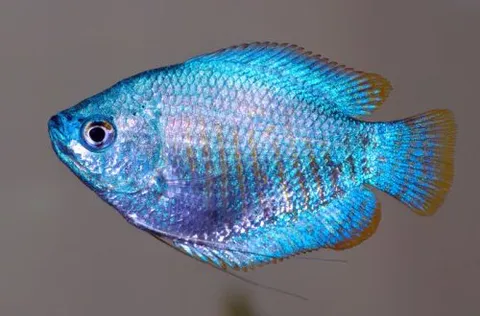
Trichogaster lalius
The Blue Dwarf Gourami, scientifically known as Trichogaster lalius, belongs to the family Osphronemidae. This beautiful miniature fish is an artificially bred variety of the common Dwarf Gourami. It stands out for its…
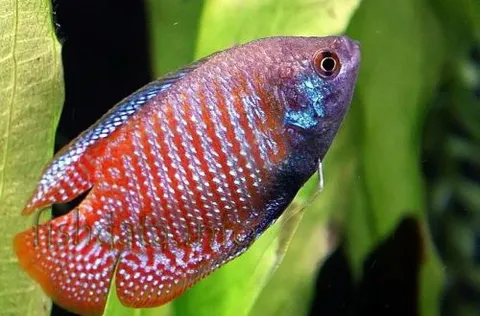
Trichogaster lalius
The Dwarf Gourami (Trichogaster lalius), a member of the Osphronemidae family, has maintained its status as one of the most sought-after aquarium species for many years. Its appeal stems not only from its vibrant…
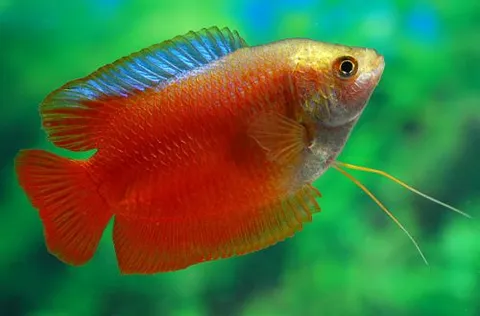
Trichogaster lalius
The Flame Gourami, also known as the Flame Dwarf Gourami and officially named Trichogaster lalius, is a member of the family Osphronemidae. This is an artificially bred variety, which appeared as a result of long and…
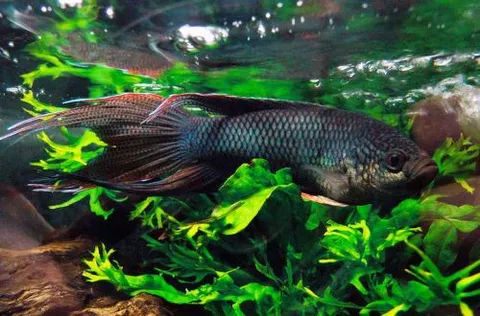
Macropodus spechti
The Black Paradise Fish, scientifically known as Macropodus spechti, belongs to the family Osphronemidae. Previously, it was often referred to as the Macropodus concolor, considered a color variation of the classic…