Temperature22 – 26 °C
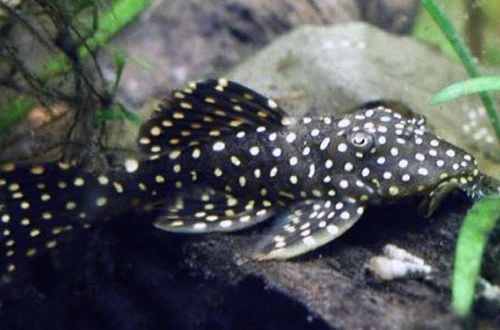
Leporacanthicus galaxias, also known as the Galaxy Pleco, belongs to the family Loricariidae (Armored Catfishes), and its scientific name is Leporacanthicus galaxias. This catfish originates from South America, occupying an extensive natural range. It can be found in the southern tributaries of the Amazon, in its middle and lower reaches, such as the Madeira and Tapajós rivers. Additionally, this species inhabits isolated river systems of the Tocantins, as well as the upper Orinoco basin.
Adults of this fish reach a length of up to 21 cm. The catfish's body is flattened and adorned with large, fan-shaped fins. Its coloration is dark — black, covered with numerous rounded white spots. This pattern resembles a starry night sky, which gave the catfish its second name — Galaxy Pleco. However, it also has another common name — Vampire Pleco. This characteristic is due to the structure of its upper jaw, where two distinct, prominent teeth, or "fangs," are visible. It is believed that these teeth are used for grasping and holding snails and other invertebrates. It is important to note that the name Leporacanthicus galaxias encompasses four subspecies, known in scientific literature as L007, L240, L241, and L294. Such designations are sometimes encountered, but they should not be misleading, as they likely refer to geographical forms with minor external differences.
The species inhabits South America, primarily in the basins of the Guamá and Tocantins rivers in Brazil, as well as the Ventuari River basin in Venezuela. In nature, these catfishes populate river sections with fast currents and sandy bottoms, where large rocks and snags are present. The water in these biotopes is characterized by high oxygen saturation and softness.
This species is not particularly peaceful towards its kin and closely related species, especially if they have similar coloration, perceiving them as direct competitors for food. In smaller aquariums, where space is limited, the likelihood of conflicts significantly increases. It is recommended to keep two or more Galaxy Plecos together only in aquariums with a volume of 200 to 250 liters or more. They coexist well with non-aggressive fish of comparable size that prefer the middle or upper water layers. Good tank mates include South American cichlids, such as Retroculus xinguensis, as well as characins like Metynnis, Hemiodopsis, Anostomus, and various peaceful catfishes, including Ancistrus, and many other inhabitants.
The minimum aquarium volume for a single adult catfish is 240 liters. The decor should ideally recreate the conditions of a mountain riverbed: a substrate of sand and gravel, as well as arrangements of large stones, boulders, and snags. These large decorative elements will serve as natural hiding places. Aquatic plants are not mandatory, but shade-loving species that can attach to rocks and driftwood (e.g., Anubias, many aquatic mosses, and ferns) will be a good addition. The Galaxy Pleco prefers clean, flowing water and an environment with an intense current. These conditions are provided by a powerful filtration system. If necessary, the aquarium can be additionally equipped with an internal pump to create current. Regular maintenance is key to successful keeping. This primarily involves weekly partial water changes with fresh water and the removal of organic waste. Maintaining high water quality also largely depends on the uninterrupted operation of the filter.
Unlike many Plecos, Leporacanthicus galaxias is not a true vegetarian. It readily accepts most sinking foods, including flakes, granules, and tablets. However, its diet should primarily consist of high-protein foods, such as fresh or frozen bloodworms, pieces of shrimp, and mussels. This species is also capable of eating aquarium snails!
Breeding in aquarium conditions is challenging, and reliable reports of widespread successful reproduction are rare. It is known that these fish are cave spawners, so a large number of artificial caves are necessary to stimulate spawning. Sexually mature males are distinguished by a larger and wider head, as well as developed odontodes on their body and fins.
Leporacanthicus galaxias are susceptible to diseases caused by poor keeping conditions, particularly high nitrate concentrations and a lack of dissolved oxygen. Due to their high-protein diet, the fish produce a significant amount of organic waste, which requires powerful filtration and regular water changes. In poor water quality, bacterial infections are possible, manifesting as lesions on the skin and gill covers. They are sensitive to stress, which can be caused by a lack of hiding places or territorial conflicts with other bottom-dwelling fish. Injuries sustained during intraspecific fights often become entry points for secondary infections. Prevention includes maintaining clean water, ensuring strong current, adequate aeration, and providing individual hiding places for each specimen, which reduces aggression and the risk of injury.
When selecting, pay attention to the fish's activity in the evening and the absence of external damage, such as ulcers, whitish spots, or fin rot. A healthy specimen should have a rounded belly, indicating normal feeding, and exhibit caution, hiding in shelters when startled. Avoid purchasing fish with sunken bellies or signs of apathy, as this may indicate emaciation or internal diseases.
The essentials: size, tank volume, water parameters and care
An adult reaches 21 cm in length. Plan the tank around the maximum size: the fish quickly outgrows a cramped setup.
The recommended volume is 240 L. A smaller tank speeds up nitrate build-up and raises stress levels.
Temperature 22–26 °C, pH 5.6–7, hardness 2–15 dGH. Stability matters more than exact values: sudden swings are harder on the fish than a small deviation from the ideal.
Around 10 years when kept properly. Lifespan depends directly on tank volume, water quality and a varied diet.
Temperament: aggressive / incompatible / unfriendly. Keep this in mind when choosing tank mates.
Recommended setup: solitary. Ignoring this is a common cause of stress and disease.
Diet type: sinking (any). Feed small portions that are finished within a couple of minutes — overfeeding does more harm than underfeeding.
The scientific name of the species is Leporacanthicus galaxias, family Armored Catfishes (Loricariidae).
The water suits 198 of 208 plants in the catalogue — the easiest ones are shown first.
Afzelius's AnubiasAnacharisAnubiasBrazilian PennywortDwarf CloverDwarf CloverDwarf HygrophilaDwarf SagittariaDwarf ValGuppy GrassHornwortJava FernJava MossMoneywortMud SwordNair's LagenandraNarrow Leaf AnacharisNarrow-leaf CloverStringy MossSüsswassertangTaiwan MossTape GrassTemple PlantUssuri Watermilfoil
Matched by family, categories and overlapping keeping conditions
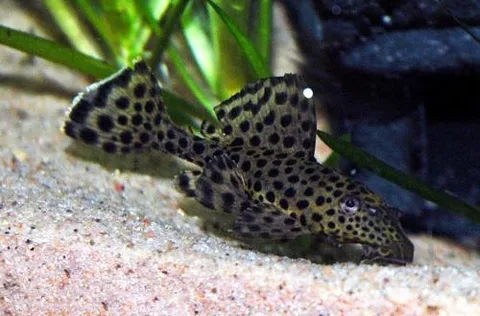
Pterygoplichthys punctatus
Pterygoplichthys punctatus, also known as Pterygoplichthys, Corroncho catfish, or Carachama, belongs to the family Loricariidae, which includes the armored catfishes. This fish is distinguished by its peaceful and calm…
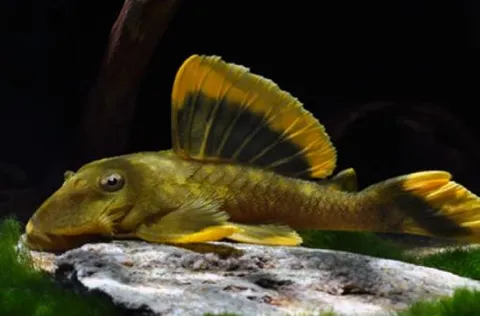
Baryancistrus chrysolomus
A large representative of the armored catfish family (Loricariidae), the Magnum Pleco, known by its scientific name Baryancistrus chrysolomus, has a rather complex temperament. This can significantly complicate the…
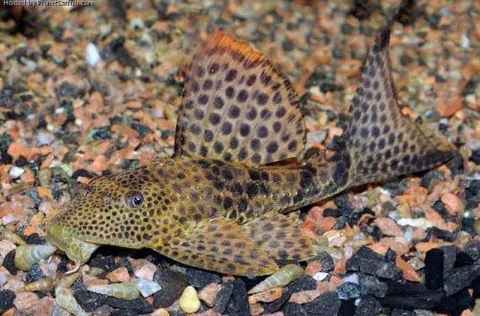
Hypostomus punctatus
The scientific name for the Spotted Fin Hypostomus, also known as the Spotted Pleco, is Hypostomus punctatus; this member of the Loricariidae family (Armored Catfish) originates from South America. It inhabits the river…
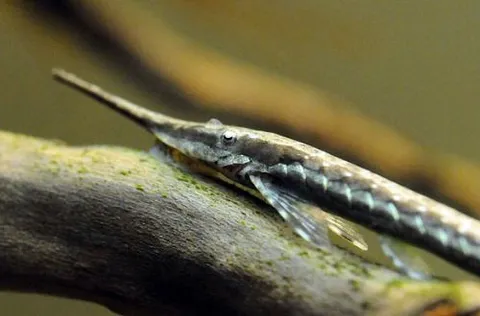
Farlowella acus
Farlowella (Farlowella acus) is a unique species of catfish belonging to the family Loricariidae, known as armored or suckermouth catfish. These fish are distinguished by their extremely original appearance, resembling…