Temperature22 – 26 °C
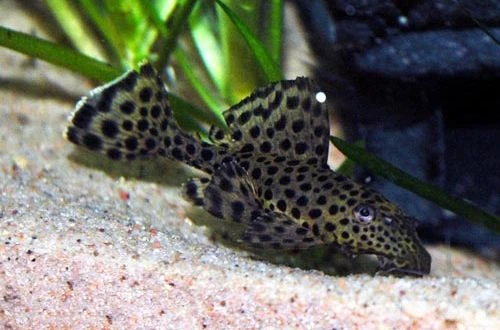
Pterygoplichthys punctatus, also known as Pterygoplichthys, Corroncho catfish, or Carachama, belongs to the family Loricariidae, which includes the armored catfishes. This fish is distinguished by its peaceful and calm disposition, making it an excellent tankmate for other aquatic inhabitants. Keeping Pterygoplichthys is not particularly difficult, provided the aquarium is of sufficient volume, so it can be confidently recommended to aquarists taking their first steps.
Adult specimens can reach a length of 30 cm. Sexual dimorphism in these fish is extremely subtle, and distinguishing males from females is quite challenging. A distinctive feature is their large head and noticeably flattened upper body. Their large fins and tail are particularly striking, and their coloration is most often spotted, in shades of gray.
This species originates from the waters of South America. Its natural habitat includes the Madeira and Purus river basins, which are right tributaries of the mighty Amazon and flow predominantly through Brazil. Individuals are also found in the Marañón River, located in Peru. These rivers are characterized by murky, silt-rich water, containing many snags and plant debris accumulated after annual forest floods. Additionally, many floodplain lakes are located along the banks of these rivers.
This fish has a calm and peaceful nature, allowing it to coexist well with other species of comparable size, even rather aggressive ones. However, keeping them with very small fish is undesirable, as the latter may accidentally become victims due to the catfishes' lack of selectivity in feeding. Intraspecific conflicts are not observed, and keeping several individuals is permissible if the aquarium is sufficiently large.
For comfortable keeping of a single catfish, the optimal aquarium volume should be at least 200 liters. Although Carachama is not highly mobile, it still requires ample space. When decorating the aquarium, it is recommended to use various shelters, such as snags. Stony gravel is best suited as a substrate. Sand should be avoided, as the fish's movements can stir up significant particulate matter that could damage filters. Live rooted plants should also be replaced with artificial ones, as they can be uprooted or eaten. However, floating plants are less susceptible to such risks. Creating favorable conditions requires maintaining stable water parameters and appropriate hydrochemical indicators. Important aspects of aquarium care include weekly partial water changes with fresh water and regular removal of organic waste.
Carachama is an omnivorous species, so its diet should be balanced and include both plant-based and protein components. Suitable plant foods include peas, as well as pieces of zucchini, cucumbers, and spinach. Bloodworms and Artemia are suitable protein foods. Additionally, dry balanced foods, preferably sinking ones, can be used.
Breeding Carachama in a home aquarium presents significant difficulties, mainly due to the large size of adult specimens. The challenge also lies in replicating the specific natural conditions associated with the change of dry and wet seasons. Currently, these fish are bred predominantly on specialized commercial farms.
Pterygoplichthys, like many other catfishes, is known for its hardiness and unpretentiousness. Diseases in these fish are quite rare and are usually associated with inappropriate keeping conditions.
When choosing a Pterygoplichthys, it is important to assess the fish's overall condition: the body should be clean, without white spots, ulcers, bruises, or skin lesions. A healthy specimen in the store will be active, firmly clinging to the glass or decor elements, rather than lying sluggishly on the bottom. Avoid specimens with sunken bellies, which may indicate emaciation or internal parasites, as well as fish with unnaturally bloated bellies. Keep in mind that Pterygoplichthys are territorial fish, so it's worth observing their behavior in the general tank at the store. Aggressive or timid individuals may be a sign of stress or overcrowding. It is optimal to acquire young specimens, as they adapt more easily to new conditions, but remember that this species reaches impressive sizes and will require a very spacious aquarium in the future.
The essentials: size, tank volume, water parameters and care
An adult reaches 30 cm in length. Plan the tank around the maximum size: the fish quickly outgrows a cramped setup.
The recommended volume is 200 L. A smaller tank speeds up nitrate build-up and raises stress levels.
Temperature 22–26 °C, pH 5.5–7, hardness 3–15 dGH. Stability matters more than exact values: sudden swings are harder on the fish than a small deviation from the ideal.
Around 10 years when kept properly. Lifespan depends directly on tank volume, water quality and a varied diet.
Temperament: semi-peaceful (dangerous to smaller ones). Not a predatory species, but small fish that fit in its mouth will eventually be eaten.
Recommended setup: both solitary and in group (flexible). Ignoring this is a common cause of stress and disease.
Diet type: sinking (any). Feed small portions that are finished within a couple of minutes — overfeeding does more harm than underfeeding.
The scientific name of the species is Pterygoplichthys punctatus, family Armored Catfishes (Loricariidae). It also appears in the literature as: Glyptoperichthys punctatus, Loricaria punctata.
The water suits 198 of 208 plants in the catalogue — the easiest ones are shown first.
Afzelius's AnubiasAnacharisAnubiasBrazilian PennywortDwarf CloverDwarf CloverDwarf HygrophilaDwarf SagittariaDwarf ValGuppy GrassHornwortJava FernJava MossMoneywortMud SwordNair's LagenandraNarrow Leaf AnacharisNarrow-leaf CloverStringy MossSüsswassertangTaiwan MossTape GrassTemple PlantUssuri Watermilfoil
Matched by family, categories and overlapping keeping conditions
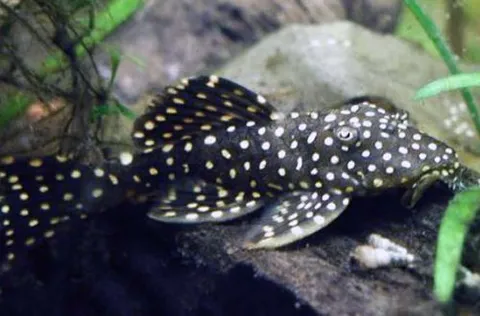
Leporacanthicus galaxias
Leporacanthicus galaxias, also known as the Galaxy Pleco, belongs to the family Loricariidae (Armored Catfishes), and its scientific name is Leporacanthicus galaxias. This catfish originates from South America,…
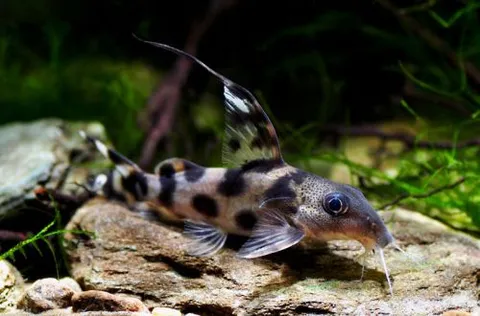
Synodontis decorus
Synodontis decorus, known as the Flag Synodontis or Clown Synodontis, belongs to the family Mochokidae. This species is one of the most striking representatives of the Synodontis genus and can adorn almost any large…
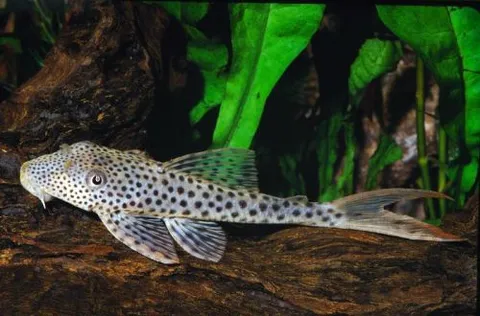
Aphanotorulus emarginatus
Aphanotorulus emarginatus, or Pleco catfish, belongs to the family Loricariidae. Interestingly, this common name often encompasses several closely related species that have been assigned different numbers in scientific…
Farlowella acus
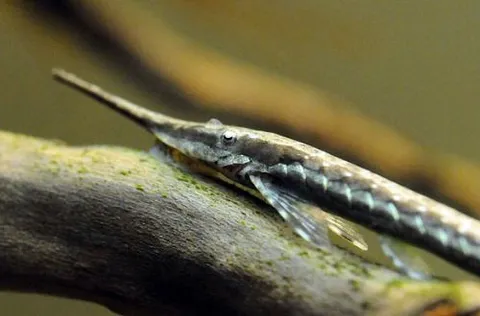
Farlowella (Farlowella acus) is a unique species of catfish belonging to the family Loricariidae, known as armored or suckermouth catfish. These fish are distinguished by their extremely original appearance, resembling…