Temperature25 – 28 °C
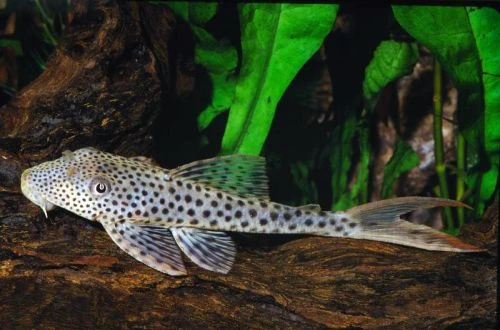
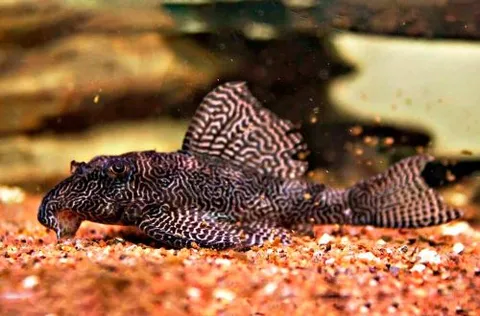
Aphanotorulus emarginatus, or Pleco catfish, belongs to the family Loricariidae. Interestingly, this common name often encompasses several closely related species that have been assigned different numbers in scientific classification, such as L035, L116, L153, L166, L108, L195, and others. These fish look almost identical and prefer similar living conditions, despite originating from different geographical areas. In aquaristics, these catfish are particularly valued for their peaceful nature and unpretentiousness, making them an excellent choice for spacious freshwater aquariums.
Adults can reach 40 cm in length, although their size tends to be somewhat smaller in aquarium conditions. The body of these fish is elongated, flattened from above, and gradually tapers towards the caudal fin. The high dorsal fin has a translucent structure. The coloration is quite diverse and depends on the region of origin, varying from pinkish-blue to yellowish-brown hues. A distinctive feature of their appearance is the numerous black spots scattered all over the body. Sexual dimorphism in the species is weakly expressed, and noticeable differences between males and females are usually not observed.
These fish are widespread in the Amazon basin, covering the territories of modern Brazil, Ecuador, Peru, and Bolivia. They prefer flowing waters rich in dissolved oxygen, with a sandy-stony substrate.
This species is distinguished by an amazingly peaceful and calm disposition, which makes it perfectly compatible with fish of similar size. Since Aphanotorulus emarginatus is not a territorial fish, it can be kept in groups of conspecifics, but this would require a very large aquarium. Due to its size, this catfish is not suitable for cohabitation with small fish, which may be frightened or accidentally eaten. Catfish are not picky eaters and, given the opportunity, can snack on smaller fish.
For such a large fish, a spacious aquarium is necessary; for a single catfish, a tank of at least 250 liters is required. The aquarium decor can be arbitrary, the main thing is to provide a sufficient number of shelters of appropriate size. It is recommended to use large plants with a well-developed root system, as well as several smooth boulders. Lighting should preferably be subdued, as the Pleco catfish feels most comfortable in shaded conditions. The choice of equipment should be based on the need to maintain a high level of dissolved oxygen (aeration), effectively remove waste products (filtration), and ensure optimal water hydrochemical composition.
Regarding diet, these catfish are completely unpretentious and readily accept most popular sinking foods for aquarium fish. Additional plant components can also be included in their diet, such as peeled cucumbers, zucchini, or spinach.
Breeding is not documented. The species belongs to the cave spawners: the eggs are laid in a shelter, and the male guards and ventilates the clutch. No reliable way to sex the fish or trigger spawning has been described for this species, and it reaches the trade as wild-caught stock.
The main cause of most diseases in these fish is unsuitable keeping conditions and poor-quality nutrition. If initial symptoms are observed, it is first necessary to check water parameters and the concentration of dangerous substances such as ammonia, nitrites, and nitrates. If the indicators deviate from the norm, they should be brought back into order, and only then should treatment begin.
When purchasing, caution should be exercised, as this species often goes on sale at a young age, reaching significant sizes as adults. Carefully inspect the fish for signs of emaciation: sunken belly and recessed eyes are critical indicators of poor health. A healthy individual should have a rounded abdomen, be active, and show no visible damage to the skin or fins.
The essentials: size, tank volume, water parameters and care
An adult reaches 40 cm in length. Plan the tank around the maximum size: the fish quickly outgrows a cramped setup.
The recommended volume is 250 L. A smaller tank speeds up nitrate build-up and raises stress levels.
Temperature 25–28 °C, pH 6.4–7.2, hardness 5–10 dGH. Stability matters more than exact values: sudden swings are harder on the fish than a small deviation from the ideal.
Around 10 years when kept properly. Lifespan depends directly on tank volume, water quality and a varied diet.
Temperament: semi-peaceful (dangerous to smaller ones). Not a predatory species, but small fish that fit in its mouth will eventually be eaten.
Recommended setup: both solitary and in group (flexible). Ignoring this is a common cause of stress and disease.
Diet type: sinking (any). Feed small portions that are finished within a couple of minutes — overfeeding does more harm than underfeeding.
The scientific name of the species is Aphanotorulus emarginatus, family Armored Catfishes (Loricariidae). It also appears in the literature as: Aphanotorulus emarginatus, Hypostomus emarginatus.
The water suits 185 of 208 plants in the catalogue — the easiest ones are shown first.
Afzelius's AnubiasAnacharisAnubiasBrazilian PennywortDwarf CloverDwarf CloverDwarf HygrophilaDwarf SagittariaDwarf ValGuppy GrassHornwortJava FernJava MossMoneywortMud SwordNair's LagenandraNarrow Leaf AnacharisNarrow-leaf CloverSüsswassertangTaiwan MossTape GrassTemple PlantUssuri WatermilfoilWater Wisteria
Matched by family, categories and overlapping keeping conditions
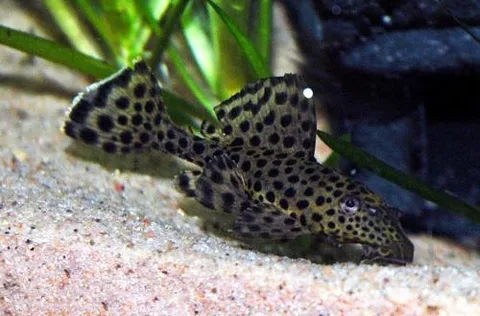
Pterygoplichthys punctatus
Pterygoplichthys punctatus, also known as Pterygoplichthys, Corroncho catfish, or Carachama, belongs to the family Loricariidae, which includes the armored catfishes. This fish is distinguished by its peaceful and calm…
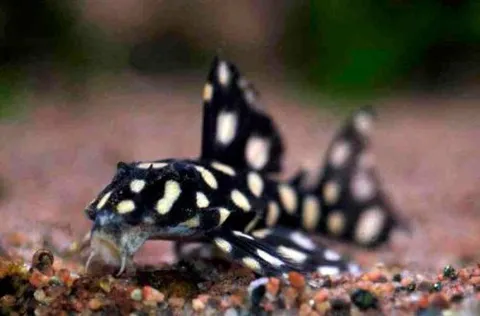
Hypancistrus contradens
The Orinoco Pleco, scientifically known as Hypancistrus contradens, is a member of the armored catfish family (Loricariidae). It is often called the "Polka Dot Pleco" due to the distinctive pattern on its body.
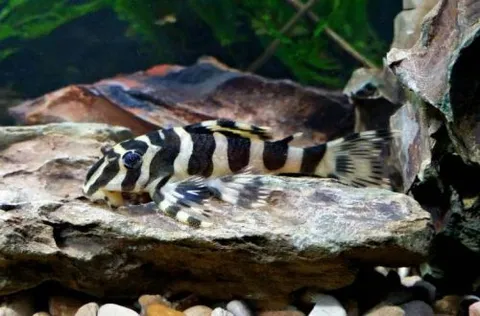
Peckoltia compta
Peckoltia compta, a representative of the armored catfish family (Loricariidae), is one of the most popular pleco species. Its popularity is due to its bright, contrasting coloration, modest size, peaceful nature, and…
Hypancistrus sp. L411
Hypancistrus Monte Dourado, known scientifically as Hypancistrus sp. L 411, belongs to the family Loricariidae. This catfish originates from South America. Its primary habitat is the Jari River basin, which is one of…