Temperature23 – 30 °C
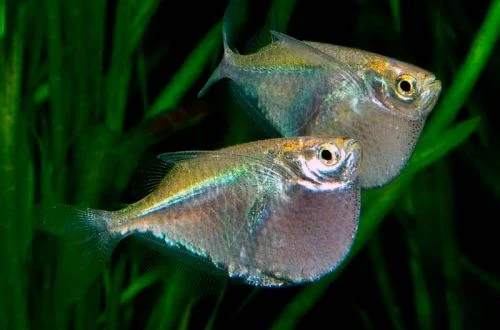
A member of the family Gasteropelecidae, the Platinum Hatchetfish (scientific name Thoracocharax securis) originates from South America. These fish inhabit the vast Amazon River basin, where they are more commonly found in floodplain lakes and swamps than in the main river channel.
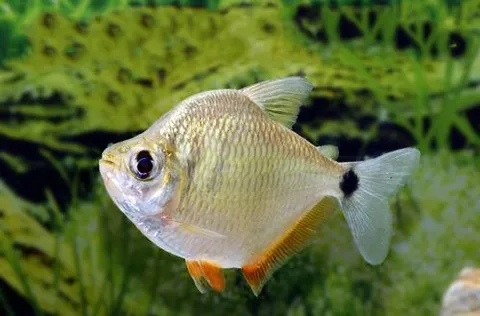
Adults of this species can reach up to 7 cm in length. Their body has the characteristic hatchet-like shape with a pronounced keel-shaped pectoral region. The fins are large, especially the pectoral fins, which resemble wings. Their coloration is silvery or grayish. The pattern includes a dark stripe running along the lateral line from head to tail, and a black outline along the lower part of the body.
The Platinum Hatchetfish inhabits the Amazon, Orinoco, and Paraná river basins in Brazil and Peru. The fish prefer slow-moving waters, floodplain lakes, and swamps with dense riparian vegetation overhanging the water. In nature, they stay in the upper layers of the water, where they find refuge among tree roots, fallen branches, and organic substrate.
These fish are schooling by nature, preferring groups of 5 or more individuals. They are peaceful and do not cause problems for other aquarium inhabitants. However, due to their defenselessness against aggressive and large fish, they should not be kept together in the same tank.
Platinum Hatchetfish constantly stay near the water surface, so they require significant swimming space. When choosing an aquarium, surface area is more important than tank height. For a group of 5 fish, a volume of 150 liters is considered optimal. The ability of these fish to jump out of the water makes a lid essential. The aquarium setup does not play a significant role. However, when decorating, especially when using live plants, excessive overgrowth of the water surface should be avoided. Successful long-term keeping largely depends on the aquarist's ability to maintain stable water hydrochemistry. Key factors include the uninterrupted operation of the filtration system and regular weekly aquarium maintenance, which involves removing organic waste and replacing part of the water with fresh water with pH and dGH values as close as possible.
This species is omnivorous and will accept a variety of foods intended for aquarium fish. It is important to note that feeding occurs exclusively at the water surface. Floating foods are preferred.
Breeding in captivity is considered a complex process. Spawning requires a separate aquarium with soft, acidic water (pH around 6.0) and subdued lighting. Eggs are laid among fine-leaved plants. The incubation period lasts about 30 hours, and fry begin free-swimming five days after hatching. Infusoria are used as a first food.
The species is sensitive to sudden changes in water hydrochemical parameters and the accumulation of organic waste. If keeping conditions are violated, the fish are susceptible to bacterial infections and fungal lesions. Prevention includes weekly partial water changes, maintaining stable filtration, and avoiding overfeeding, which rapidly degrades water quality.
When purchasing, choose active fish without visible damage to fins or scales. It is important to assess the behavior of individuals in the store: healthy hatchetfish stay in a school in the upper water layer and show caution. Avoid specimens with signs of emaciation, skin damage, or unnatural behavior, as these fish are extremely sensitive to stress during transport and changes in conditions.
The essentials: size, tank volume, water parameters and care
An adult reaches 7–9 cm in length. Plan the tank around the maximum size: the fish quickly outgrows a cramped setup.
The recommended volume is 150 L. A smaller tank speeds up nitrate build-up and raises stress levels.
Temperature 23–30 °C, pH 6–7.5, hardness 4–15 dGH. Stability matters more than exact values: sudden swings are harder on the fish than a small deviation from the ideal.
Around 5 years when kept properly. Lifespan depends directly on tank volume, water quality and a varied diet.
Temperament: peaceful, active/mobile. Keep this in mind when choosing tank mates.
Recommended setup: small group (5–6 individuals). Ignoring this is a common cause of stress and disease.
Diet type: floating (any). Feed small portions that are finished within a couple of minutes — overfeeding does more harm than underfeeding.
The scientific name of the species is Thoracocharax securis, family Freshwater Hatchetfish (Gasteropelecidae). It also appears in the literature as: Gasteropelecus pectorosus, Gasteropelecus securis, Thoracocharax pectorosus.
The water suits 197 of 208 plants in the catalogue — the easiest ones are shown first.
Afzelius's AnubiasAnacharisAnubiasBrazilian PennywortDwarf CloverDwarf CloverDwarf HygrophilaDwarf SagittariaDwarf ValGuppy GrassHornwortJava FernJava MossMoneywortMud SwordNair's LagenandraNarrow Leaf AnacharisNarrow-leaf CloverStringy MossSüsswassertangTaiwan MossTape GrassTemple PlantUssuri Watermilfoil
Matched by family, categories and overlapping keeping conditions
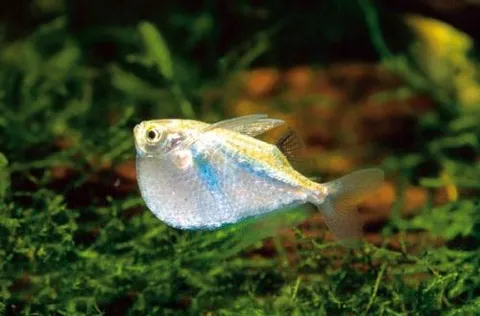
Thoracocharax stellatus
Thoracocharax stellatus, also known as the Golden or Platinum Hatchetfish, belongs to the family Gasteropelecidae. These fish impress with their unusual body shape, making them an attractive choice for aquarists,…
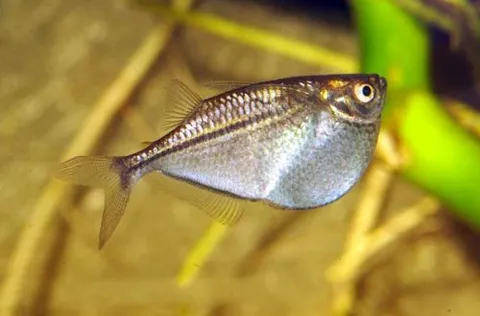
Gasteropelecus levis
The Silver Hatchetfish (scientific name Gasteropelecus levis) belongs to the family Gasteropelecidae. The genus name comes from the Greek gaster ("belly") and pelekys ("hatchet") and refers to the sharply keeled body…
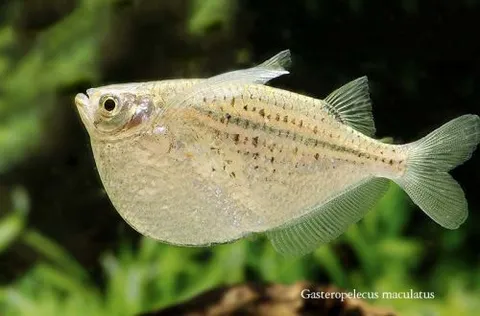
Gasteropelecus maculatus
The Spotted Hatchetfish, also known as Gasteropelecus maculatus, belongs to the family Gasteropelecidae, which comprises the hatchetfish.
Tetragonopterus argenteus
Tetragonopterus, scientifically known as Tetragonopterus argenteus, belongs to the family Characidae. This fish has a high and robust body, compressed laterally, resembling a rhombus in shape. A characteristic feature…