Temperature20 – 28 °C
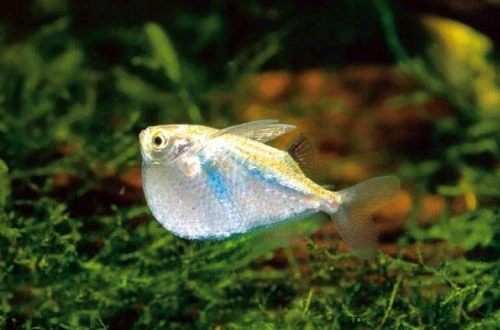
Thoracocharax stellatus, also known as the Golden or Platinum Hatchetfish, belongs to the family Gasteropelecidae. These fish impress with their unusual body shape, making them an attractive choice for aquarists, especially beginners, due to their relative ease of care.
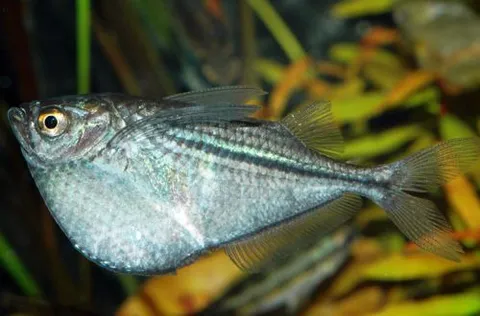
Adult hatchetfish reach a length of about 6–7 cm. Their body has a characteristic wedge shape, strongly compressed laterally, making them resemble an axe blade. The belly of these fish is silvery, while the back is colored in yellow tones with a golden sheen. Under certain lighting, bluish stripes may appear on their body.
The natural habitat of this species covers South America. Among all hatchetfish, it is the most widespread, found almost everywhere in major river systems such as the Amazon, Orinoco, and Paraná. Preferred habitats include stagnant waters: quiet backwaters, swamps, and floodplain lakes, where they often stay near abundant surface vegetation.
This peaceful and benevolent species prefers to live in schools of its own kind or in the company of other calm fish. Good tank mates include small tetras, Corydoras and Plecostomus catfish, as well as Geophagus cichlids and Apistogramma, and many other species. There is a common misconception that these fish can perform long "flights" above the water due to their large pectoral fins resembling wings. However, research conducted in 1995 disproved this legend.
For a comfortable group of ten hatchetfish, an aquarium of at least 250 L will be required. The aquascape can be arbitrary, but special attention should be paid to the upper water column. It is important to provide both open areas for swimming and zones with dense thickets of floating plants, which will serve as cover. The choice of other decorative elements is not critical and depends on the aquarist's preferences or the needs of other inhabitants. Long-term and successful keeping is possible with the maintenance of high water quality (low pollutant content), stable temperature, and hydrochemical parameters. Golden hatchetfish adapt well to a fairly wide range of pH and dGH values, so maintaining them at the required level will not be difficult with regular aquarium maintenance and the use of necessary equipment. This primarily applies to filtration systems. It should also be noted that the Platinum Hatchetfish can indeed jump out of the water when threatened, but this fact has nothing to do with the idea of "flight"; many fish avoid such maneuvers.
In home aquariums, these fish become omnivorous, although in nature their diet consists mainly of small insects and other invertebrates. An important requirement for food is its buoyancy, as hatchetfish can only feed from the water surface.
To date, there are no documented cases of successful breeding of hatchetfish in amateur aquariums. In nature, the spawning of these fish coincides with seasonal changes, such as periods of rain and drought, as well as migration to flooded forest areas. It is there, in quiet, food-rich backwaters, that the fry appear. Recreating such conditions in a home environment presents significant difficulties for a beginner aquarist.
Maintaining a stable biological system, providing a balanced diet, and eliminating stress factors (e.g., harassment by aggressive tank mates) are the best guarantees for preserving fish health. If the first signs of illness appear, the first thing to pay attention to is precisely these three aspects, as deviations have likely occurred in one of them. As a rule, eliminating the problem leads to self-recovery. However, if the immune system proves to be insufficiently strong, medicinal treatment may be required.
When choosing a Platinum Hatchetfish, it is important to ensure there are no external injuries, as the fish are prone to trauma during transport and jumping. Healthy individuals should actively swim in the upper water layers, have clean fins without signs of rot or white film, and display natural schooling activity. Avoid purchasing fish with sunken bellies or signs of emaciation, as this species can be sensitive to store conditions and stress from relocation. It is recommended to acquire a group of 6 or more individuals, as solitary keeping leads to significant stress and timidity.
The essentials: size, tank volume, water parameters and care
An adult reaches 6–7 cm in length. Plan the tank around the maximum size: the fish quickly outgrows a cramped setup.
The recommended volume is 250 L. A smaller tank speeds up nitrate build-up and raises stress levels.
Temperature 20–28 °C, pH 5–7.5, hardness 1–15 dGH. Stability matters more than exact values: sudden swings are harder on the fish than a small deviation from the ideal.
Around 5 years when kept properly. Lifespan depends directly on tank volume, water quality and a varied diet.
Temperament: peaceful (regular). Keep this in mind when choosing tank mates.
Recommended setup: large group (10+ individuals). Ignoring this is a common cause of stress and disease.
Diet type: floating (any). Feed small portions that are finished within a couple of minutes — overfeeding does more harm than underfeeding.
The scientific name of the species is Thoracocharax stellatus, family Freshwater Hatchetfish (Gasteropelecidae). It also appears in the literature as: Gasteropelecus stellatus, Gastropelecus stellatus, Salmo pectoralis.
The water suits 198 of 208 plants in the catalogue — the easiest ones are shown first.
Afzelius's AnubiasAnacharisAnubiasBrazilian PennywortDwarf CloverDwarf CloverDwarf HygrophilaDwarf SagittariaDwarf ValGuppy GrassHornwortJava FernJava MossMoneywortMud SwordNair's LagenandraNarrow Leaf AnacharisNarrow-leaf CloverStringy MossSüsswassertangTaiwan MossTape GrassTemple PlantUssuri Watermilfoil
Matched by family, categories and overlapping keeping conditions
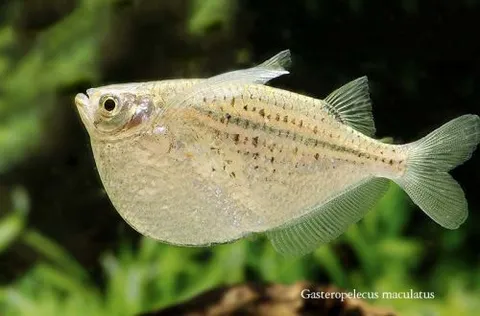
Gasteropelecus maculatus
The Spotted Hatchetfish, also known as Gasteropelecus maculatus, belongs to the family Gasteropelecidae, which comprises the hatchetfish.
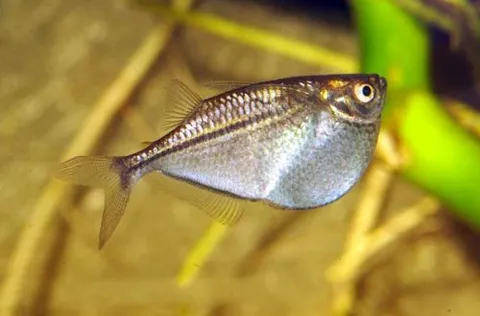
Gasteropelecus levis
The Silver Hatchetfish (scientific name Gasteropelecus levis) belongs to the family Gasteropelecidae. The genus name comes from the Greek gaster ("belly") and pelekys ("hatchet") and refers to the sharply keeled body…
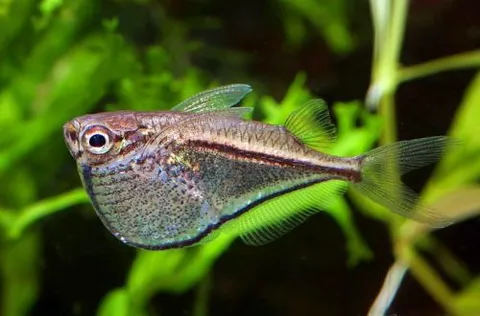
Carnegiella marthae
Carnegiella marthae, more commonly known as the Black-winged Hatchetfish or Martha's Hatchetfish, belongs to the family Gasteropelecidae (freshwater hatchetfishes). The origin of its first common name remains unknown.…
Gasteropelecus sternicla
The scientific name Gasteropelecus sternicla refers to hatchetfish, belonging to the family Gasteropelecidae. These fish are notable for their unusual appearance. Their original body shape is not the only distinguishing…