Temperature22 – 28 °C
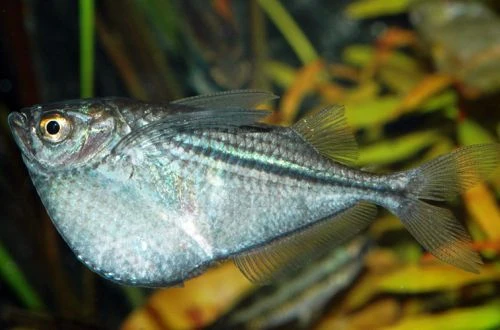
The scientific name Gasteropelecus sternicla refers to hatchetfish, belonging to the family Gasteropelecidae. These fish are notable for their unusual appearance. Their original body shape is not the only distinguishing feature; their feeding method, where the fish leap out of the water, spreading their pectoral fins to maneuver in flight to catch insects, is also of interest.
A distinctive feature of this fish is its body: flattened on the sides, with a pronounced belly, it truly resembles an axe blade. The mouth is positioned quite high on the head, which facilitates gathering food from the water surface. The long and rigid pectoral fins spread out like wings during a jump, providing the fish with the necessary maneuverability. The main body coloration is silvery, complemented by dark speckles and a stripe that runs along the entire body from head to tail.
These amazing fish were first described in South America as early as 1758, in the mid-18th century. Hatchetfish inhabit vast territories of the Amazon River basin, preferring small rivers and streams rich in floating vegetation. They usually stay in the upper layers of the water, but instantly dart into the depths when danger arises. In their natural environment, their primary diet consists of insects.
This species is distinguished by its peaceful and even somewhat shy nature, so keeping them with aggressive tankmates is completely unacceptable. It is recommended to form groups of at least 6 individuals. They get along perfectly with other small, calm, and unhurried fish.
Hatchetfish have high demands for water purity and are extremely sensitive to any fluctuations in pH and dGH parameters, which can significantly reduce their immunity. A standard set of aquarium equipment is mandatory: aeration, heating, lighting system, and filtration. It is advisable to use a filter with an element that acidifies the water. It is important to remember that the aquarium must be reliably covered with a lid, as these fish are prone to jumping. In aquarium decoration, preference should be given to floating plants, such as water lilies, whose leaves on the surface provide shelter for the fish. Other decorative elements do not play a significant role.
In their natural habitat, these fish are exclusively predators, feeding on larvae and adult insects collected from the water surface. In aquarium conditions, they easily adapt to dry commercial foods floating on the surface. Freeze-dried insect-based products, such as bloodworms or daphnia, would be an optimal choice. In summer, the diet can be enriched with live foods: mosquito larvae, bloodworms, small fruit flies, and common flies.
Cases of successful breeding of these fish in home aquariums are extremely rare. This is mainly done by professional breeders working for commercial purposes, who then supply the offspring to retail trade networks.
Hatchetfish are often susceptible to Ichthyobodo disease. The main cause of its occurrence is unsatisfactory water quality. This disease is especially common in newly acquired fish. If the aquarium has a mature biological environment and all water parameters are maintained within normal limits, health problems generally do not arise.
When purchasing, choose active individuals that stay in a school and exhibit natural behavior. Avoid fish with damaged fins, signs of emaciation, white film, or spots on the body, as this species is sensitive to stress during transport and prone to infectious diseases. In the store, the fish should stay near the water surface, which is characteristic of their species. Before purchasing, make sure there are no signs of Ichthyobodo or other parasites in the aquarium with the fish, as newly bought individuals often require quarantine to adapt to new conditions.
The essentials: size, tank volume, water parameters and care
An adult reaches 6 cm in length. Plan the tank around the maximum size: the fish quickly outgrows a cramped setup.
The recommended volume is 110 L. A smaller tank speeds up nitrate build-up and raises stress levels.
Temperature 22–28 °C, pH 6–7, hardness 2–15 dGH. Stability matters more than exact values: sudden swings are harder on the fish than a small deviation from the ideal.
Around 5 years when kept properly. Lifespan depends directly on tank volume, water quality and a varied diet.
Temperament: peaceful (regular). Keep this in mind when choosing tank mates.
Recommended setup: medium group (6–8 individuals). Ignoring this is a common cause of stress and disease.
Diet type: meat / protein (live, frozen, fresh). Feed small portions that are finished within a couple of minutes — overfeeding does more harm than underfeeding.
The scientific name of the species is Gasteropelecus sternicla, family Freshwater Hatchetfish (Gasteropelecidae). It also appears in the literature as: Clupea sternicla, Gasteropelecus argenteus, Gasteropelecus coronatus.
The water suits 197 of 208 plants in the catalogue — the easiest ones are shown first.
Afzelius's AnubiasAnacharisAnubiasBrazilian PennywortDwarf CloverDwarf CloverDwarf HygrophilaDwarf SagittariaDwarf ValGuppy GrassHornwortJava FernJava MossMoneywortMud SwordNair's LagenandraNarrow Leaf AnacharisNarrow-leaf CloverStringy MossSüsswassertangTaiwan MossTape GrassTemple PlantUssuri Watermilfoil
Matched by family, categories and overlapping keeping conditions
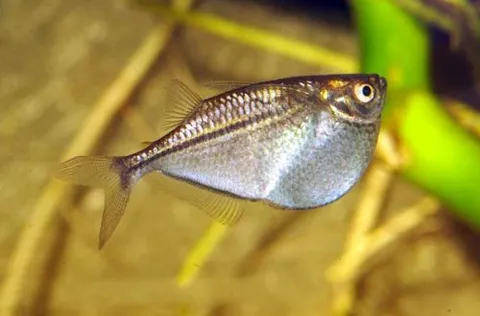
Gasteropelecus levis
The Silver Hatchetfish (scientific name Gasteropelecus levis) belongs to the family Gasteropelecidae. The genus name comes from the Greek gaster ("belly") and pelekys ("hatchet") and refers to the sharply keeled body…
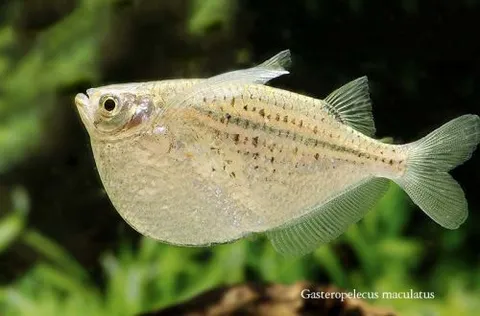
Gasteropelecus maculatus
The Spotted Hatchetfish, also known as Gasteropelecus maculatus, belongs to the family Gasteropelecidae, which comprises the hatchetfish.
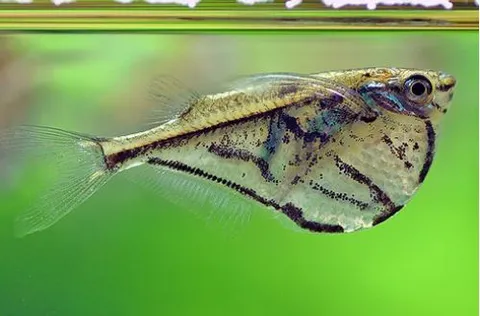
Carnegiella strigata
The scientific name Carnegiella strigata belongs to the family Gasteropelecidae, whose name translates to "axe-shaped belly." This name is reflected in the appearance of the marbled hatchetfish or Carnegiella. As an…
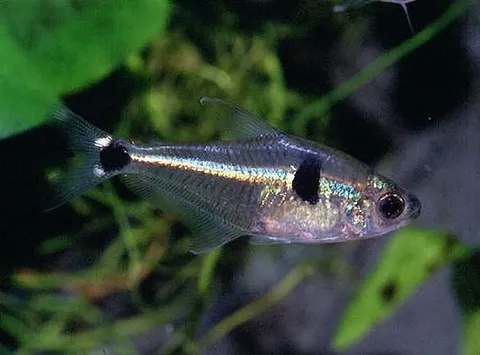
Phenacogaster calverti
The fish Phenacogaster calverti, known as Phenacogaster calverti, belongs to the family Characidae. Its natural habitat is the numerous coastal river systems of the Brazilian states of Ceará and Paraíba in the east of…