Temperature20 – 28 °C
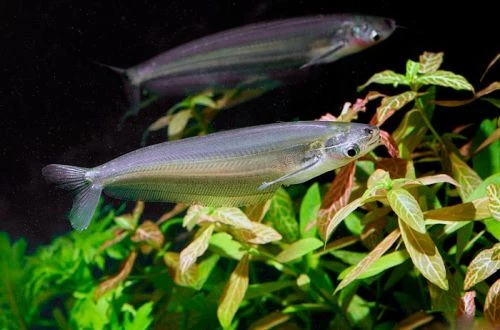
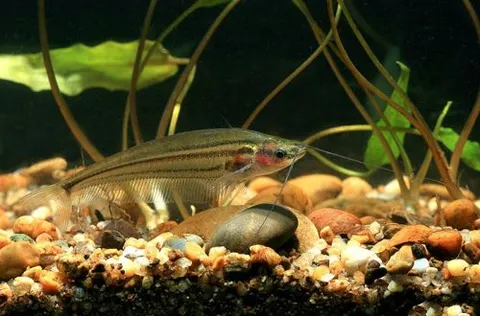
Kryptopterus geminus, known as the Glass Catfish Twin, is a representative of the family Siluridae (Catfishes). Its name "twin" is due to its close relationship with another, quite popular species – the Ghost Glass Catfish. Interestingly, these two species were formerly considered one. In retail stores, they are often confused, but this error does not lead to problems, as their keeping requirements are similar.
These individuals can reach up to 17 cm in length. The appearance of the Glass Catfish Twin almost completely matches that of the Ghost Glass Catfish, from which it differs only in some morphological details: it is slightly larger, has a narrower head, and an elongated anal fin. Sexual dimorphism is weakly expressed, making it difficult to distinguish males from females.
The natural habitat of this fish covers the lower and middle basins of the Mekong River in Southeast Asia, including territories of Thailand, Laos, Cambodia, and Vietnam. It prefers the murky waters of large tributaries and small streams.
This catfish is distinguished by its peaceful and calm disposition. It is quite capable of coexisting with other species of similar size. However, it is advisable to avoid overly active or large fish that may compete for food. It is also important to consider that overly small fish or fry can sometimes become accidental prey.
For a group of 4–5 fish, an aquarium of 250–300 liters or more is desirable. The choice of decor is not critical; the main thing is to provide subdued lighting and create enough hiding places. These can include dense plant thickets, piles of snags, or other decorative elements. The long-term well-being of the Glass Catfish Twin depends on maintaining stable water conditions within acceptable temperatures and hydrochemical parameters. For this, it is necessary to equip the aquarium with all the required equipment and regularly perform essential care procedures. In particular, 20–30% of the water volume should be replaced with fresh water weekly, and organic waste should be removed promptly.
In natural conditions, the diet of this fish consists of invertebrates, crustaceans, and other zooplankton, as well as smaller fish. For successful keeping in a home aquarium, a varied diet including dry, frozen, and live foods should be offered.
Information on the successful breeding of this species in artificial conditions is absent. In the natural environment, spawning is associated with the change of dry and wet seasons. With the onset of rains, the catfishes migrate to flooded areas of tropical forests for spawning, where the emerging fry are relatively safe and provided with an abundance of food.
Most health problems in fish often arise from unsuitable keeping conditions. Maintaining a stable and comfortable habitat is a key factor for successful keeping. If symptoms of illness appear, the first step is to check the water quality. If deviations are found, it is important to take immediate measures to eliminate them. If the symptoms do not disappear or worsen, medicinal treatment may be required.
When selecting individuals in a store, pay attention to body transparency: in healthy fish, it should be clear, without cloudy spots, film, or hemorrhages. Avoid specimens with damaged fins or signs of emaciation, where skeletal bones are prominent. Since this species is schooling, acquire a group of 4–5 fish at once, as solitary keeping causes them severe stress. In the store, observe their behavior: healthy catfishes stay in the water column, show activity, and react to movement from outside. Lethargic fish that constantly lie on the bottom or try to hide in the corner of the aquarium may be weakened or sick. Make sure there are no aggressive species in the aquarium with them that could cause injuries, as injured fish adapt extremely poorly to new conditions.
The essentials: size, tank volume, water parameters and care
An adult reaches 17 cm in length. Plan the tank around the maximum size: the fish quickly outgrows a cramped setup.
The recommended volume is 250 L. A smaller tank speeds up nitrate build-up and raises stress levels.
Temperature 20–28 °C, pH 6–7.5, hardness 2–15 dGH. Stability matters more than exact values: sudden swings are harder on the fish than a small deviation from the ideal.
Around 5 years when kept properly. Lifespan depends directly on tank volume, water quality and a varied diet.
Temperament: semi-peaceful (dangerous to smaller ones). Not a predatory species, but small fish that fit in its mouth will eventually be eaten.
Recommended setup: small group (3–4 individuals). Ignoring this is a common cause of stress and disease.
Diet type: any (universal). Feed small portions that are finished within a couple of minutes — overfeeding does more harm than underfeeding.
The scientific name of the species is Kryptopterus geminus, family Sheatfishes (Siluridae).
The water suits 197 of 208 plants in the catalogue — the easiest ones are shown first.
Afzelius's AnubiasAnacharisAnubiasBrazilian PennywortDwarf CloverDwarf CloverDwarf HygrophilaDwarf SagittariaDwarf ValGuppy GrassHornwortJava FernJava MossMoneywortMud SwordNair's LagenandraNarrow Leaf AnacharisNarrow-leaf CloverStringy MossSüsswassertangTaiwan MossTape GrassTemple PlantUssuri Watermilfoil
Matched by family, categories and overlapping keeping conditions
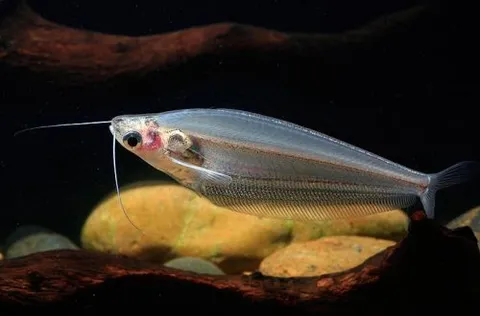
Kryptopterus bicirrhis
Kryptopterus bicirrhis, known as the Two-barbel Indian Glass Catfish, belongs to the family Siluridae (Catfishes). It is not commonly found in aquariums, although the name "glass catfish" is sometimes mistakenly applied…
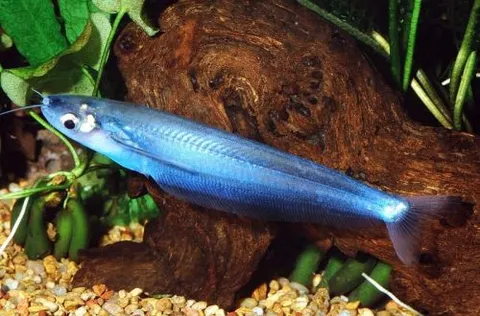
Kryptopterus cryptopterus
The Blue Glass Catfish, also known as the Smoky Glass Catfish (scientific name Kryptopterus cryptopterus), belongs to the family Siluridae. Despite being a miniature predator, it is undemanding to keep and gets along…
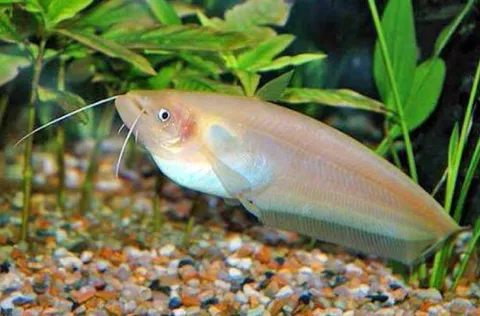
Ompok bimaculatus
Ompok bimaculatus, or the Two-spot Ompok (also known as the Ompok Catfish), belongs to the family Siluridae — the Sheatfishes. This fish is found in its natural habitat in the waters of South and Southeast Asia,…
Kryptopterus macrocephalus
The Spotted Glass Catfish, also known as the False Glass Catfish under its scientific name Kryptopterus macrocephalus, belongs to the family Siluridae. This fish is peaceful but at the same time carnivorous. It is quite…