Temperature16 – 24 °C
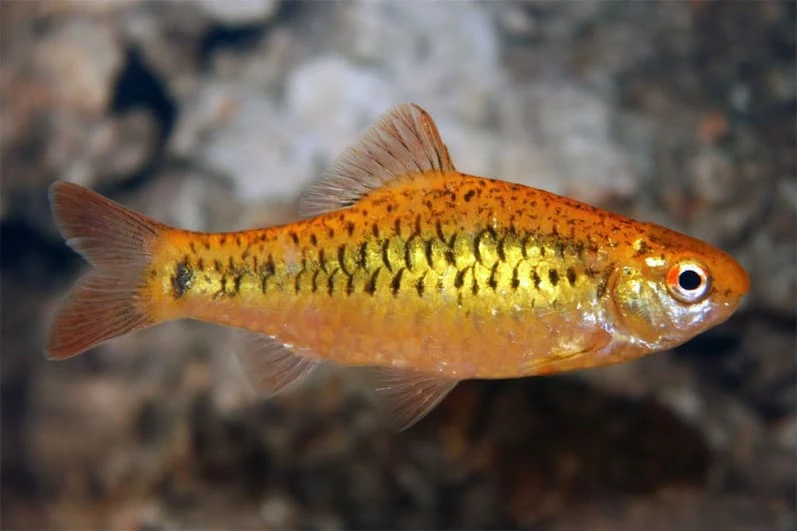
The Golden Barb, scientific name Barbodes semifasciolatus, belongs to the family Cyprinidae. It is one of the most sought-after fishes in freshwater aquaria. Its golden colouration is the result of an artificial mutation that appeared in the 1960s through deliberate selective breeding.
Adult individuals of this species generally reach a length of about 7 cm. Sexual dimorphism is subtle, making it challenging to distinguish males from females visually. As previously mentioned, the wild form displays a silvery hue with a greenish sheen, and a reddish tint may be present on the belly. In contrast, the selectively bred variety boasts a rich orange-yellow coloration, with the edges of some scales appearing darker.
Wild populations of this species occur in Vietnam, southern mainland China including Hainan Island, Taiwan, and northern Laos; the core of the range lies in the Red River basin. These fish inhabit small rivers and various still waters, including swamps, river backwaters, ditches, and irrigation canals. They typically prefer shallow, coastal areas that feature dense aquatic vegetation.
This peaceful and active fish coexists well with other species of similar size and temperament. They thrive in schools. Within a group of 8–10 individuals of both sexes, an internal hierarchy forms, compelling males to compete for the attention of females, which in turn intensifies the vibrancy of their coloration.
The 'Golden' form of the Barb is recognized as one of the most resilient and low-maintenance species in contemporary aquaristics. For a group of 8-10 fish, a tank volume of at least 100 liters is recommended. While any setup is acceptable, an optimal configuration includes a dark substrate and a moderate amount of floating plants that cover about half of the water's surface. In such environments, coupled with a balanced diet, these fish exhibit their most vibrant colors. Standard equipment typically comprises filtration and lighting systems. In most residential settings, a heater is not necessary for this species. Water conditions should feature a gentle internal current. The broad acceptable ranges for temperature, pH, and GH mean that water preparation is minimal; allowing tap water to sit for a day before use is usually sufficient. Aquarium maintenance involves a weekly partial water change (20–25% of the total volume), regular cleaning of the substrate to remove organic waste, and wiping algae from the glass.
The Golden Barb is an undemanding species, readily consuming a variety of dry, frozen, and live foods. A crucial aspect of their daily diet is the inclusion of plant-based supplements. Feeding should occur 2–3 times a day, with portions consumed within 5 minutes. Timely removal of any uneaten food is essential to prevent excessive water pollution.
Golden Barbs are egg-scattering spawners; females release their eggs into the water column, where males then fertilize them. Parental instincts are poorly developed, and adults may consume their own eggs and fry shortly after spawning. For successful breeding, it is advisable to use a separate breeding tank to protect the offspring from the adult fish. The setup should be simple, with particular attention paid to the substrate. It should consist of sufficiently large particles, such as pebbles or decorative glass beads, that do not fit tightly together, thereby creating spaces. As the eggs sink, many will fall into these crevices, becoming inaccessible to the fish. A similar protective effect can be achieved by securing a fine-mesh net to the tank bottom. Alternatively, dense growths of low-growing, fine-leaved plants or mosses, like Riccia fluitans or Java moss, covering a large portion of the substrate (in which case any substrate type is suitable), provide excellent cover for the eggs. A typical breeding tank volume is 20–30 liters, filled halfway. Equipment includes a heater and a simple air-driven filter to prevent accidental suction of eggs and fry. Spawning often occurs under dim lighting, eliminating the immediate need for a light source. To stimulate breeding behavior, set the water temperature near the upper acceptable limit of 23–24°C, maintain neutral to slightly acidic pH values, and enrich the daily diet with protein-rich foods like bloodworms, daphnia, or brine shrimp, either live or frozen. After some time, females will appear noticeably rounded, and males will actively court their chosen partners. At this point, prepare a separate tank, filling it with water from the main aquarium, then transfer a few females and the most colorful males. The end of spawning is most easily observed when the females become noticeably slender. The fish should then be returned to the main tank. Fry will emerge within 24–48 hours and begin free-swimming a day later. Feed them specialized microscopic fry food or Artemia nauplii.
A balanced diet and appropriate living conditions are the best defense against diseases in freshwater fish. Therefore, if initial symptoms of illness (such as changes in coloration or behavior) appear, the first step should be to assess water quality and conditions, restoring optimal parameters as needed, before proceeding with any treatment.
When purchasing, choose active, lively individuals with clean scales and intact fins. Avoid fish with visible white spots, film, ulcers, or signs of emaciation, as these may indicate infectious diseases. In the store, fish should show curiosity and stay together if they are kept in a group. It is recommended to acquire individuals that appear brightly colored and show interest in food offered by the seller.
The essentials: size, tank volume, water parameters and care
An adult reaches 7 cm in length. Plan the tank around the maximum size: the fish quickly outgrows a cramped setup.
The recommended volume is 100 L. A smaller tank speeds up nitrate build-up and raises stress levels.
Temperature 16–24 °C, pH 6–8, hardness 4–18 dGH. Stability matters more than exact values: sudden swings are harder on the fish than a small deviation from the ideal.
Around 5 years when kept properly. Lifespan depends directly on tank volume, water quality and a varied diet.
Temperament: peaceful, active/mobile. Keep this in mind when choosing tank mates.
Recommended setup: group (8–10 individuals). Ignoring this is a common cause of stress and disease.
Diet type: plant-based with meat additives. Feed small portions that are finished within a couple of minutes — overfeeding does more harm than underfeeding.
The scientific name of the species is Barbodes semifasciolatus, family Cyprinids (Cyprinidae). It also appears in the literature as: Barbus aureus, Barbus hainani, Barbus semifasciolatus.
The water suits 196 of 208 plants in the catalogue — the easiest ones are shown first.
Afzelius's AnubiasAnacharisAnubiasBrazilian PennywortDwarf CloverDwarf CloverDwarf HygrophilaDwarf SagittariaDwarf ValGuppy GrassHornwortJava FernJava MossMoneywortMud SwordNarrow Leaf AnacharisNarrow-leaf CloverStringy MossSüsswassertangTaiwan MossTape GrassTemple PlantUssuri WatermilfoilWater Wisteria
Matched by family, categories and overlapping keeping conditions
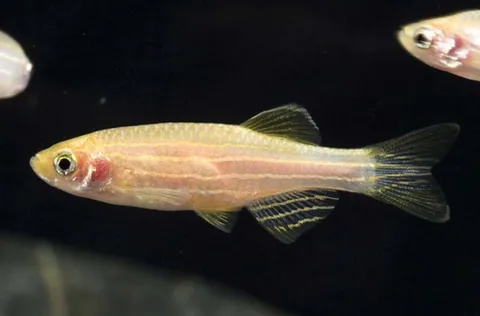
Danio rerio
The Albino Zebra Danio, scientifically known as Danio rerio, is a member of the Cyprinidae family. This fish is a natural morphological form of the Zebra Danio and is found in the wild. Its key difference from its…
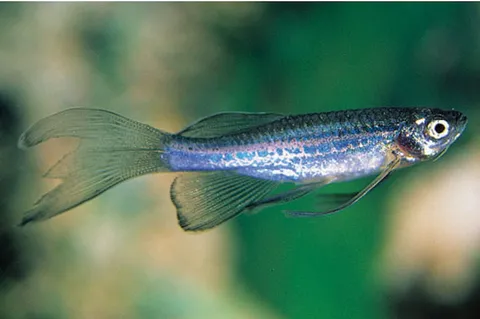
Danio rerio
The Blue Danio, known by its scientific name Danio rerio, belongs to the carp family (Cyprinidae). This variation of the classic Danio rerio stands out for its silvery-blue coloration, consisting of numerous small…
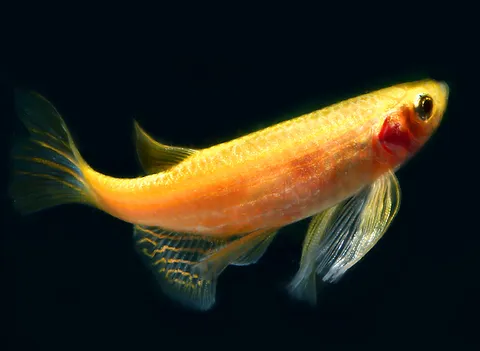
Danio rerio
A representative of the Cyprinidae family, known as the Gold Danio, bearing the scientific name Danio rerio, is similar in appearance and behavior to its brethren, with the exception of one important feature – its…
Danio rerio
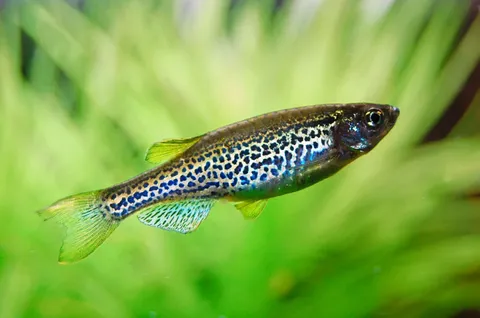
The Leopard Danio, known scientifically as Danio rerio, belongs to the family Cyprinidae. This easily recognizable and vibrant fish is considered one of the most popular varieties of Danio rerio. It is not found in the…